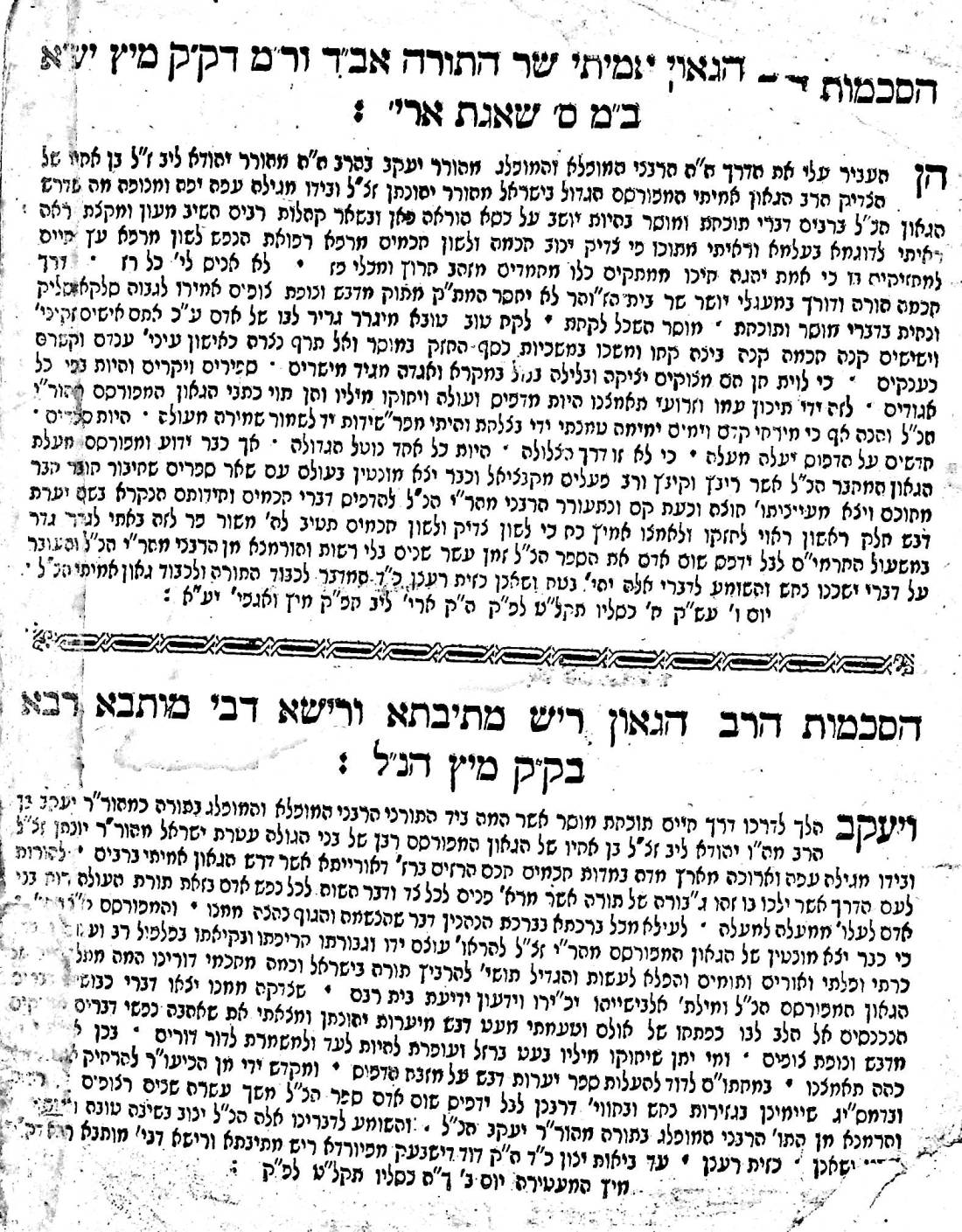
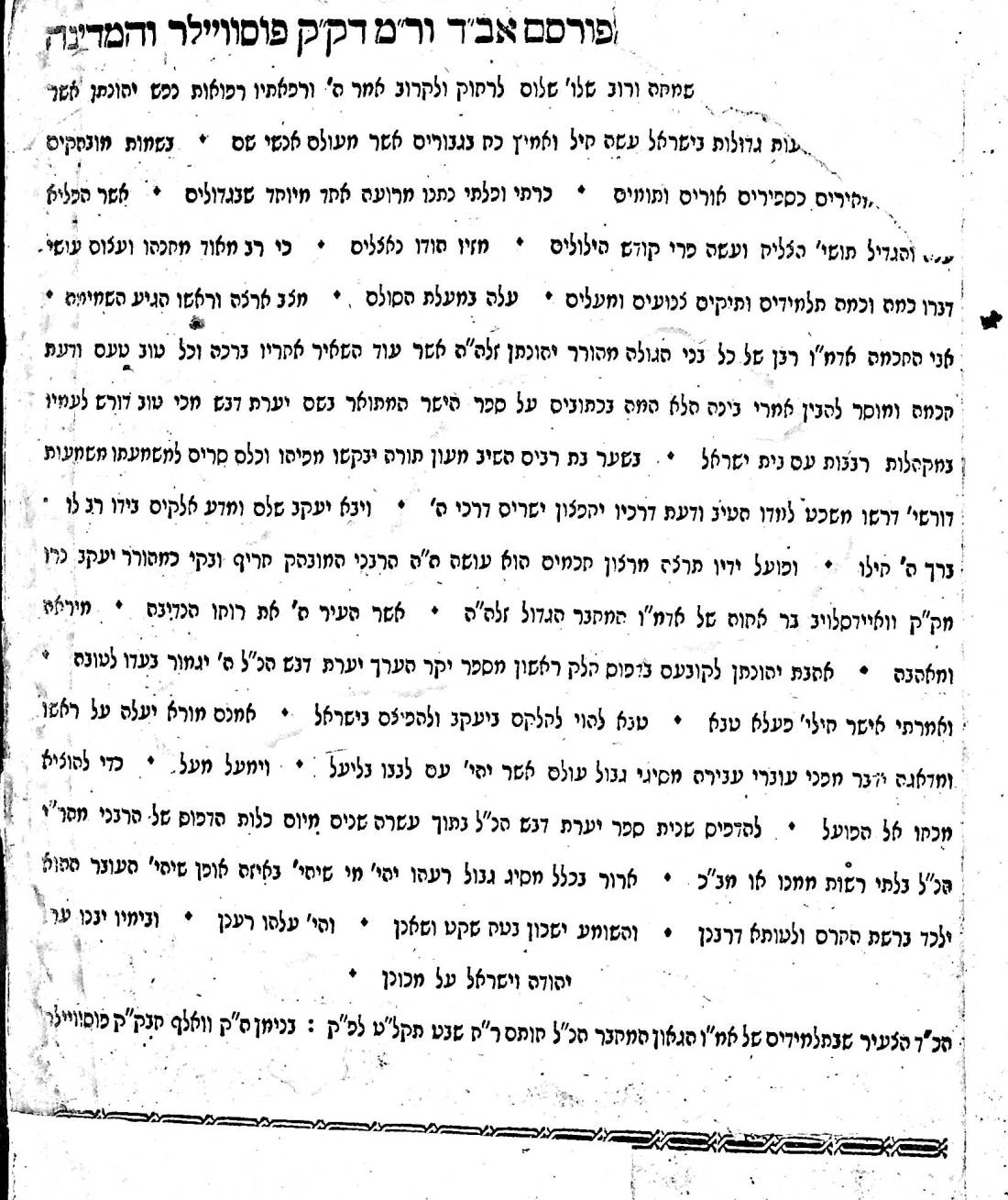
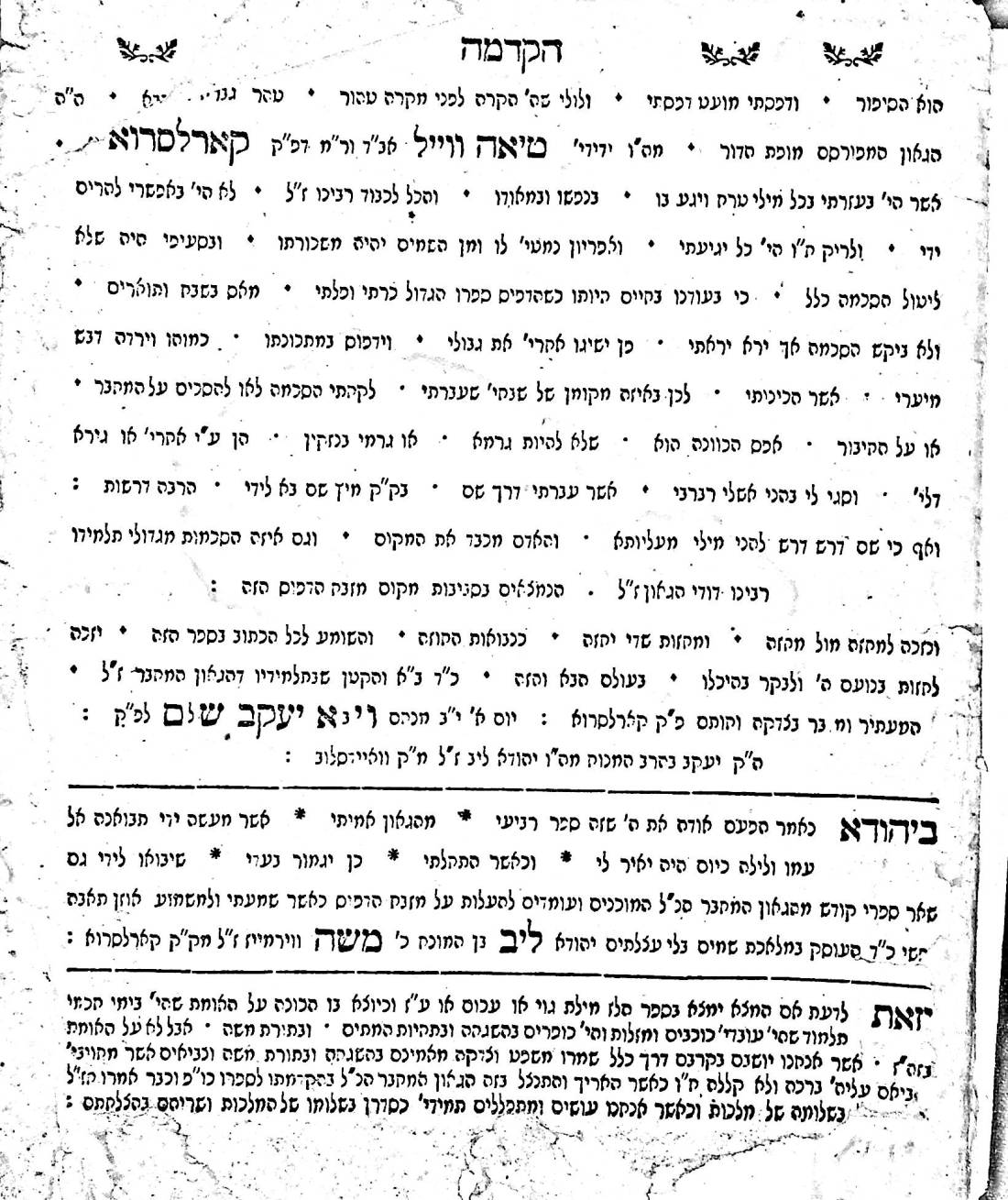
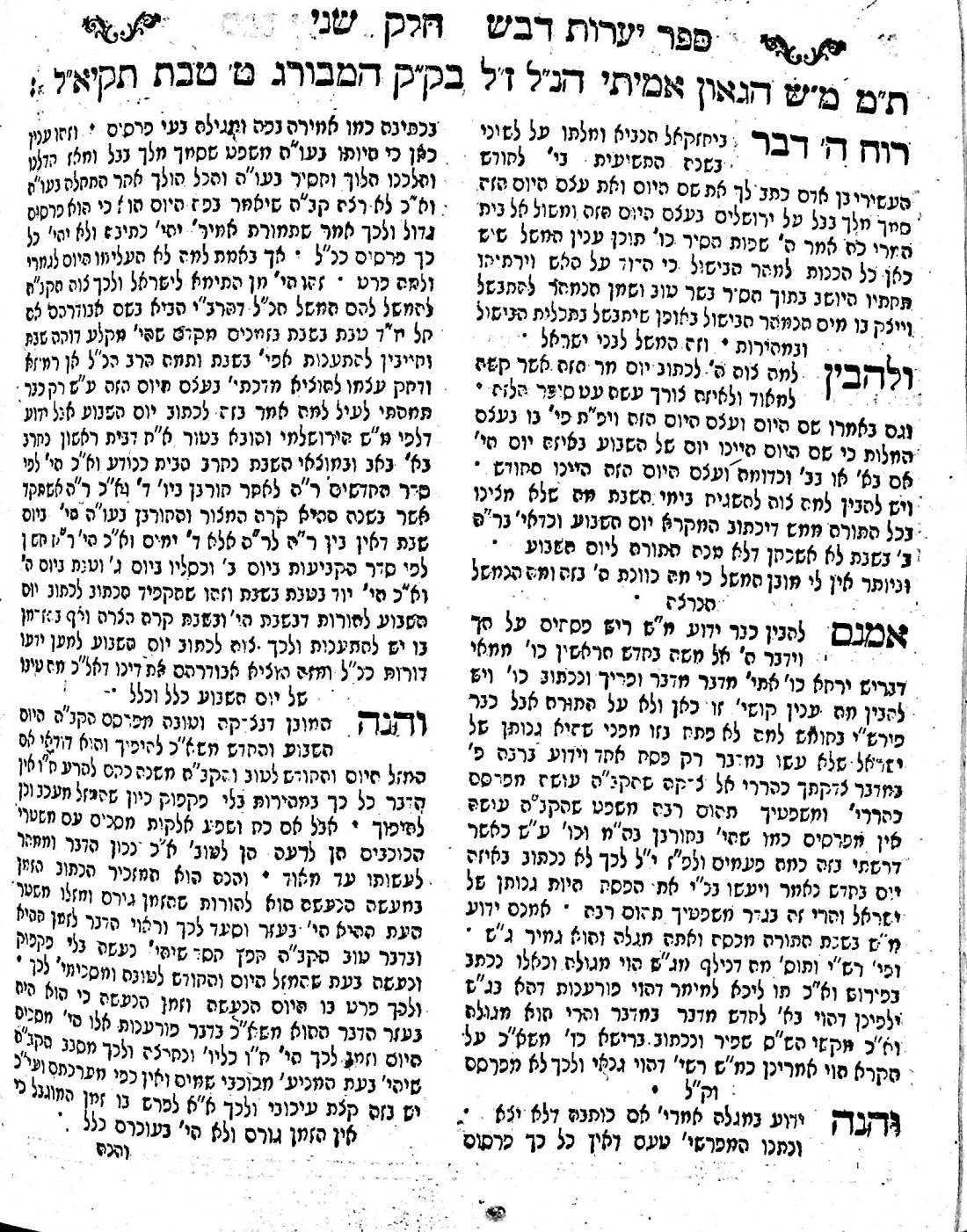
 This is a book from my antique book collection. It is a first edition of Yaaros Devash (A Hive of Honey), and has some important haskomos (approbations). Yaaros Devash is a collection of sermons on ethical matters.
The author, Rabbi Jonathan Eibeschutz (circa 1690/4–1764) was a talmudist and kabbalist, a child prodigy. He married the daughter of Rabbi Isaac Spira, the head of the Rabbinical Court of Bunzlau. He settled in Prague in 1715, and in time became head of the yeshivah (rabbinical school) and a famous preacher. After the death of Rabbi David Oppenheim in 1736, he was appointed dayan (judge) of Prague. Elected rabbi of Metz in 1741, where he wrote this book, he subsequently became rabbi of the “Three Communities,” Altona, Hamburg, and Wandsbek (1750). Both in Metz and in Altona he had many disciples and was considered a great preacher.
His position in the Three Communities, however, was undermined when the dispute broke out concerning his suspected leanings toward Shabbateanism. This controversy accompanied Rabbi Eybeschutz throughout his life, and the quarrel had repercussions in every community from Holland to Poland. His main opponent was Rabbi Jacob Emden, also a famous talmudist and a potential rival in the candidature to the rabbinate of the Three Communities. The quarrel developed into a great public dispute which divided the rabbis of the day. While most of the German rabbis opposed Rabbi Eybeschutz, his support came from the rabbis of Poland and Moravia. A fruitless attempt at mediation was made by Rabbi Ezekiel Landau, rabbi of Prague. Most of Rabbi Eybeschutz’ own community was loyal to him and confidently accepted his refutation of the charges made by his opponent, but dissension reached such a pitch that both sides appealed to the authorities in Hamburg and the government of Denmark for a judicial ruling. The king favored Rabbi Eybeschutz and ordered new elections, which resulted in his reappointment. After his reelection as rabbi of the Three Communities, some rabbis of Frankfort, Amsterdam, and Metz challenged him to appear before them to reply to the suspicions raised against him. Rabbi Eybeschutz refused, and when the matter was brought before the Council of the Four Lands in 1753, the council issued a ruling in his favor. In 1760 the quarrel broke out once more when some Shabbatean elements were discovered among the students of Rabbi Eybeschutz’ yeshiva.
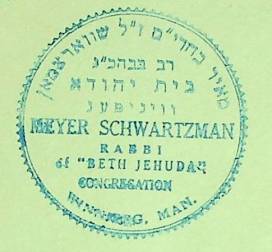 My copy has stamps of Rabbi Meyer Schwartzman, who was a Ger chassid, born near Kalisch in 1901. He had semicha (his rabbinical diploma) and also a doctorate in literature. He and his family escaped from Poland just before the war and moved to Canada. They settled in Winnipeg, where Rabbi Schwartzman joined the Agudas Yisrael organization and became the Chief Rabbi of Winnipeg, as well as the pulpit rabbi of the synagogue Bais Yehudah (appointed in 1940).
 Rabbi Meyer wrote many books on Chasidic history, literature, and culture. He also wrote on the five books of the Torah entitled Meir Einei Yesharim.









 Jewish Miscellanies