 This is an interesting book from my antique Hebrew books collection. It consists of an important book by Asher ben Yechiel (1259 Cologne (?)-1327 Toledo), known as Rabeinu Asher or the Rosh, together with important commentaries by Rabbi Yom Tov Lipman Heller.
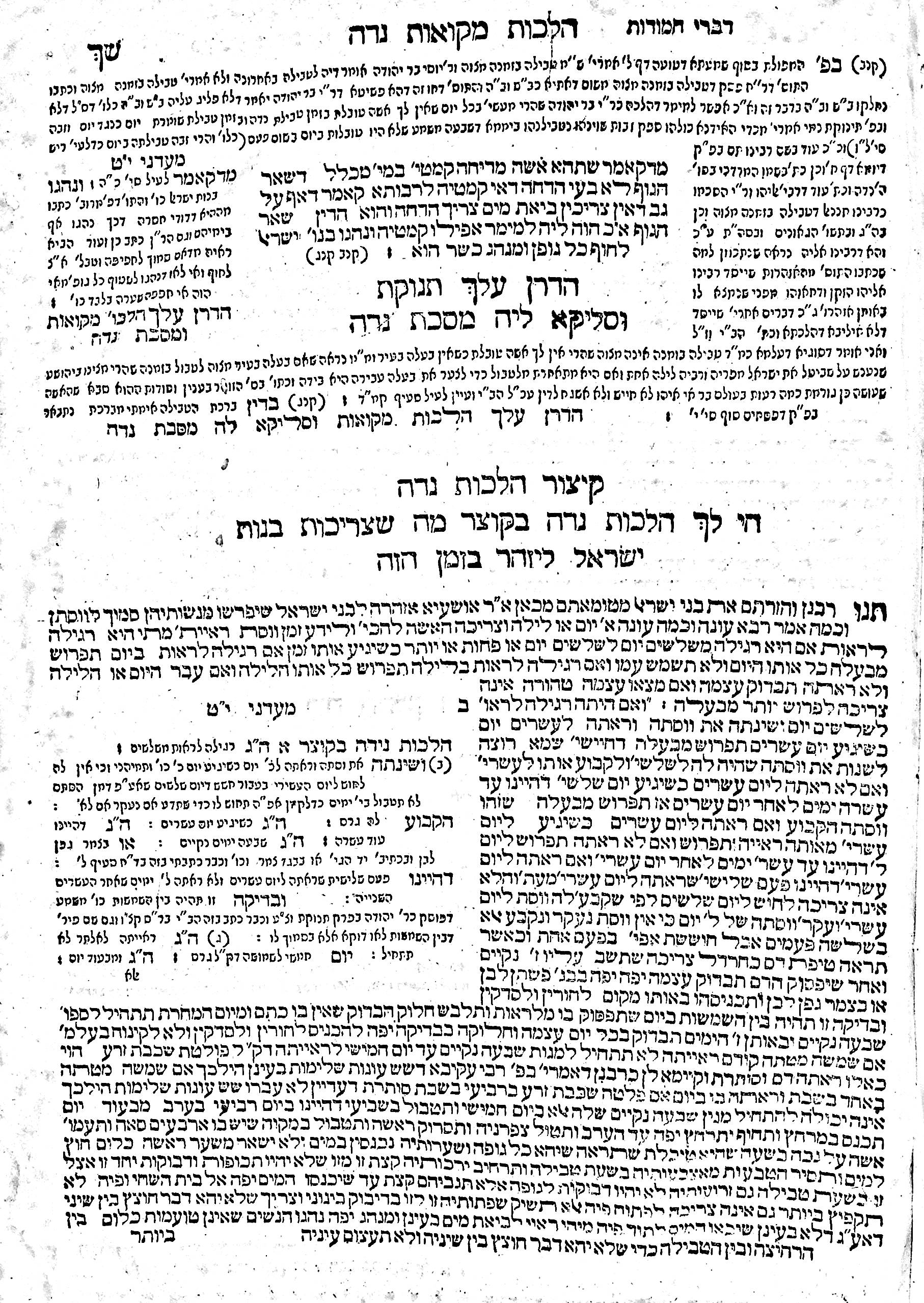
Rabbeninu Asher’s best known work is this abstract of Talmudic law. It includes the final, practical law, leaving out the intermediate discussion and concisely stating the final decision. It omits areas of law that only apply to the Land of Israel as well as the Aggadah (the legendary stories) of the Talmud.
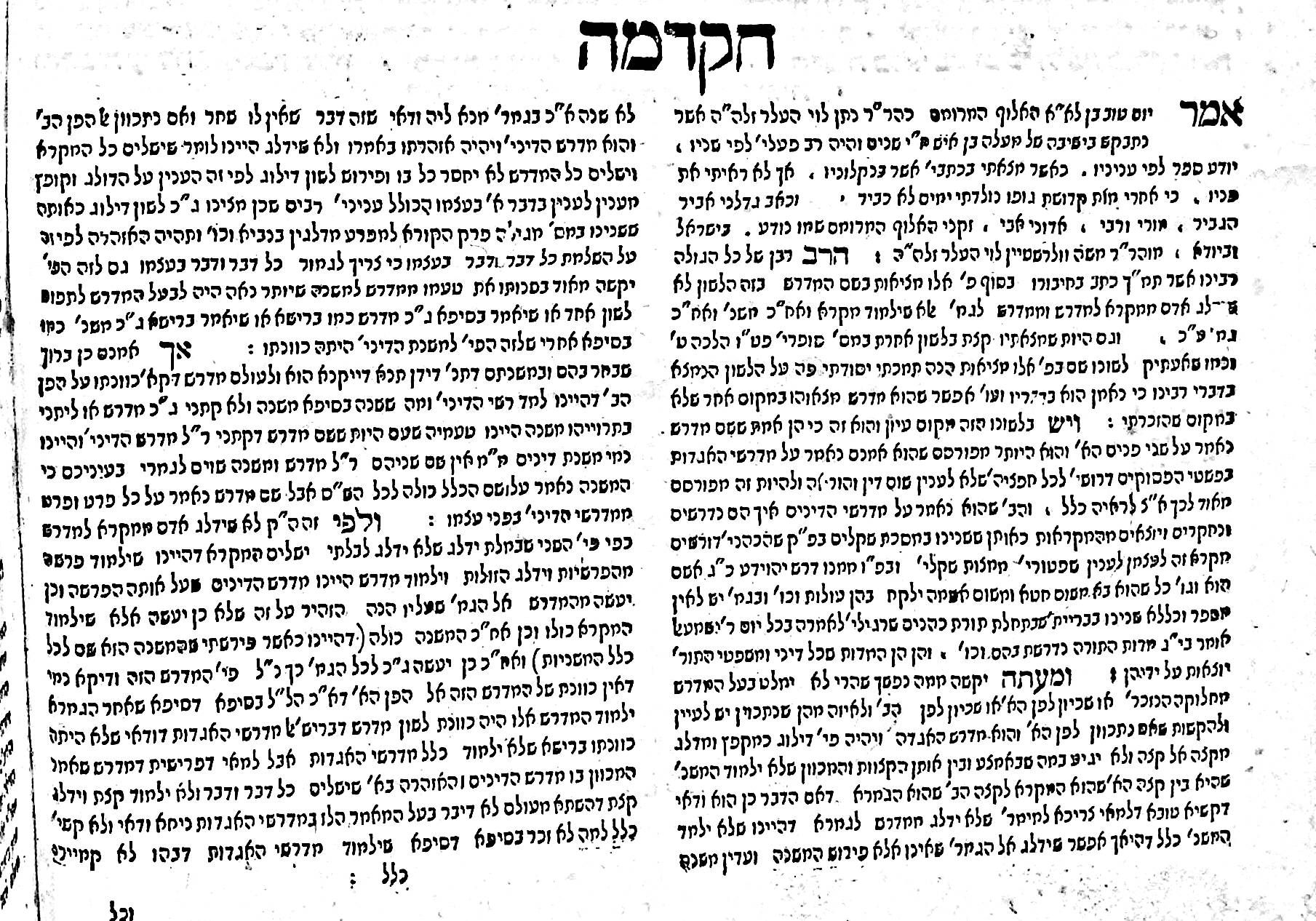
Instead of being surrounded with the commentary of Rashi, and the Tosphos, like a volume of Talmud, the text is surrounded with two commentaries, Ma’adnei Yom Tov and Divrei Chamudos, written by my nine-greats grandfather, Rabbi Yom Tov Lipman Heller.
Rabbi Heller (1579 – 1654) was a Rabbi and Talmudic scholar – a major figure in Prague and Poland during the great age of Talmudic scholarship before 1648. From 1627 he was Chief Rabbi of Prague. In 1643 he was elected Head of the Rabbinical Court of Crakow, where he remained until his death in 1654. He is best known as the author of Tosfos Yom Tov on Mishnayos.
In 1629, Rabbi Heller was arrested at the order of the imperial court of Holy Roman Emperor Ferdinand II. He was accused of insulting Christianity and imprisoned in Vienna. A commission was quickly appointed to inquire into Heller’s guilt. He defended himself adroitly, but the commission’s verdict was that Heller be sentenced to death. After intervention, the king agreed to impose a fine of 12,000 thalers instead. After negotiations it was reduced to 10,000 thalers (still a huge sum). After spending more than a month in prison, Rabbi Heller was released. He published an autobiographical work about this period, called Megillas Eivah.
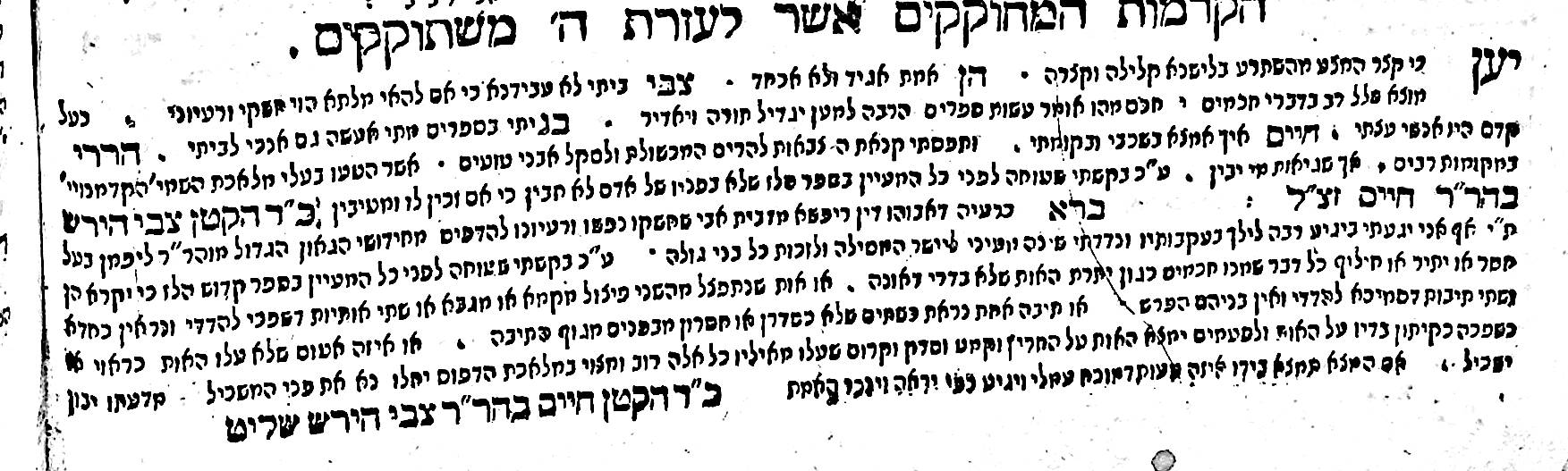
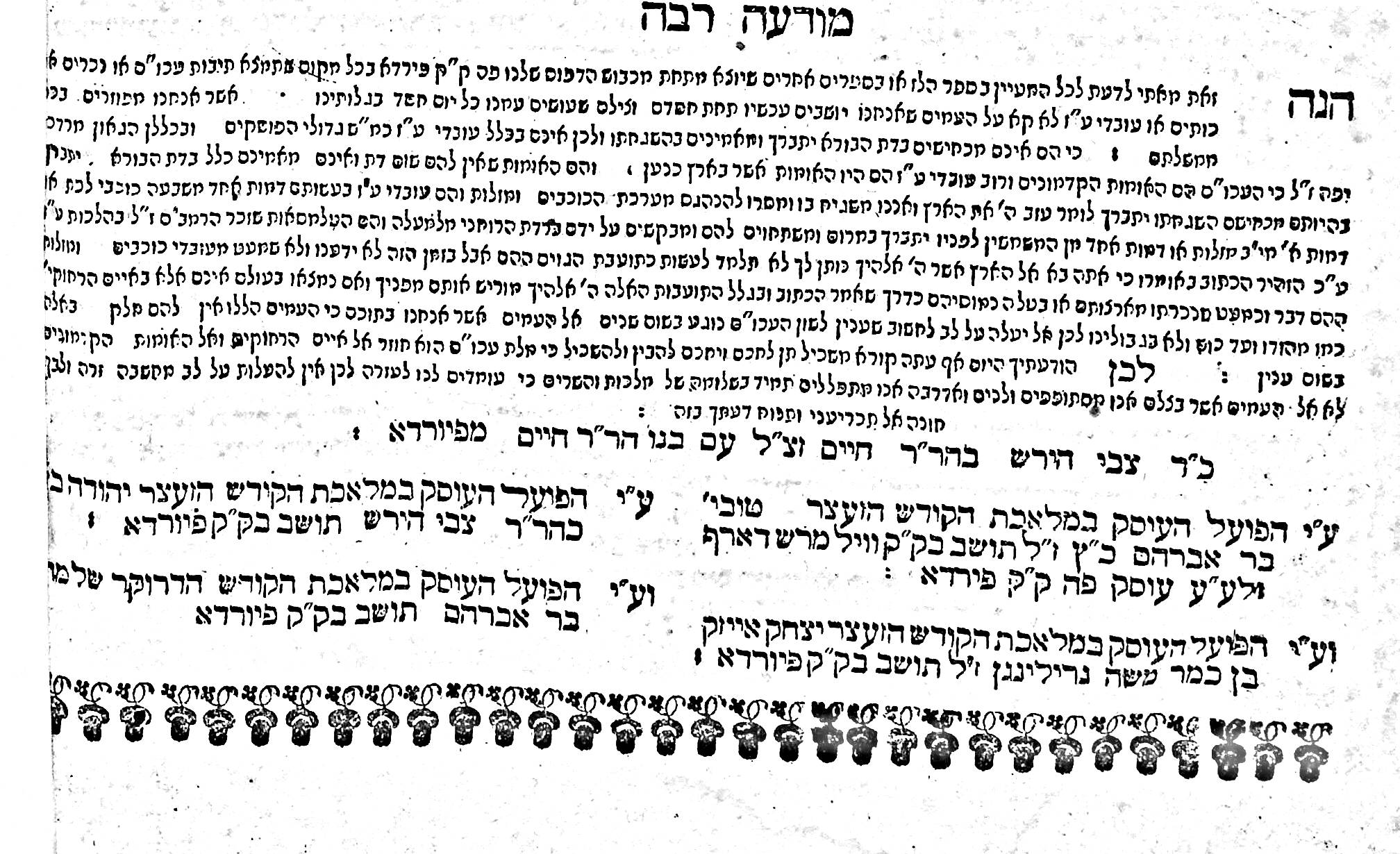
The publisher of my 1745 edition was Rabbi Tzvi Hirsch, son of Reb Chaim of Furth. The last page (below) has the names of the zetzer (typesetter) and druker (press operator).
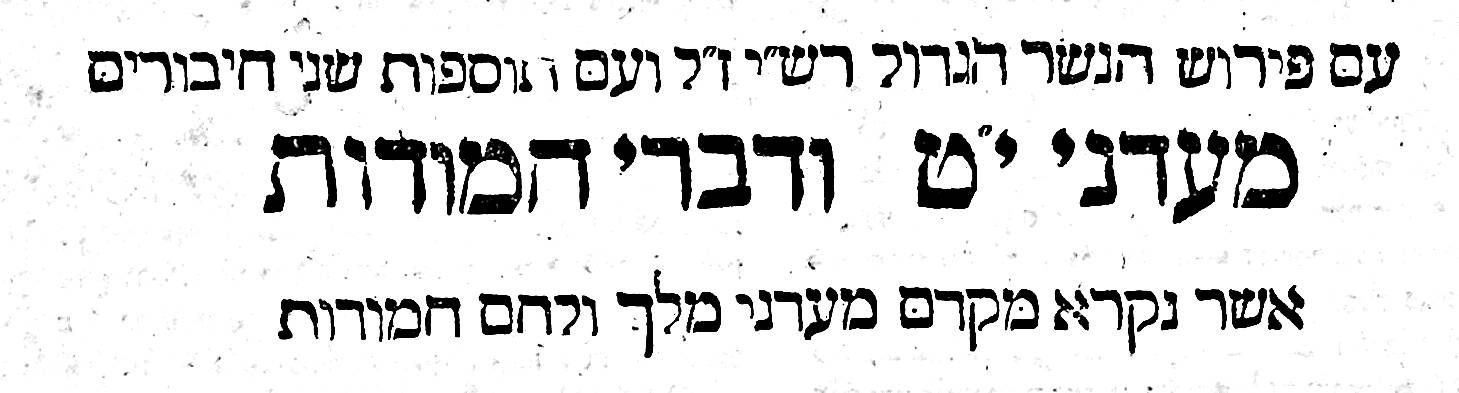 The Ma’adnei Yom Tov and Divrei Chamudos commentaries, as we have said, were written by Rabbi Yom Tov Lipman Heller. However, the title page makes clear that these were originally called Ma’adnei Melech and Lechem Chamudos. Why the name change?
The first edition of this commentary was published by the author in Prague in 1628, before his imprisonment. It was denounced before King Ferdinand II as being anti-Christian and anti-government. It is unclear whether the Tosefos Yom Tov changed the names himself, or the publishers of this second edition in Furth in 1745. Perhaps the Furth publishers feared that they would not get the necessary government permission to print this second edition. They decided to change the name and included a note that said that no anti-Christian or anti-government ideas were in the work.
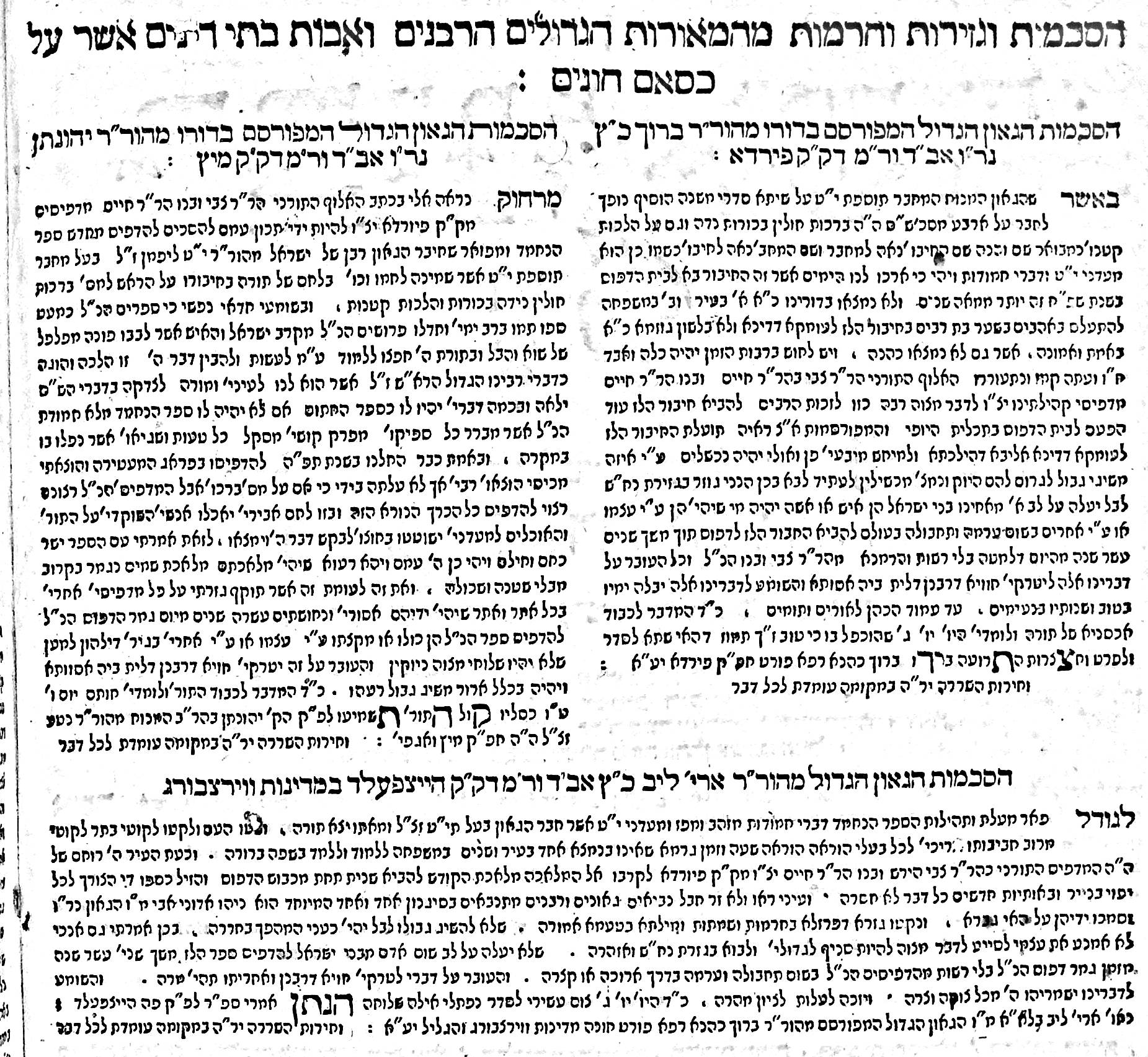
 The book has three interesting Haskomos (approbations), including one written by none other than the famous Rabbi Jonathan Eybeschutz (1690 – 1754). He was a Dayan (judge) of Metz at the time that this book was printed and then became a Rabbi of Prague and later was Rabbi of the “three communities” of Altona, Hamburg and Wansbeck. He was well known for being suspected of Sabbatean beliefs (a follower of the false messiah, Sabbatai Zvi) and the resulting conflict with Rabbi Jacob Emden.



 Jewish Miscellanies