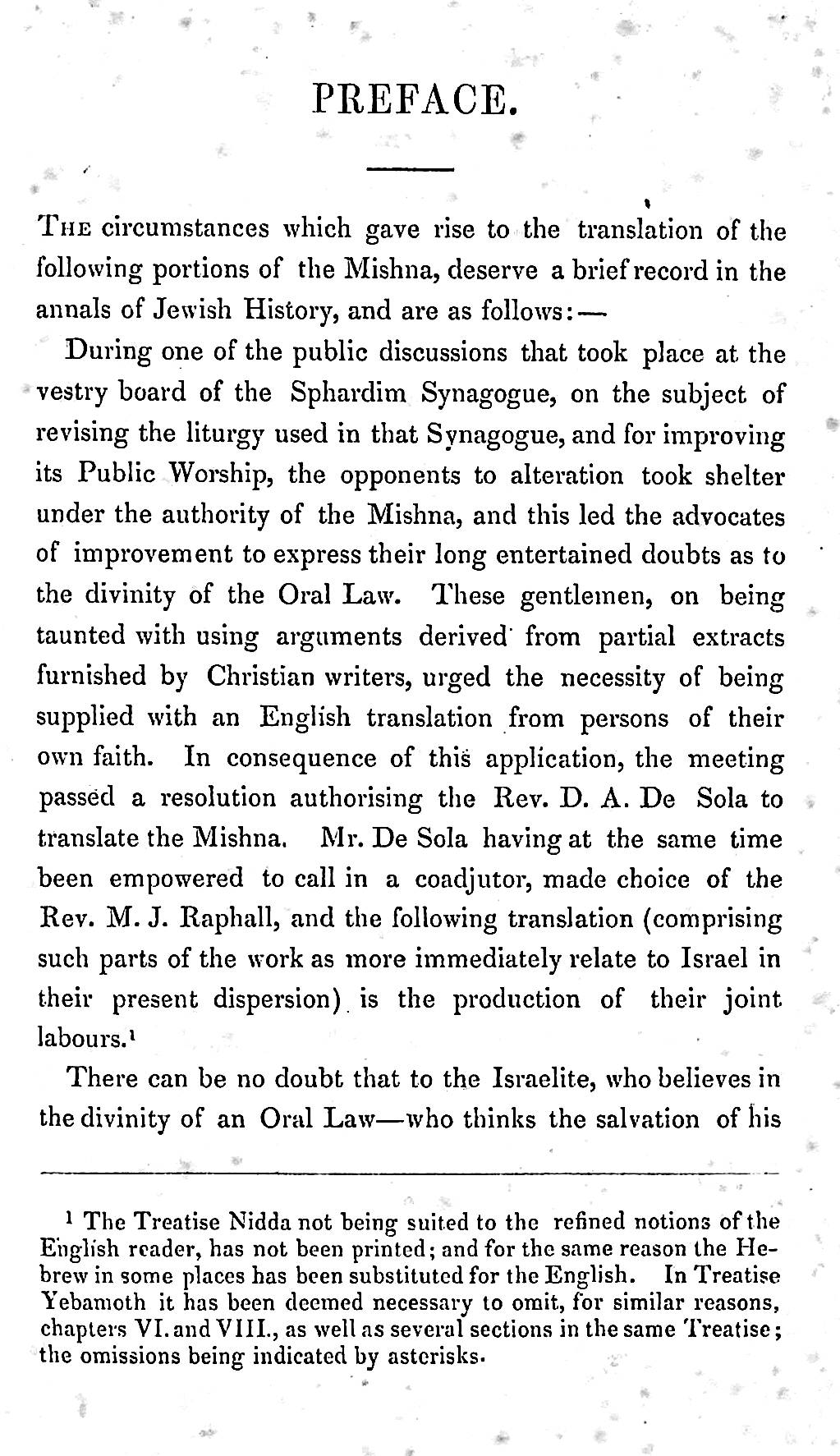
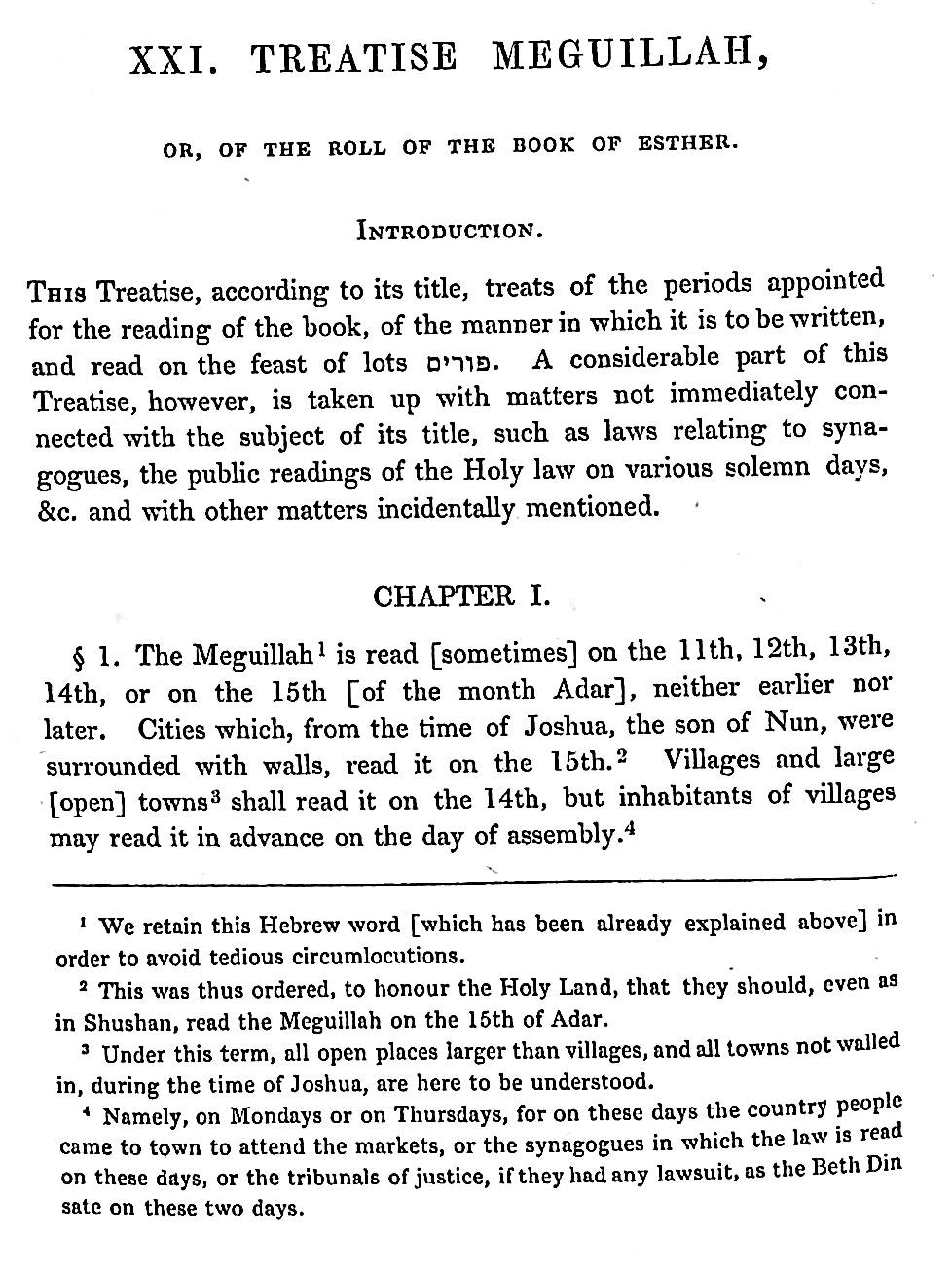
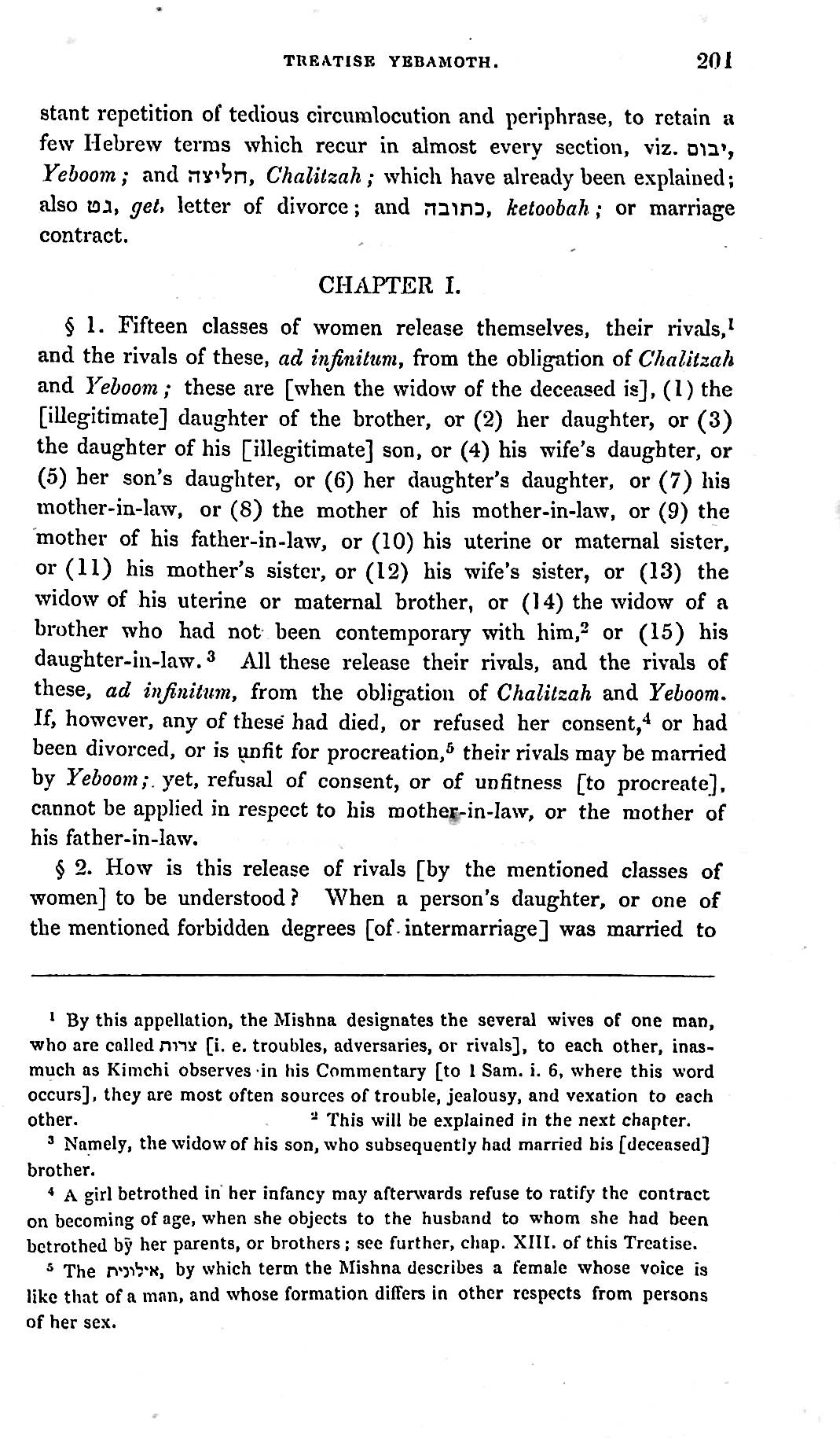
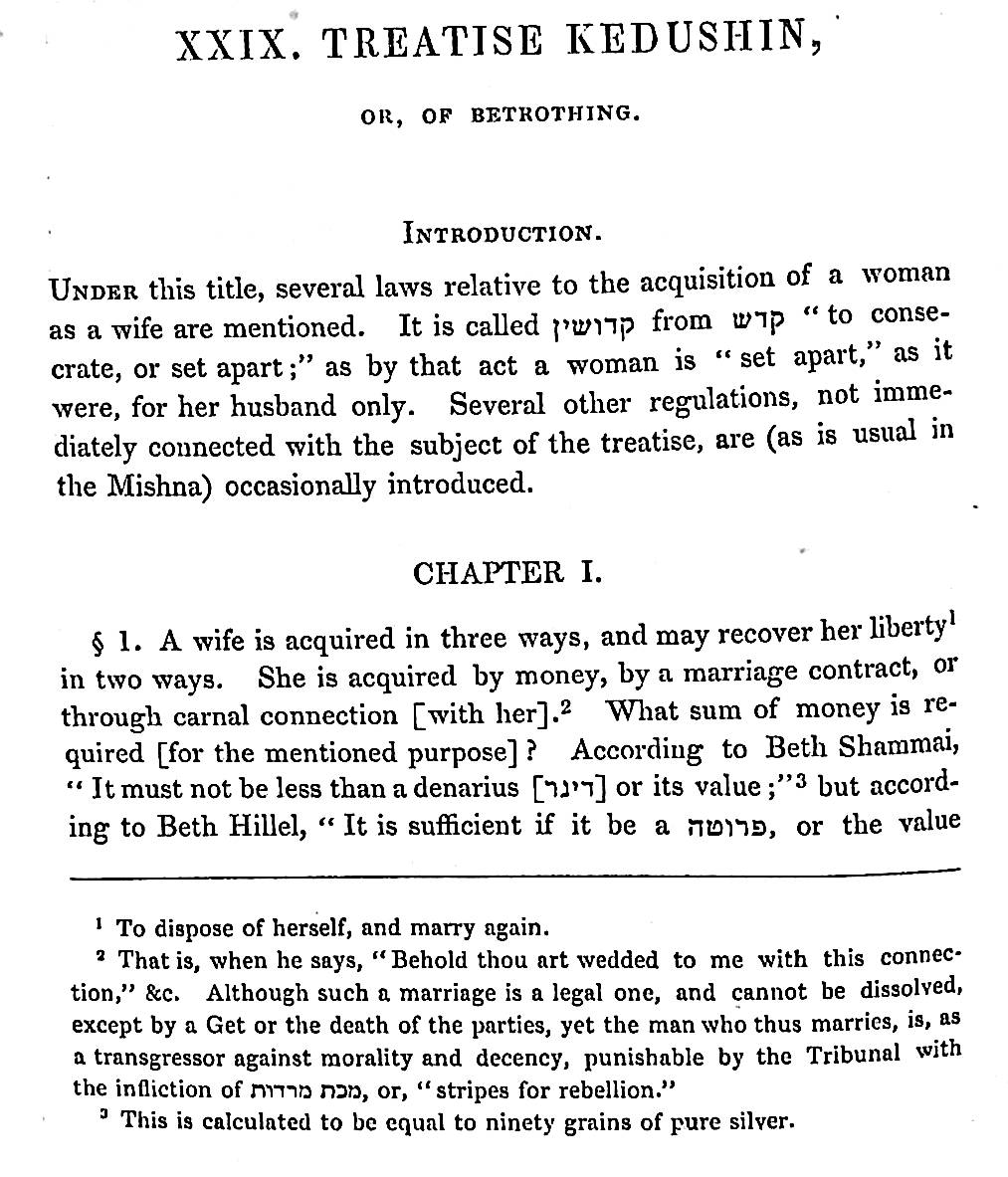
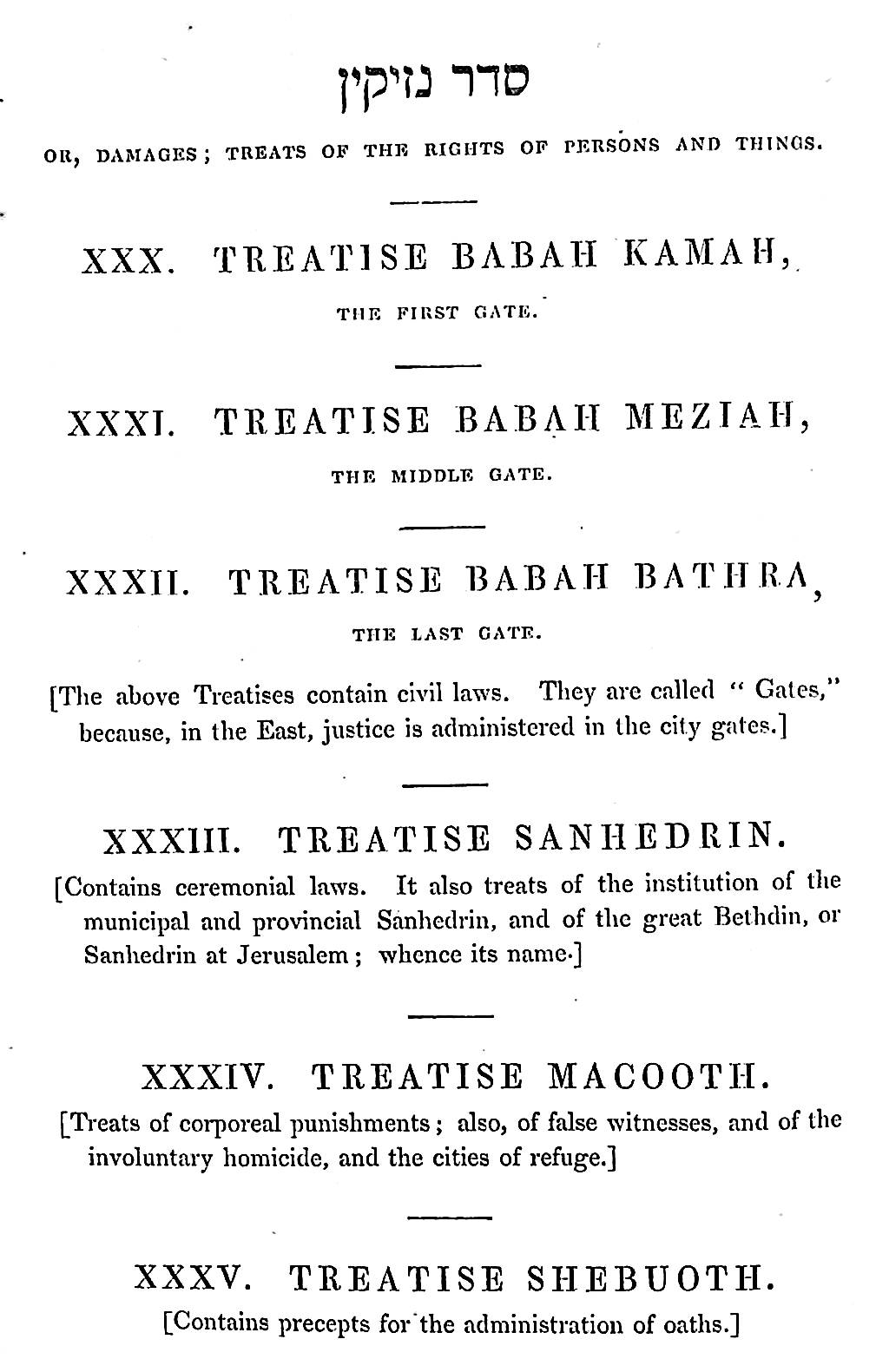
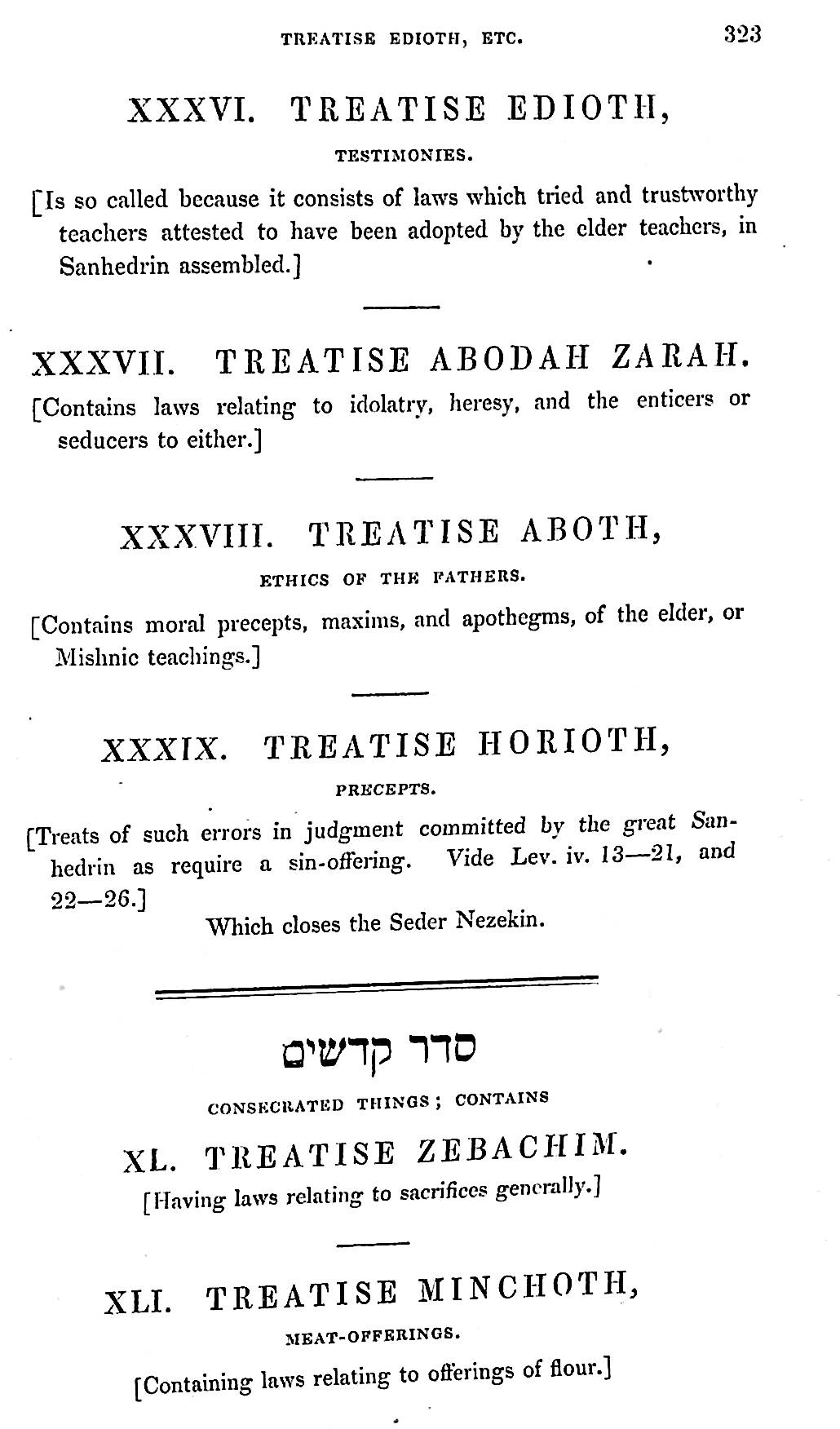
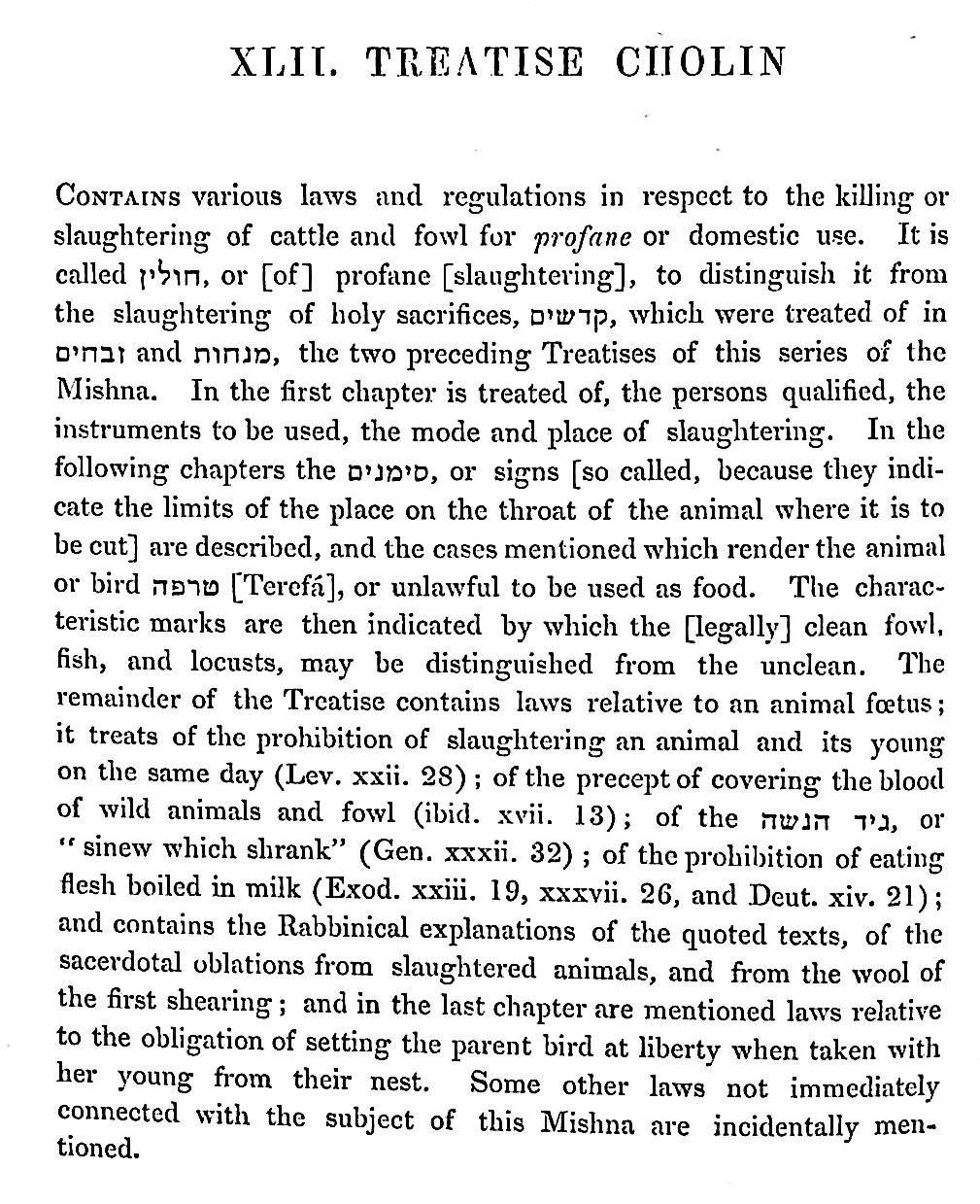
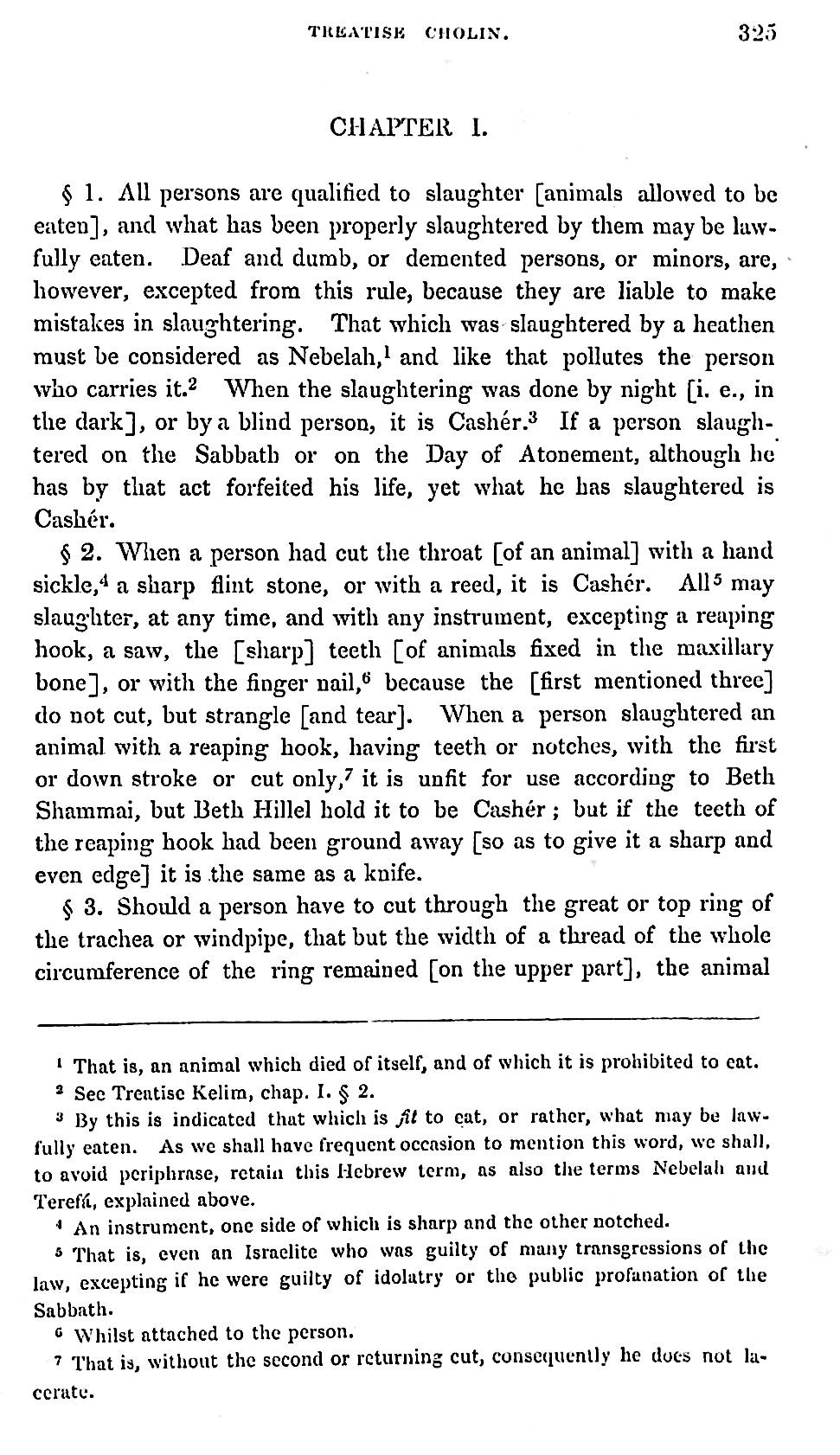
 The circumstances which prompted this translation of 18 out of 60 treatises of the Mishna into English, 180 years ago, are explained in the preface. The Sephardic community in London was divided between those who wished to maintain orthodox practices and those who wished to establish a reform synagogue with revised liturgy. The reform advocates expressed doubt over the origin of the Oral Law (i.e. the Talmud). Those who fought this took shelter under the authority of the Mishna, but needed an English translation to support their views.
The vestry board of the orthodox Bevis Marks synagogue passed a resolution authorizing the Rev. D. A. De Sola to translate the Mishna. David De Sola close Rev. Morris Jacob Raphall as a partner for this project. They translated what they considered to be the 18 most useful tractates. There is some evidence of Victorian prudishness. Nidda was not translated “due to the refined notions of the English reader”.
David Aaron De Sola was born in Amsterdam in 1796. In 1818, just 23 years old, he was appointed Assistant Hazan (Cantor) of the Bevis Marks Sephardic synagogue in London. The De Sola family had a long history and association with Bevis Marks, and his kinsman, Isaac De Sola was Hazan in London from 1690 to 1700. David Aaron had a large family, and his eldest son, Abraham, settled in Canada and was the spiritual leader of the Montreal Jewish community.
De Sola was known as “the learned Hazan’ on account of his scholarship and writings. He quickly learned and mastered the English language, and gave sermons in English. He was an assistant to the Haham, Raphael Meldola, whose daughter he married in 1819. After Haham Raphael Meldola died in 1828, David Aaron De Sola assumed the spititual leadership of the English Sephardim. He produced translations of both Sephardi and Ashkenazi liturgy. He died in 1860.
Morris Jacob Raphall was born in Stockholm, Sweden, in 1798. At the age of nine, he was taken by his father, who was banker to the King of Sweden, to Copenhagen, where he was educated at the Hebrew grammar school. He was educated for the Jewish ministry in Coenhagen, in London where he went in 1812, and in the university of Giessen. He received the Ph.D. degree from the University of Erlangen (Germany).
After lecturing on Hebrew poetry in 1834 he began to publish the Hebrew Review, and Magazine of Rabbinical Literature, the first Jewish periodical in England;[1] he was forced to discontinue it in 1836 owing to ill health.
He acted as Honorary Secretary to Chief Rabbi Solomon Herschell in London. In 1840, when the blood accusation was made at Damascus, he traveled to Syria to aid in the investigation, and published a refutation of it in four languages (Hebrew, English, French, and German). He also wrote a defense of Judaism against an anonymous writer in the London Times.
In 1841 Rev. Raphall was appointed minister of the Birmingham Synagogue and master of the school. He continued in these capacities for eight years, and then sailed for New York City in 1849. He was appointed rabbi and preacher of Manhattan’s B’nai Jeshurun congregation, at the time called the Greene Street Synagogue. He continued there until 1866 and died in New York on June 23, 1868.
The book was used by non-Jewish scholars as well – my copy has the stamp of the Presbytarian College of Belfast.




 Jewish Miscellanies