 This is another book that has come from the library of Jews College in London, and it has the old stamp of the Beis Hamedrash HaAshkenazi (the study house of the Ashkenazi community) in London.
From time to time, books appear for sale that have come from the Jews College Library, in London, and I have occasionally bought these and previously written about them.
Jews College was founded in 1855 as a Rabbinical College in London. It was well endowed by gifts of books and significant libraries and the library was an important collection. I have written previously about the history of this library, which was written by the Librarian of the time, Ruth Lehmann.
 Jews College was a college of the University of London until recent years, and has been renamed the London School of Jewish Studies and moved to Hendon (a suburb of North-West London). Presumably my books came from one of the sales from the Library to raise funds in approximately 2004. This book has an identical possibly nineteenth century cloth binding in good condition as those below:
I have a copy of Ein Yaakov, printed in Amsterdam in 1742, from the Jews College Library.
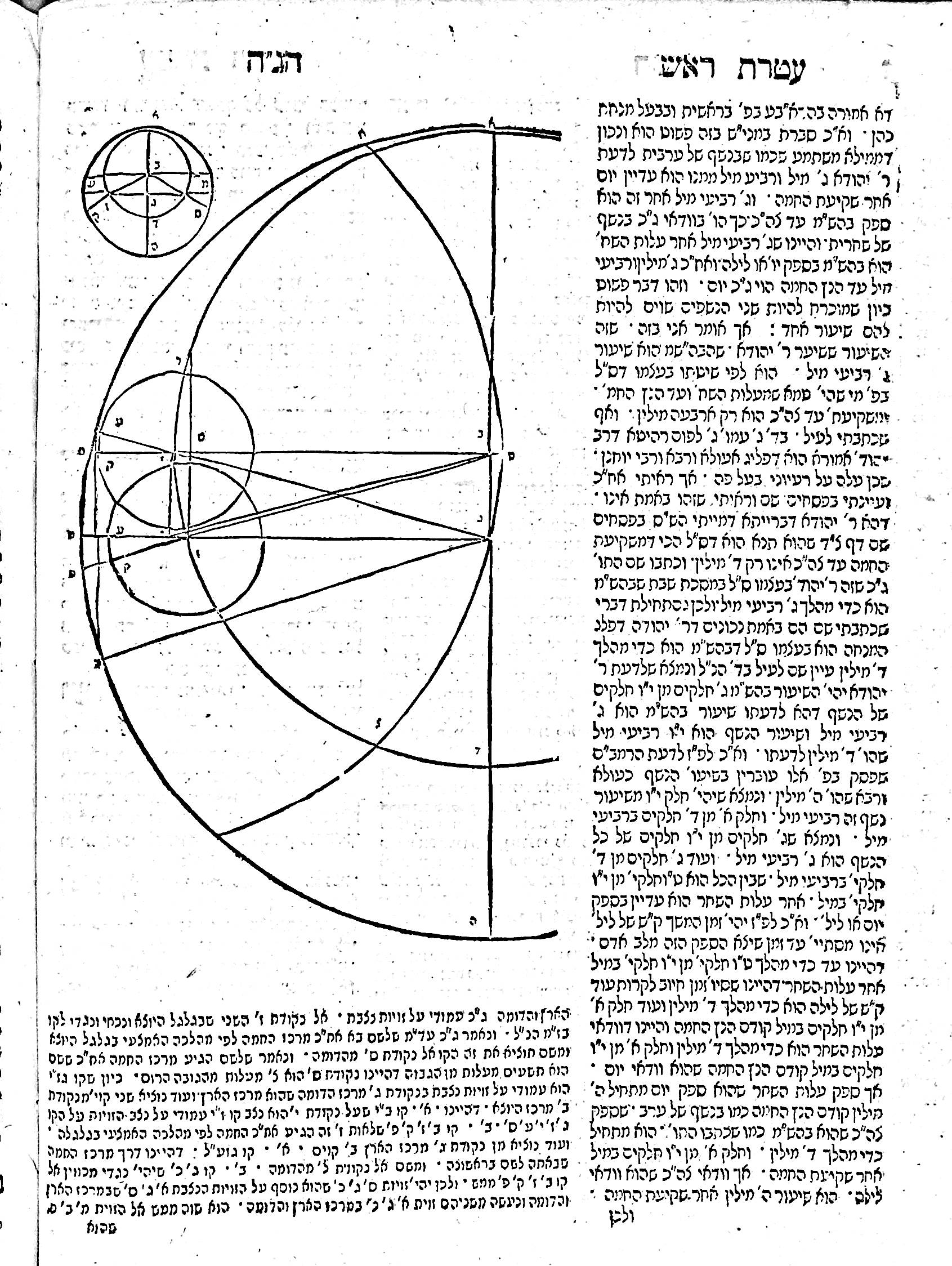
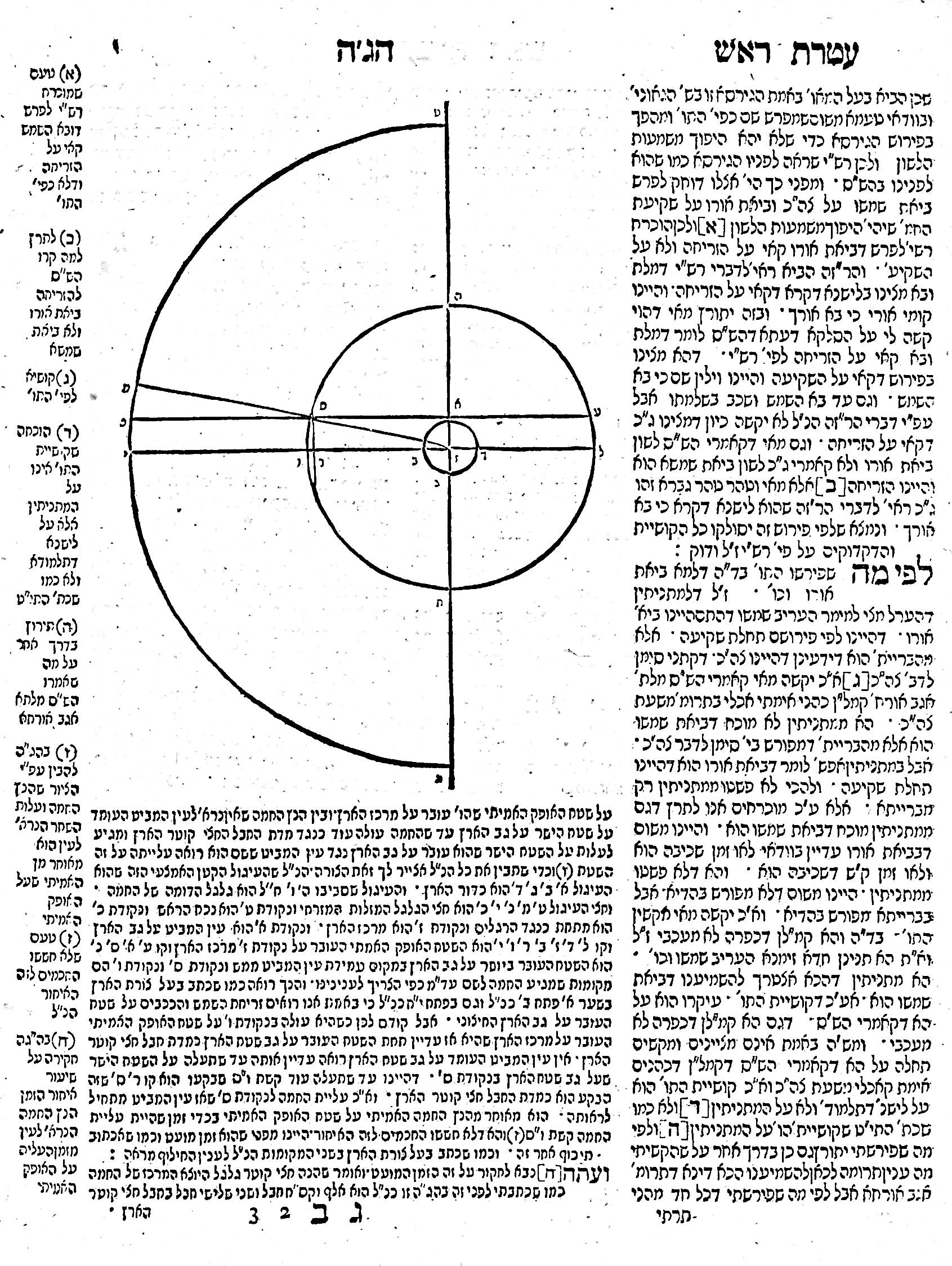
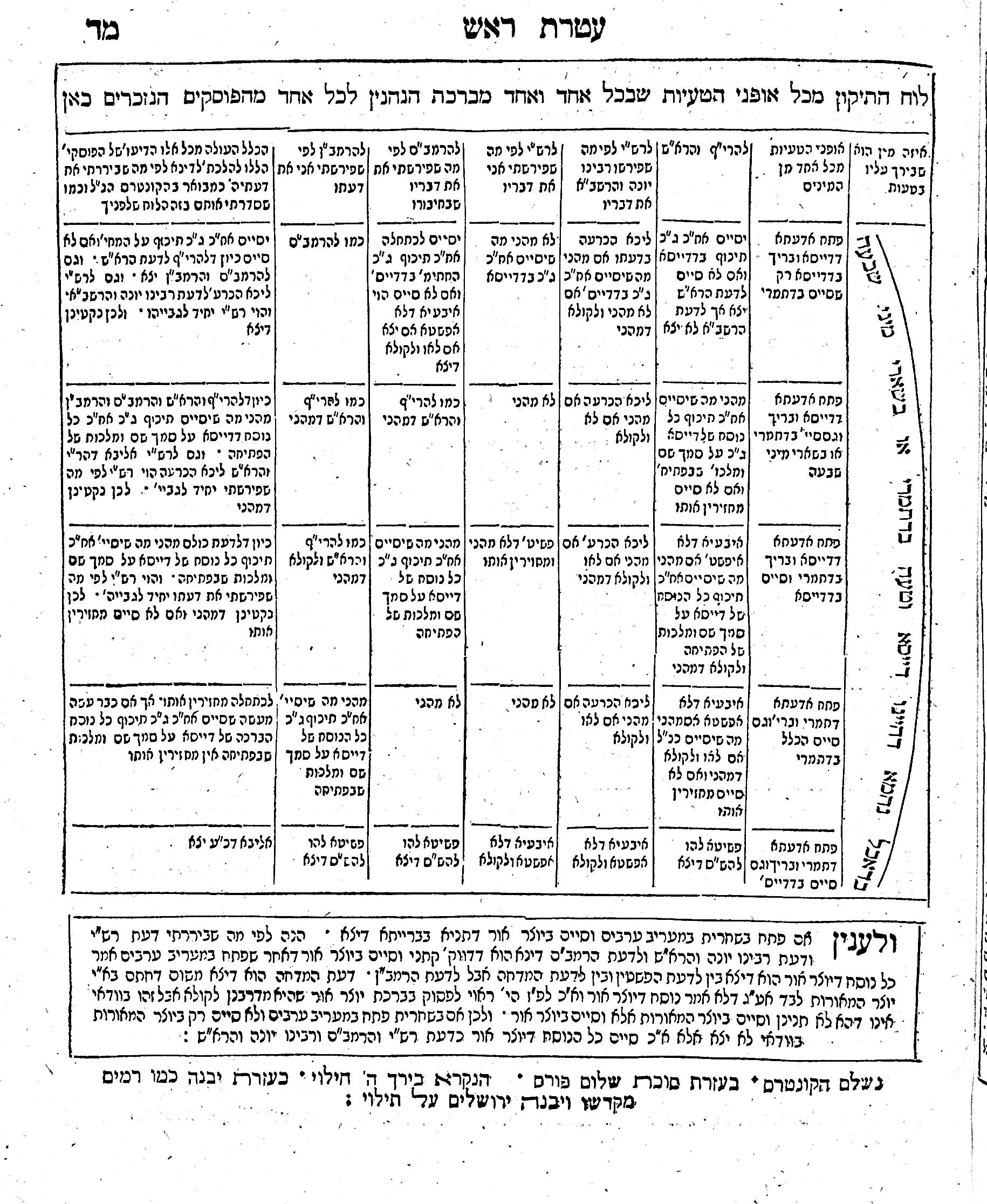
This book consists of novellae on the Talmud and Mishnayos by R. Levi ben David of Kodnya (Kadni), who lived from circe 1725 to circa 1780. (c.1725-c.1780). The title page describes Ateres Rosh as the first of two parts included in the book Livyat Chen (an ornament of grace). It has several diagrams, including one that is full page. The author’s son relates that his father was martyred by gentiles in Wegrow where he was laid to rest.
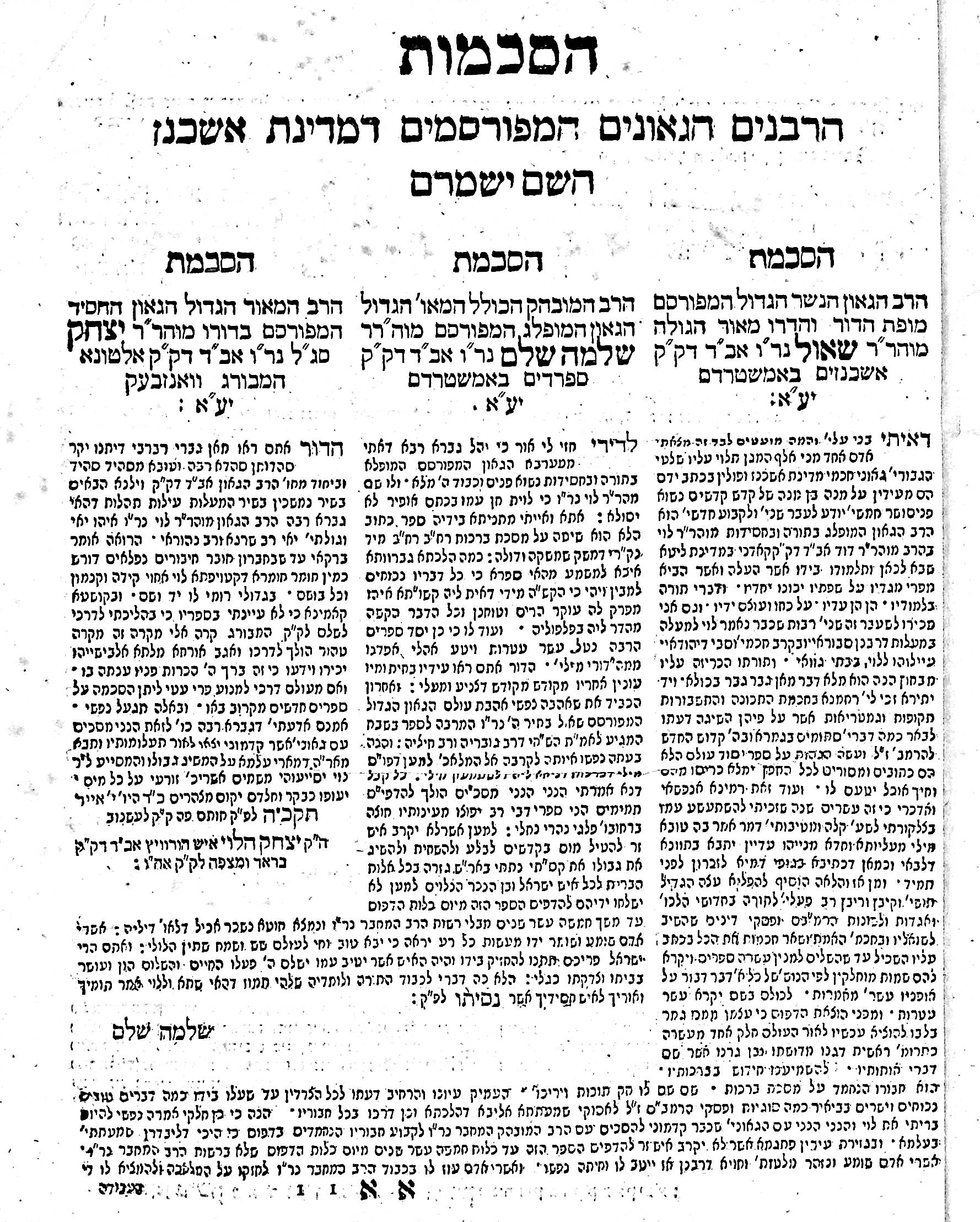
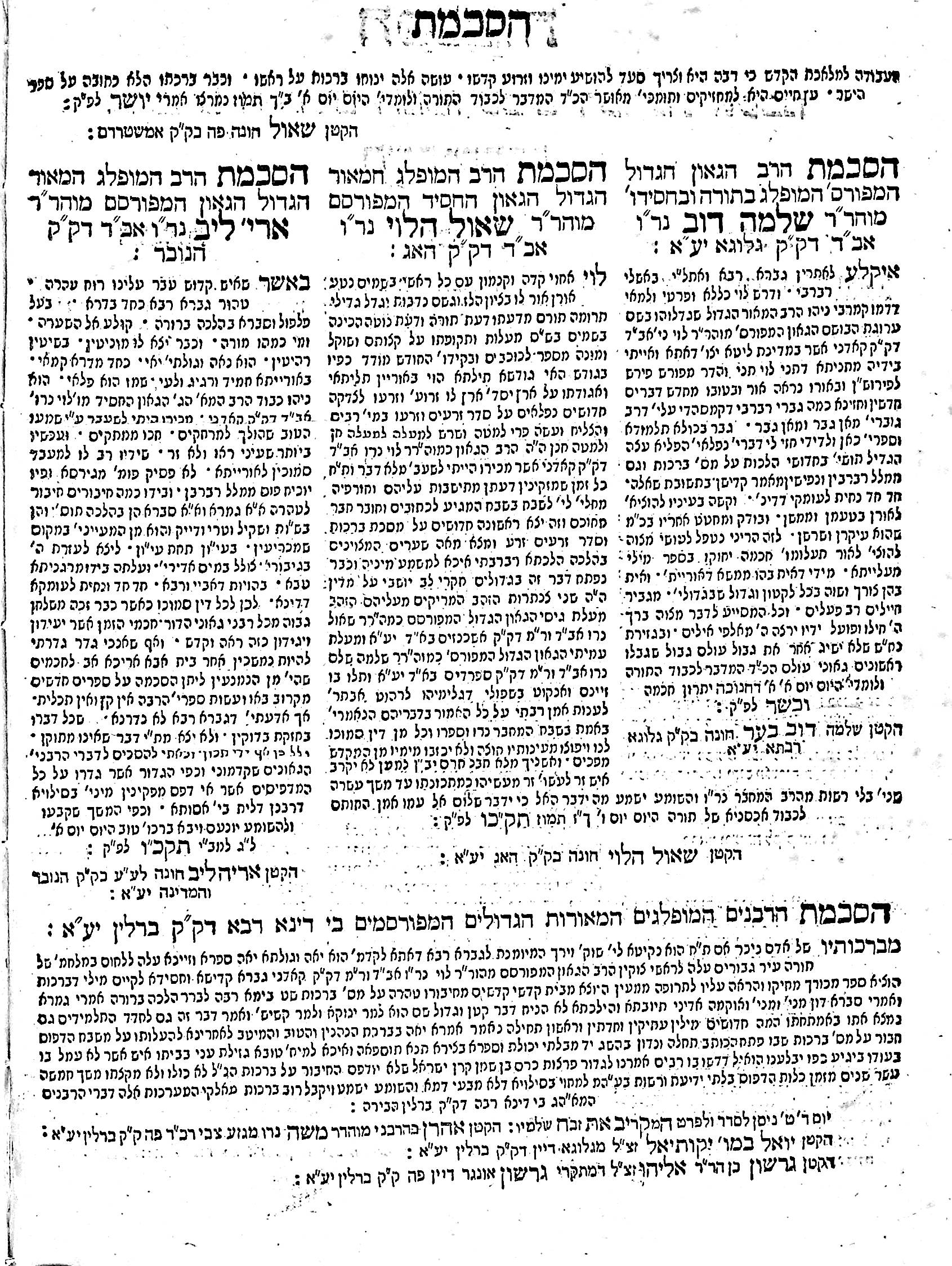
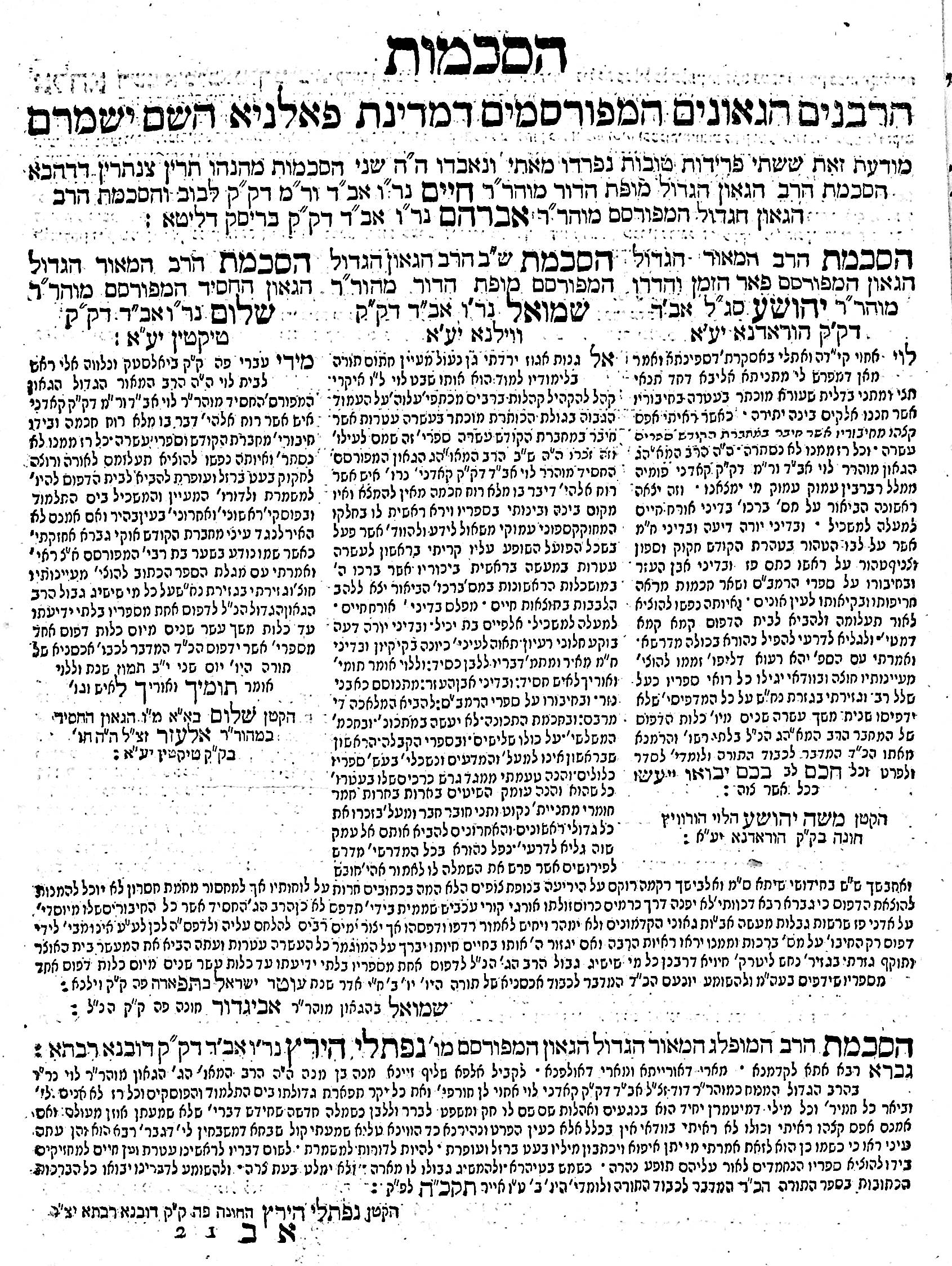
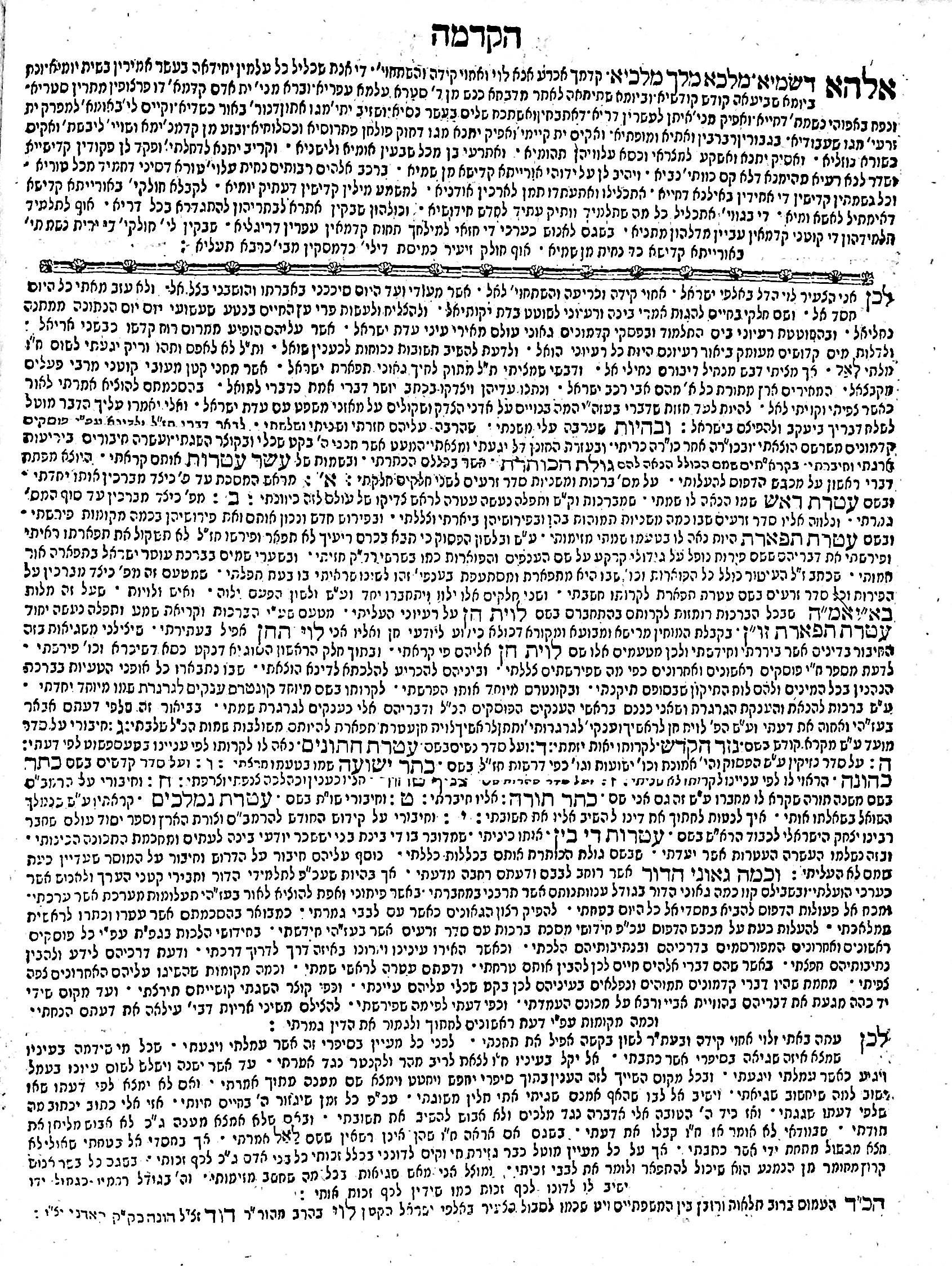
The author seems quite obscure – I have been able to find very little about him, and yet… the book is well printed on excellent laid paper in Amsterdam, which would have been expensive to produce. The author must have been well-regarded because of the outstanding set of twelve Haskomos (approbations) at the beginning of the volume. These Haskomos are all recommendations by leading rabbonim (rabbis) of the mid-1700s. They were written (and the book was printed) during the lifetime of the author, and they are an interesting group of the Rabbis of the time.
Although they mostly give just the first name and the town, I have been able to identify all but one:
- Rabbi Shaul Lowenstamm (1717 – 1790), the Head of the Rabbinical Court (Av Beis Din) of the Ashkenazi Jews in Amsterdam.
- Rabbi Shlomo Shalem, Rabbi and Dayan (judge) of the Sephardi Jews in Amsterdam.
- Rabbi Yitzchok Halevi Horowitz of Altona (1715 – 1767), known as Itzikel Hamburger.
- Rabbi Solomon Dov Berish Halberstadt of Glogau (1720-1785).
- Rabbi Shaul Halevi Hague (Hagger), (1711 – 1785), the Head of the Rabbinical Court of The Hague from 1748.
- Rabbi Arieh Leib, the Head of the Rabbinical Court of Hannover.
- Rabbi Moshe Yehoshua Halevi Horowitz (1694 – 1773), the Head of the Rabbinical Court of Grodno (Horodna).
- Rabbi Shmuel ben Avigdor of Vilna (1720 – 1793). He was appointed Head of the Rabbinical Court in Vilna, was somewhat controversial, and was Vilna’s last official Rabbi.
- Rabbi Shalom ben Elazar Rokeach (1695 – 1767), the Head of the Rabbinical Court of Tykocin.,
- Rabbi Naftali Hertz Halberstadt (1686 – 1777), Head of the Rabbinical Court of Dubno.
- And then there are two whose letters of approbation were apparently lost, although they are still listed. One is Rabbi Chaim of Lvov (Lemberg – modern Lviv), whom I have not been able to identify.
- The other is my great-great-great-great-great-grandfather, Rabbi Abraham Katzenellenbogen of Brisk (1722-1804).
After the Haskomos, the book itself includes interesting diagrams and tables.





 Jewish Miscellanies