 This is a very important booklet, written and published during the Second World War by Sir Victor Gollancz. He was a British publisher and humanitarian and was the nephew of a famous British Rabbi, Rabbi Sir Hermann Gollancz.
Victor Gollancz was often noted as a supporter of left-wing causes. He was an effective and innovative publisher, a good writer and a political activist. He supported many causes. He backed democratic socialism through his Left Book Club as well as the left wing of the British Labour Party. He helped bring attention to poverty among employed and unemployed coal miners and their families by publishing George Orwell’s The Road to Wigan Pier – a book suggested by Gollancz.
Although he gained high credibility by forecasting the Nazi extermination of Jews, he campaigned for friendship with both Germany and Soviet Russia.
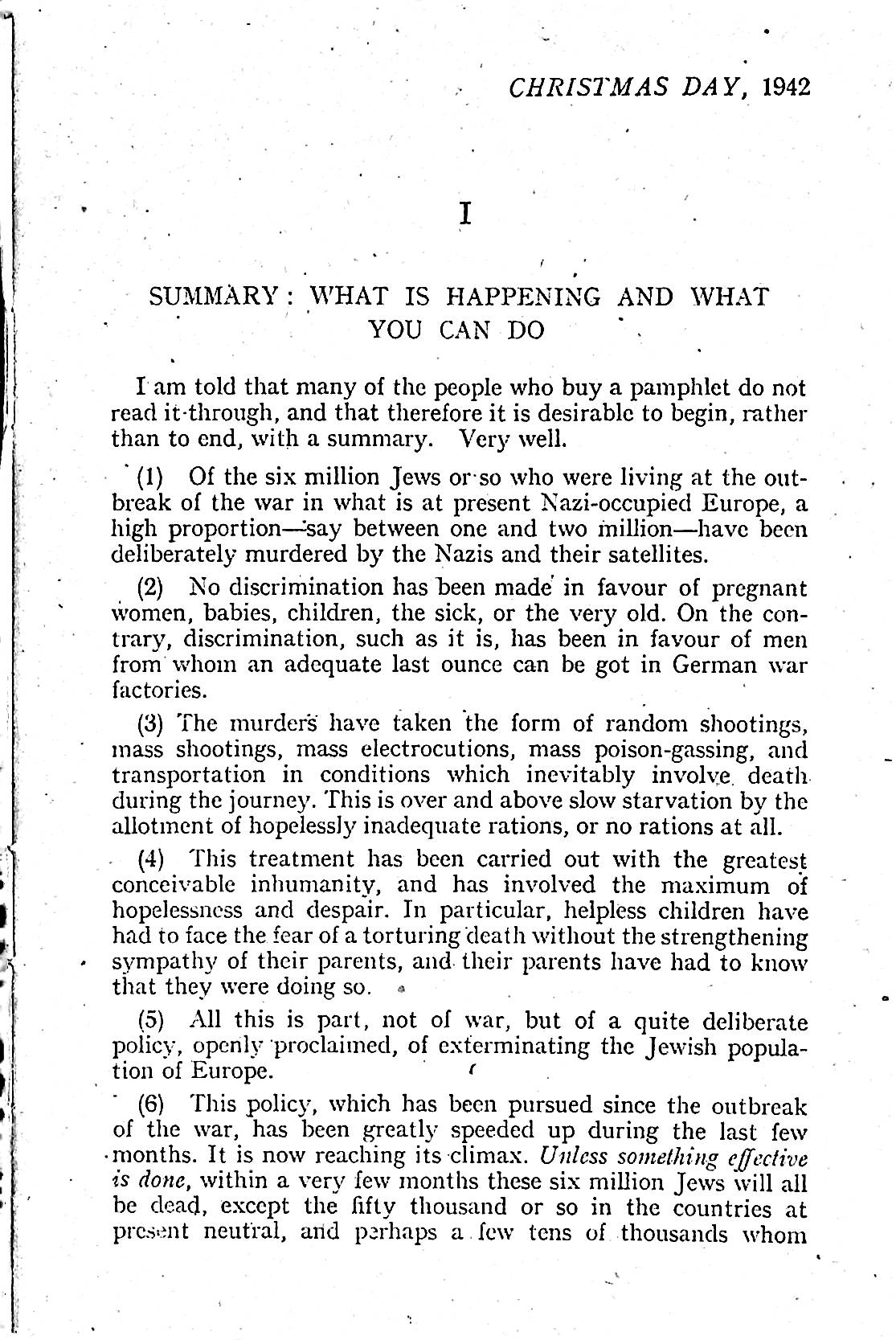
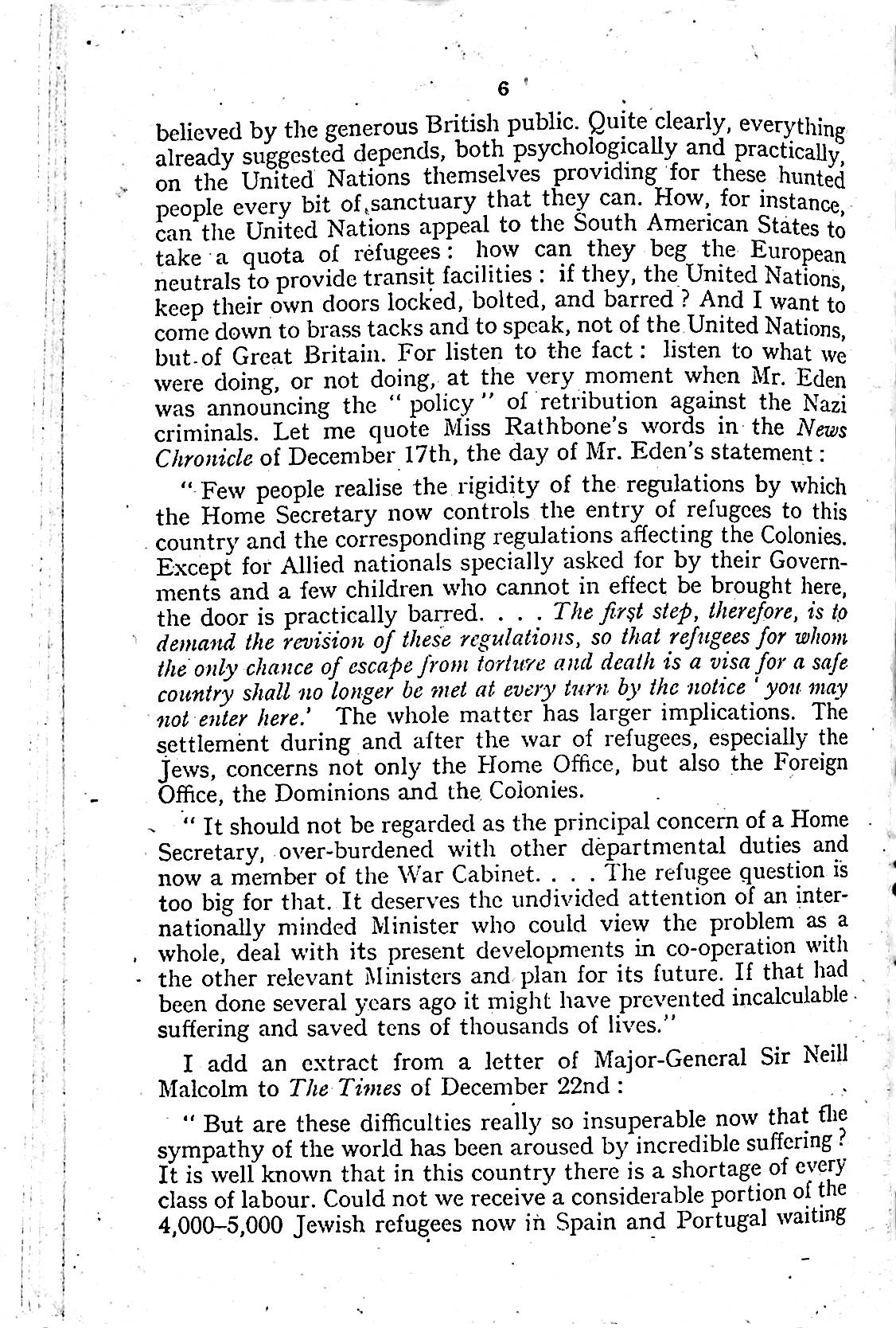
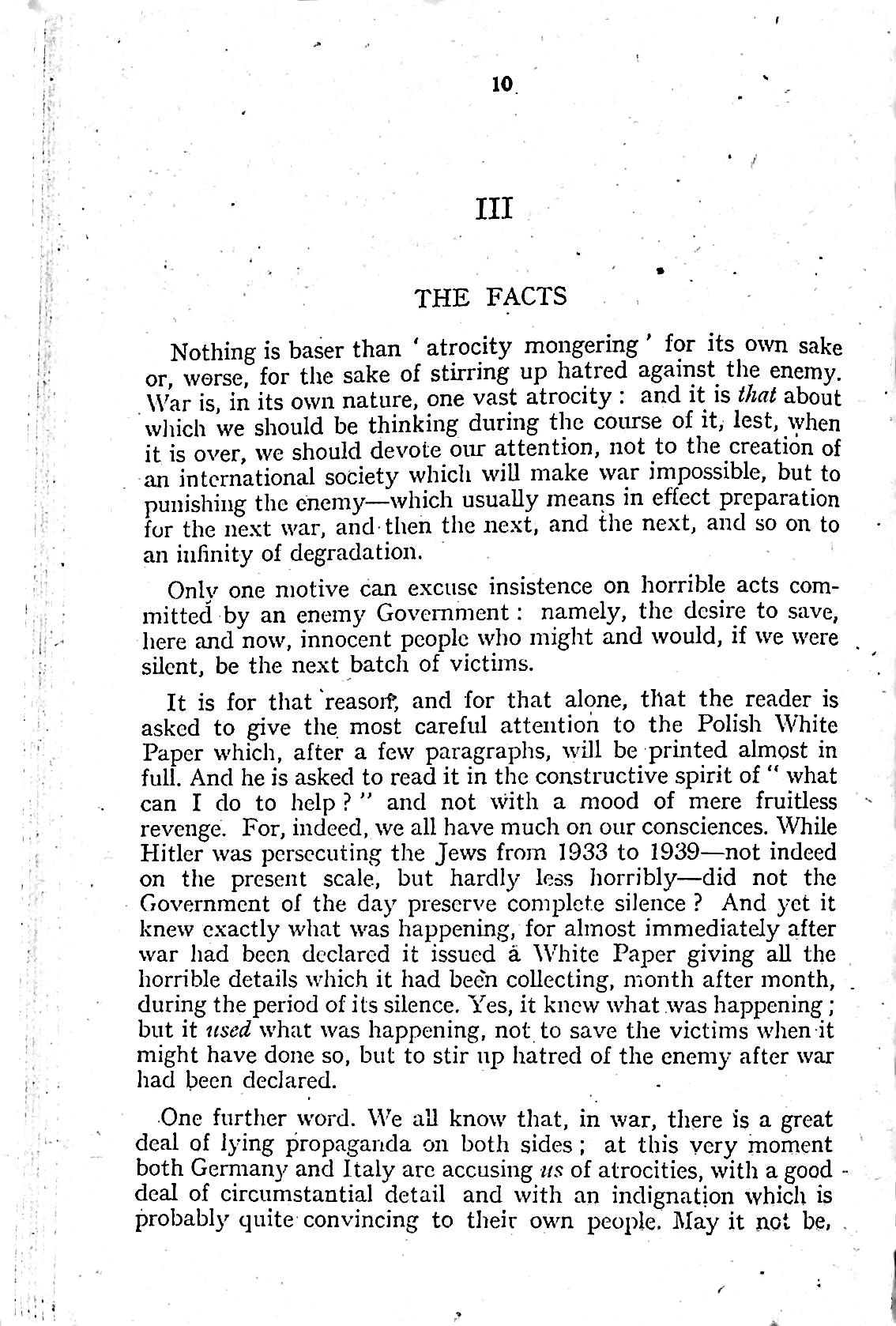
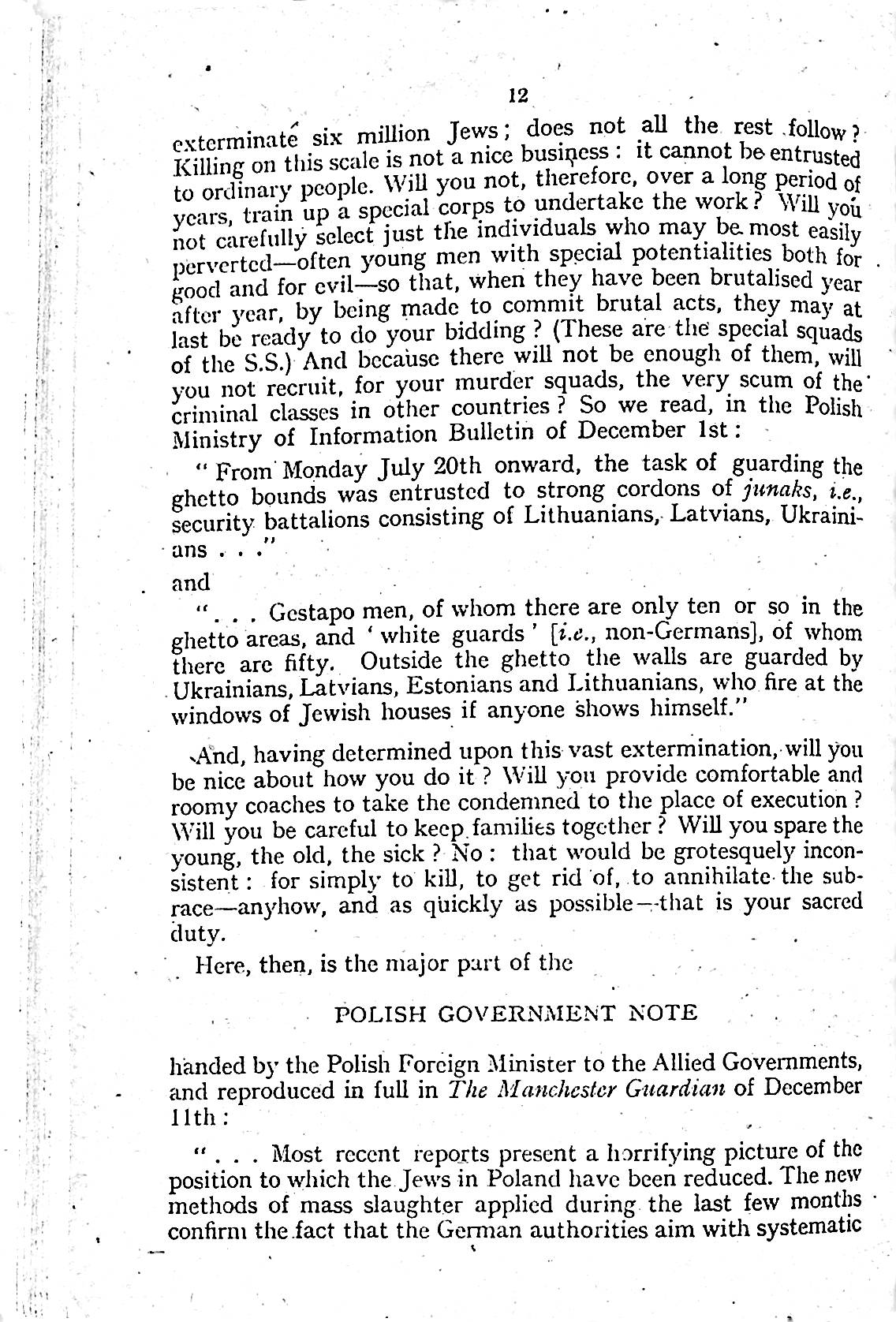
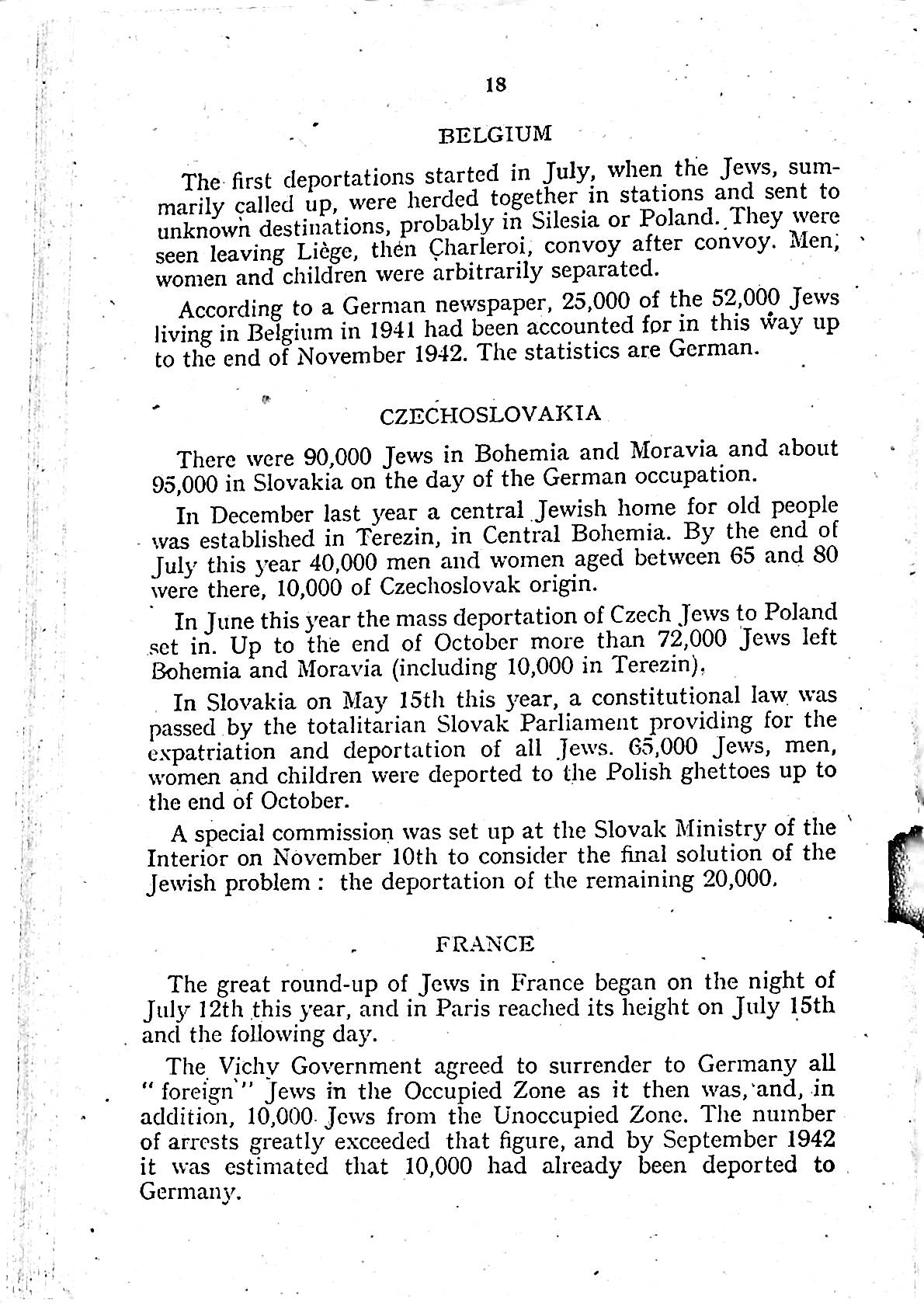
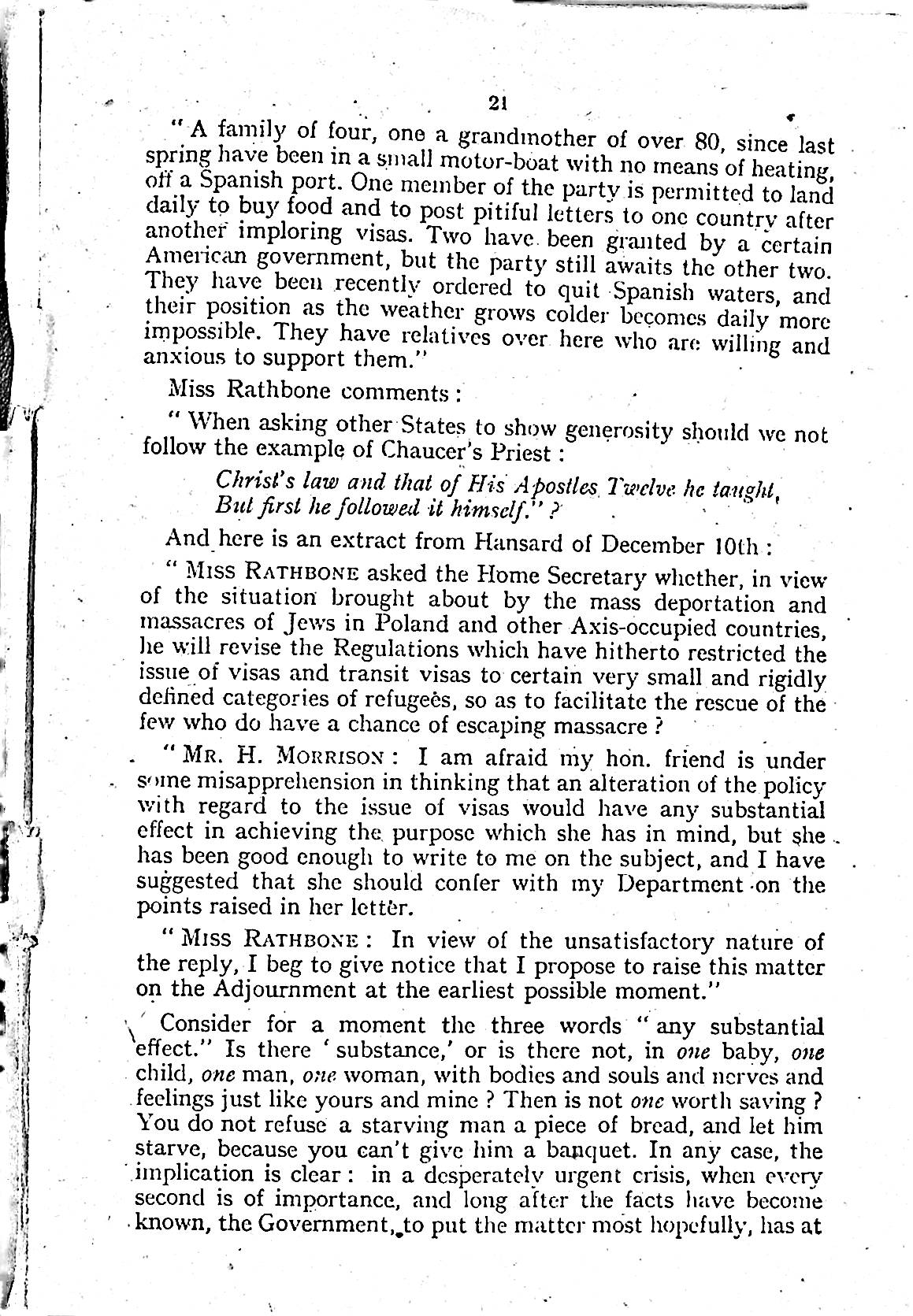
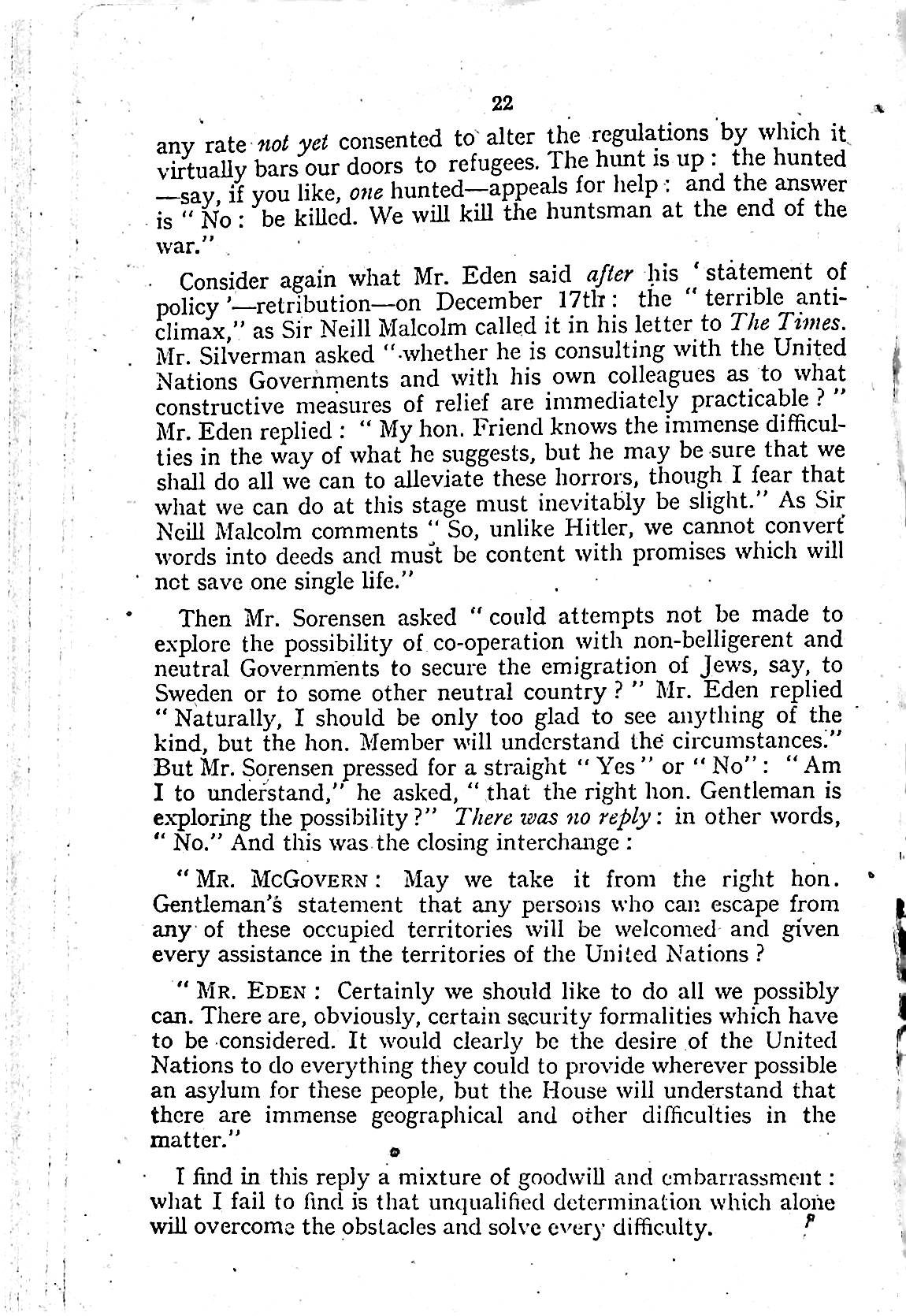
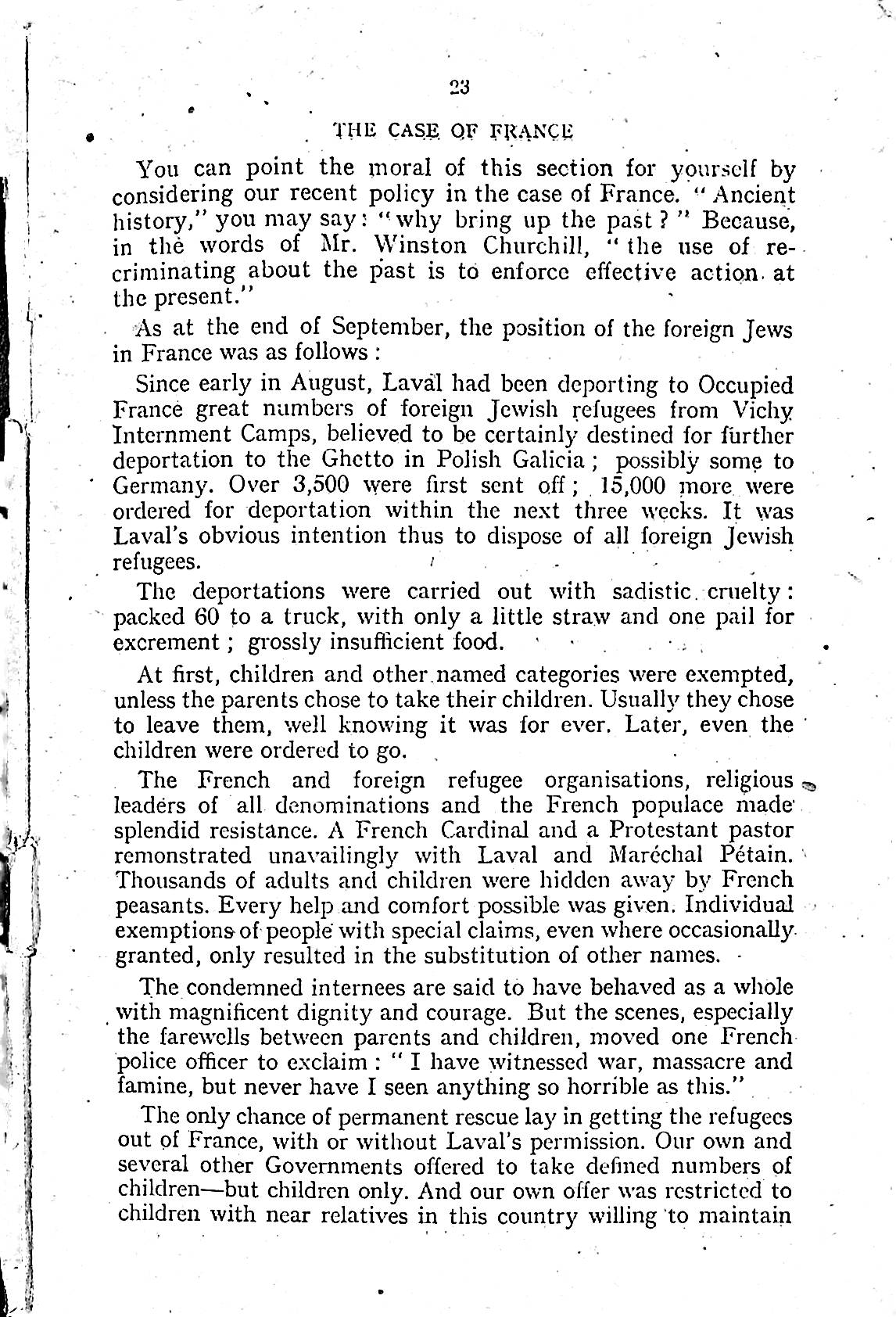
Although he was involved with many causes, Gollancz did not forget about his own people. During the Second World War, he predicted that six million Jews would be murdered, and he worked very hard to save the Jews of Europe. After the Second World War he supported the establishment of a Jewish state in the Holy Land. One of the ways Gollancz attempted to stop the holocaust and save European Jewry was writing and publishing the pamphlet titled “Let My People Go.” Published in early 1943, the date of its writing was Christmas, 1942. At the time, it was believed that ‘only’ two million Jews had been killed.
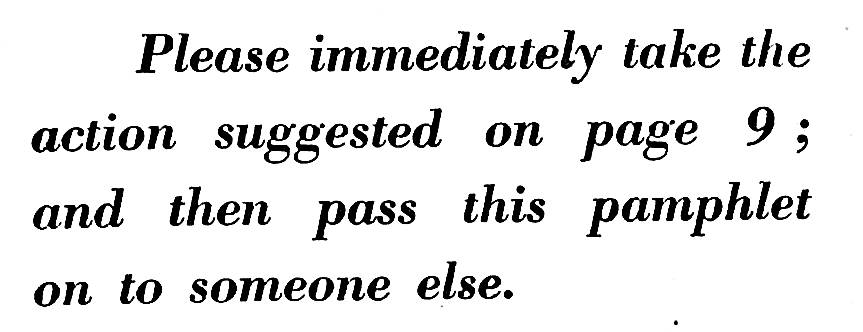
He describes the genocide against the Jews and, on page nine, encourages readers to take action.
“By writing letters to your M.P. [Member of Parliament] (House of Commons, S.W.I), to the Home Secretary, the Foreign Secretary (Whitehall, S.W.I), and your local paper, by organizing meetings, passing resolutions – all the usual methods of democracy – urging particularly that our own regulations for the admission of refugees should be relaxed and the boldest possible measures of rescue adopted. In this way you will put to shame any doubts, if doubts there can really be, about your humanity.”
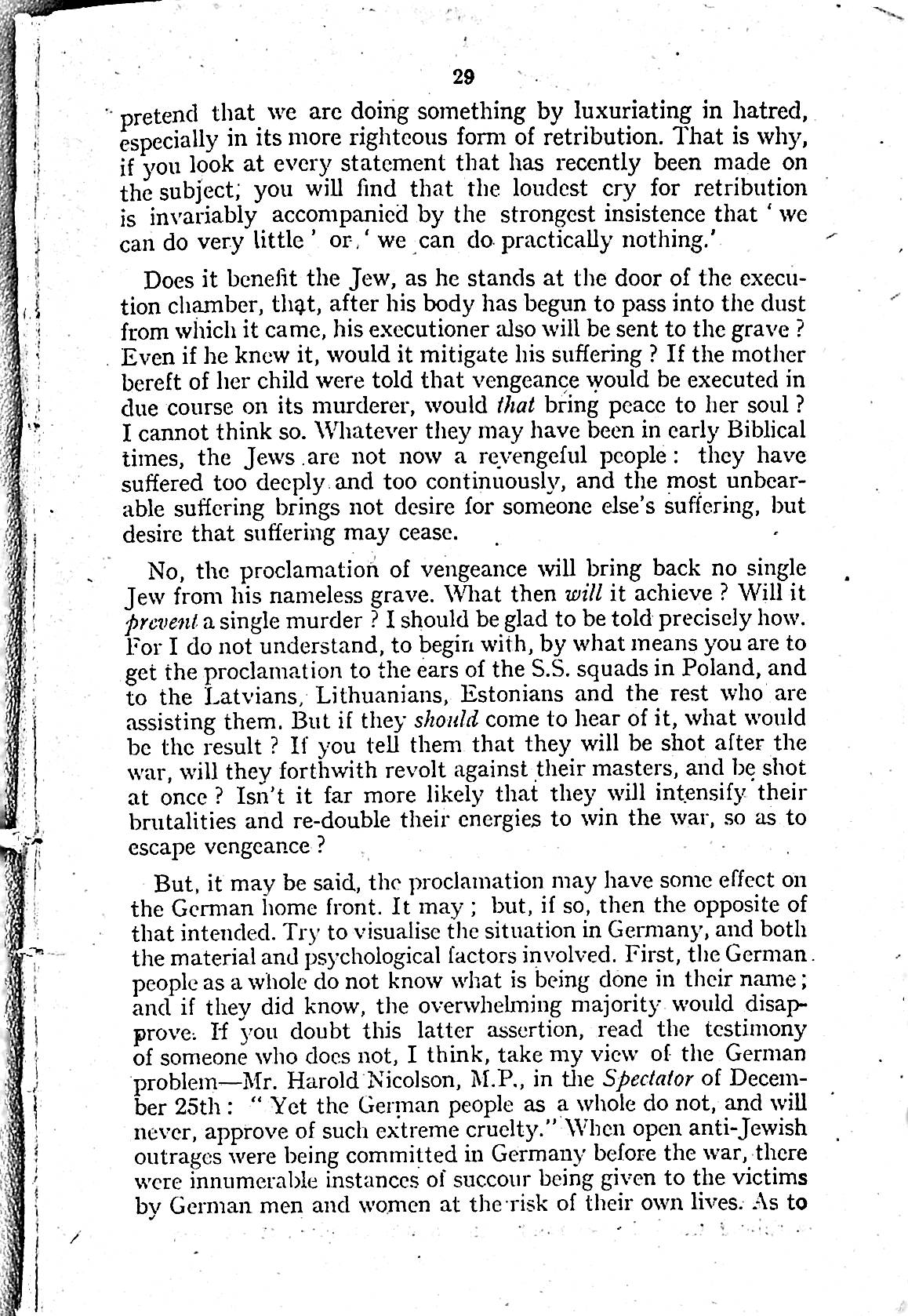
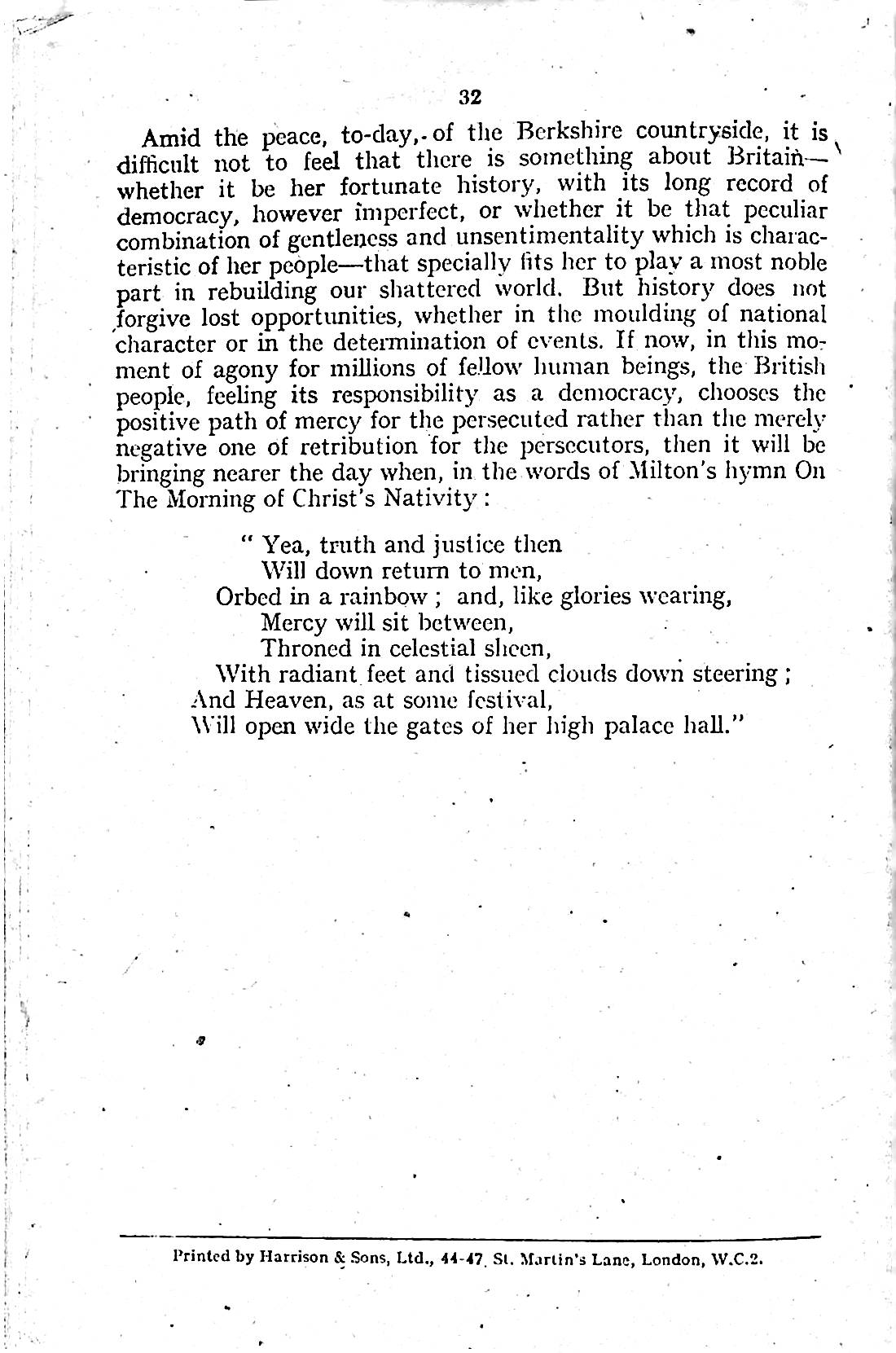
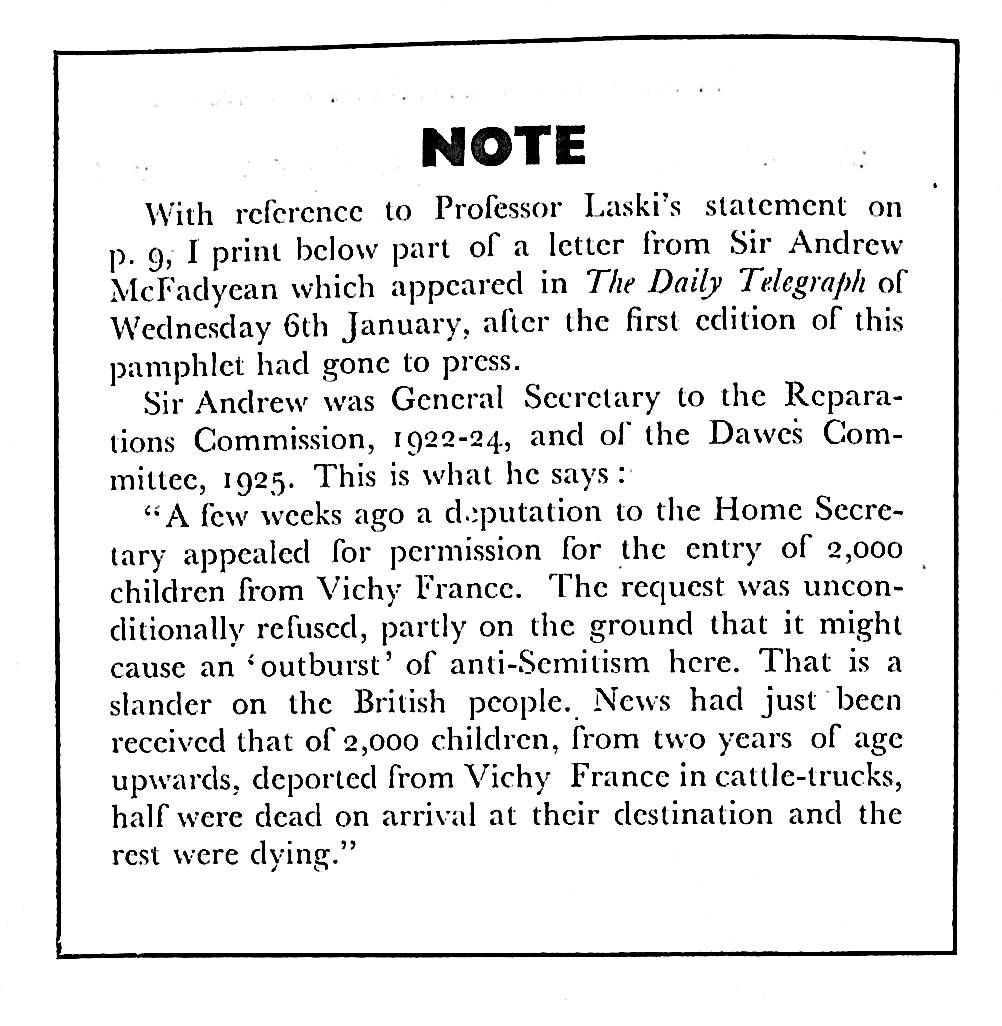
The entire booklet is reproduced below.















 Jewish Miscellanies