 L. Frumkin, the wine merchant, was an East End of London institution, at 162 Commercial Road. My great-grandfather’s public house, the King’s Head, was at 128 Commercial Road, and my late great-aunt told me that when she was young they would stop serving beer for Pesach, cover one of the bars with a cloth and serve kosher wine from Frumkin’s down the road.
I’ll write more about Frumkin’s when I write about another book of Rabbi Frumkin, but this is the story of this book, it’s author, and also it’s eventual owner, Rabbi J. Leiner.
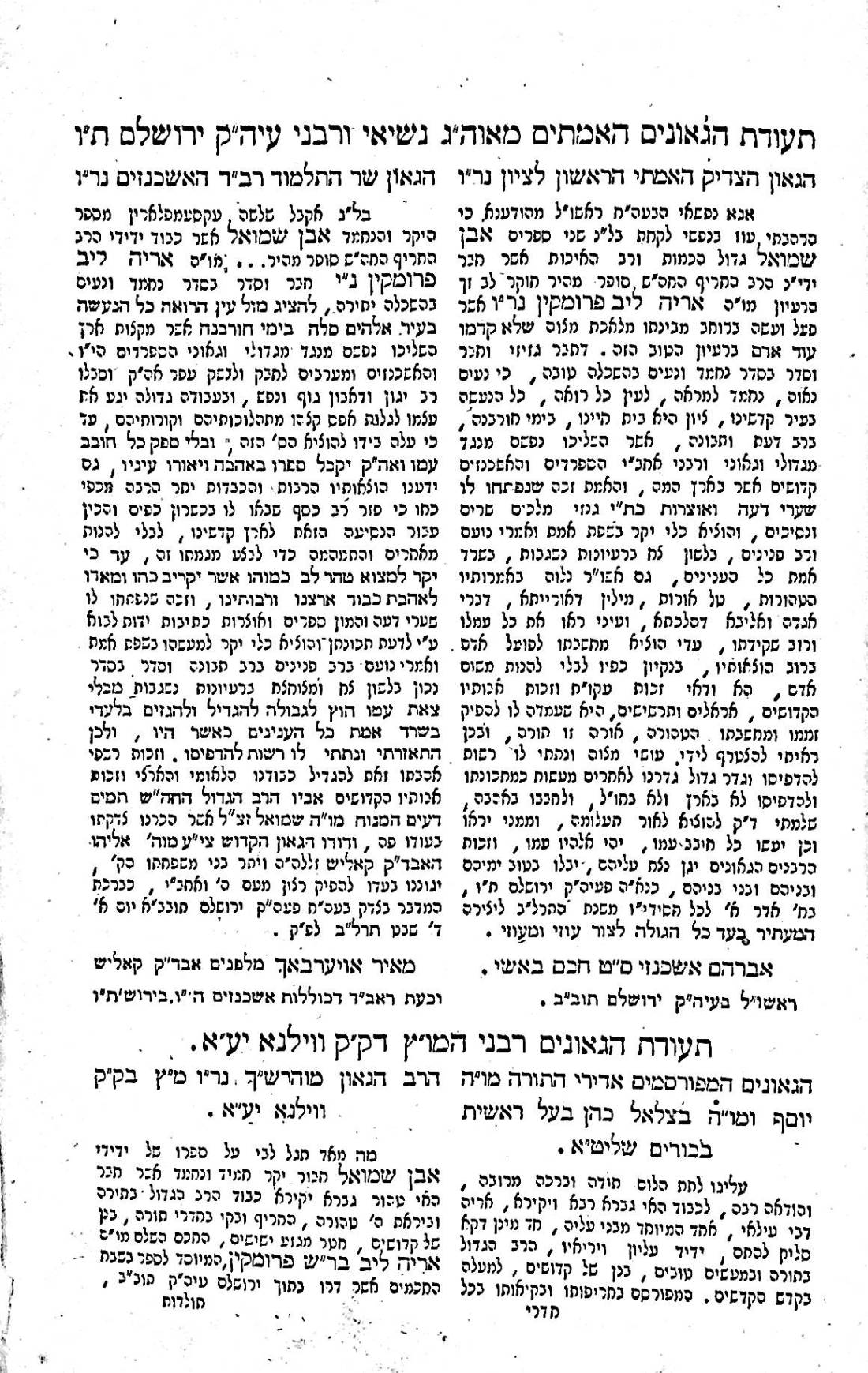
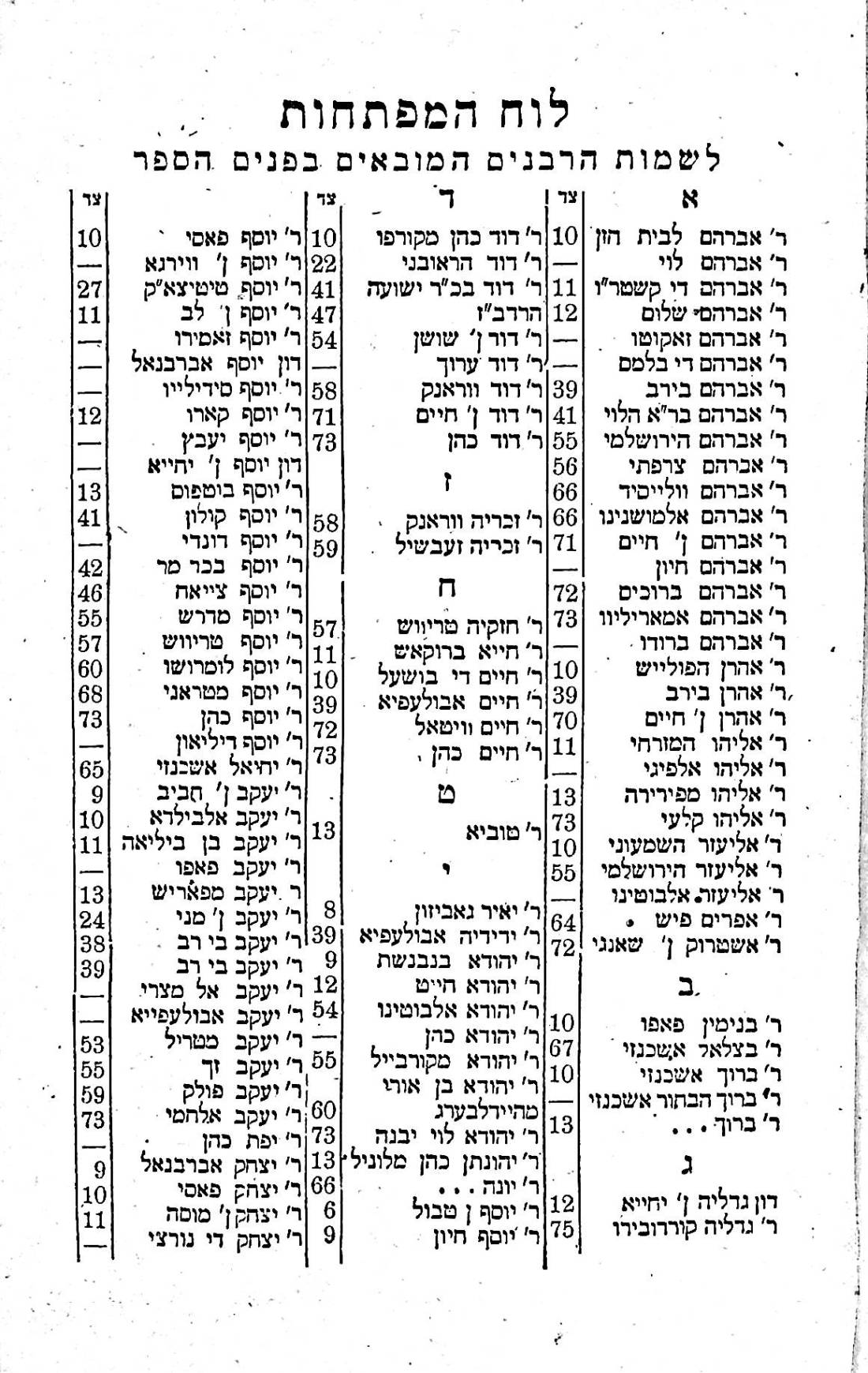
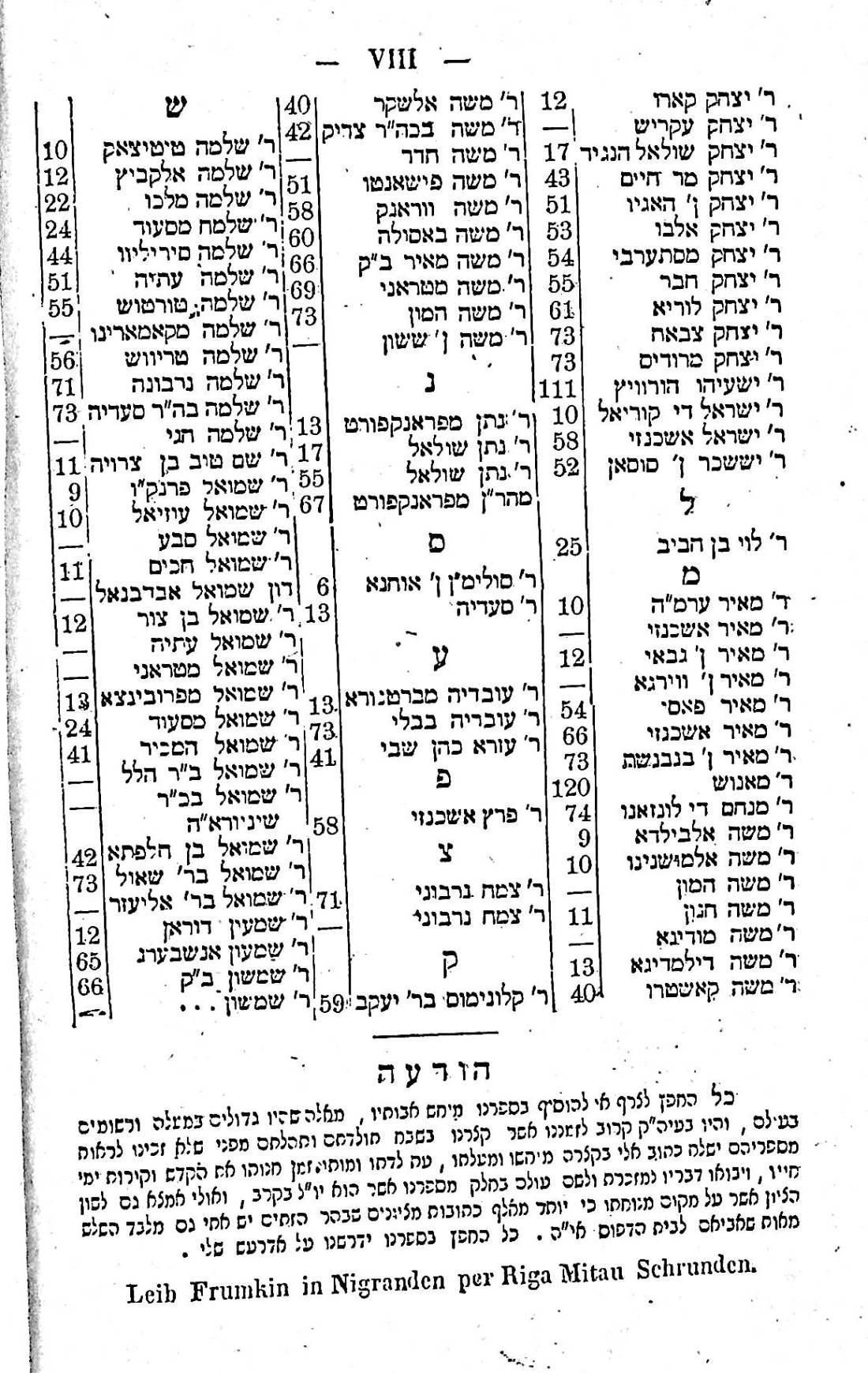
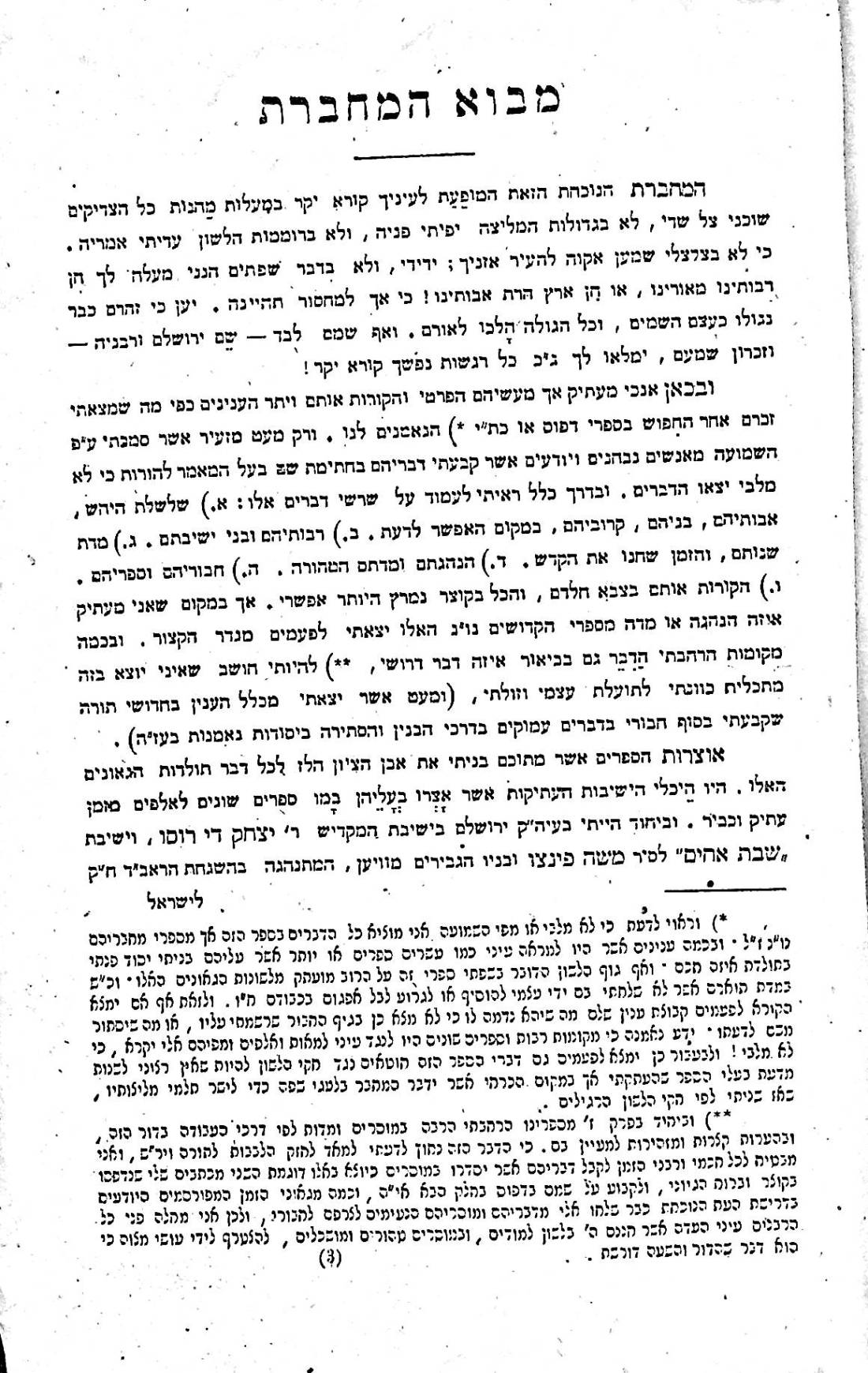
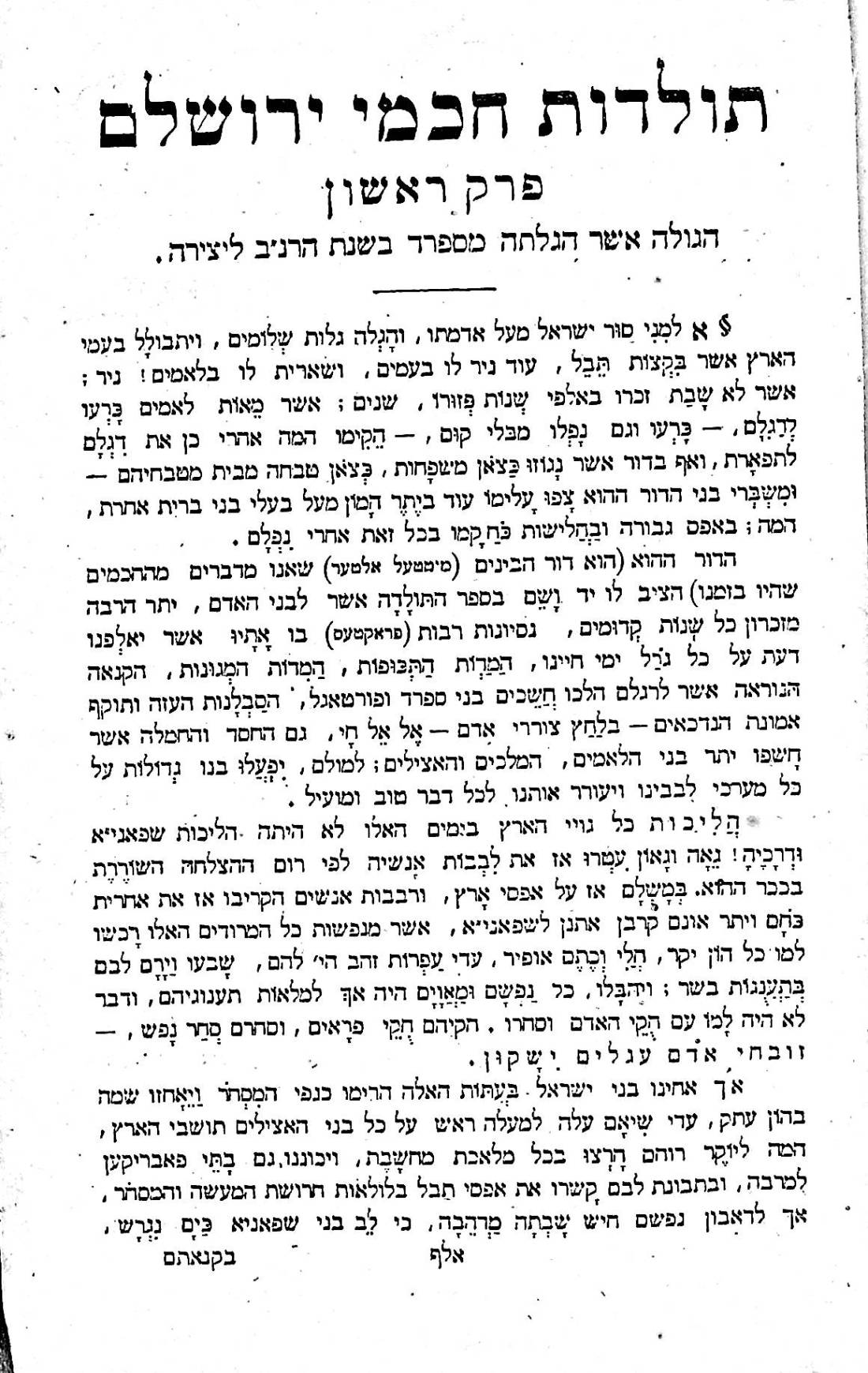
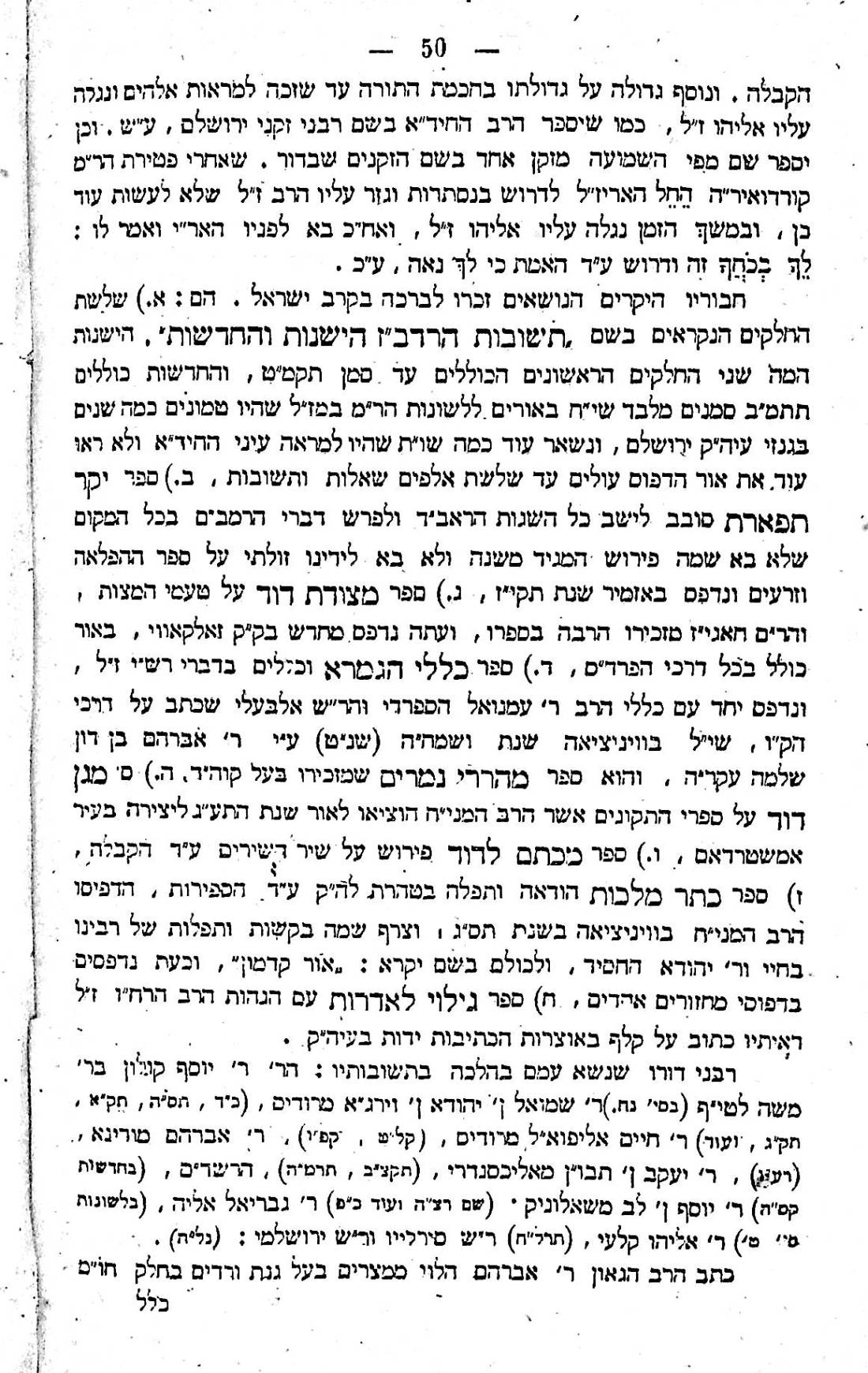
The book itself is called Even Shmuel, after the author’s father. It covers “their families, teachers, disciples and the books they wrote, and the history of the Holy City of Jerusalem, the writings on their tomb-stones in the Mount of Olives cemetery, the information was collected from various books and manuscripts in libraries”.
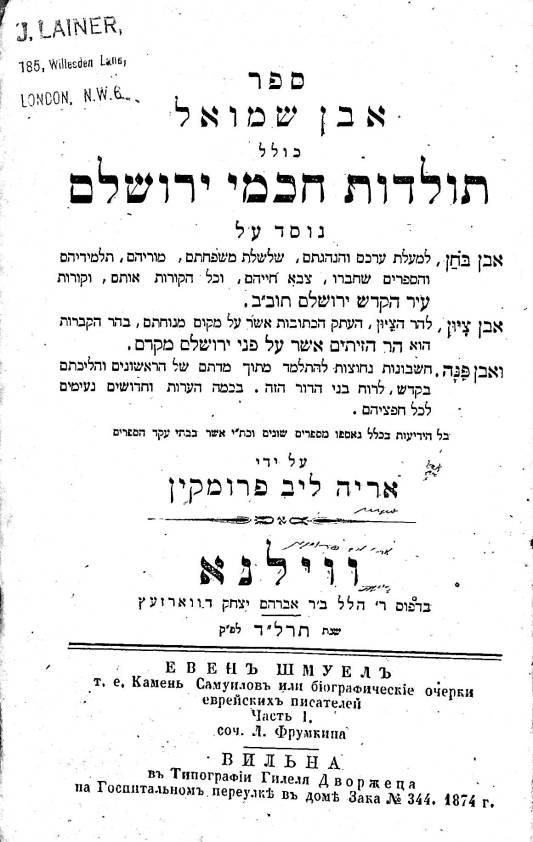 It appears to be a second edition with 12 extra pages at the end concerning a left handed person and the wearing of tefillin (phylacteries).
Rabbi Aryeh Leib Frumkin (1845–1916) was a rabbinical scholar and writer; and a pioneer of Jewish settlement in the Land of Israel. He studied rabbinics in his native Kelme, Lithuania, and at the Slobodka Yeshiva. He visited Palestine (the Land of Israel) in 1867, and after two years in Odessa, returned to Jerusalem in 1871. There he began research for this history of the rabbis and scholars of Jerusalem, which was published in Vilna in 1874. Returning to Lithuania, Rabbi Frumkin received Semicha (his rabbinical degree) and became Rabbi at Ilukste, Latvia. After the 1881 pogroms, Rabbi. Frumkin participated in a conference in Germany to consider the plight of Russian Jewry. He advocated settlement in the Land of Israel as a solution, opposing emigration to the United States. He bought land in Petach Tikvah, built the first house there, and lived there as a farmer and scholar for ten years.
In 1893 or 1894 he went to London and was active in Jewish life in the East End. He established his wine business, and returned to the Land of lsrael in 1911, where he lived first in Jerusalem and then returned to Petach Tikvah.
 The previous owner of my copy of the book, Rabbi Yerucham Leiner of Radzyn (Poland), was an outstanding scholarly Rebbe who lived in London for twelve years, including the war period. He was born in Radzyn in 1888. His great uncle was Rabbi Gershon Chanoch Heinoch Leiner, famous for his rediscovery of the blue dye for use in tzitzis (ritual cords of eight threads which are placed at the corners of garments). One cord was supposed to be blue, using a dye from a mollusc called chillazon. The Rambam (Maimonides), in his commentary on the Mishnah, wrote that the source had been lost. Rabbi Gershon travelled to Naples in 1887 and 1888 and claimed to have rediscovered chillazon. A factory was established in Radzyn for the manufacture of blue thread for tzitzis.
Rabbi Yerucham Leiner was known as a child prodigy and he succeeded his father in 1920 as Rabbi of the town of Chelm. Kn 1933 or 1934, Rabbi Leiner left Poland and settled,in London, briefly in Finsbury. In 1935, with the financial help of Abba Bornstein, he opened his Shtiebl (small synagogue) at 185 Willesden Lane. It was called Beth Hamidrash Kehal Yisrael and also known as Leiner’s Minyan. It was opened officially on 7th April 1935 in the presence of Dayan Abramsky. Dayan L:azarus (then Rabbi of the Brondesbury Synagogue), Rabbi Louis Rabbinowitz of the Cricklewood Synagogue, and the bibliophile Abraham Shalom Yahuda.
Rabbi Leiner was a prolific writer, including books and many articles. He took very rigid positions. Writing in the Jewish Chronicle he criticized Chief Rabbi Hertz for his position on sacrifices and wrote (JC, 21st March 1947) that the Chief Rabbi should be selected by Talmidei Chachomim (Torah scholars).
He moved to New York in 1947, and his synagogue in Willesden Lane was closed. He died on August 20th (20th Av), 1962, and is buried in Woodbridge, New Jersey.







 Jewish Miscellanies
One thought on “Even Shmuel, Toldos Chochamei Yerushalayim (the history of the rabbis of Jerusalem), by Aryeh Leib Frumkin, Vilna, 1874 (copy of Rabbi Yerucham Leiner of Willesden Lane).”