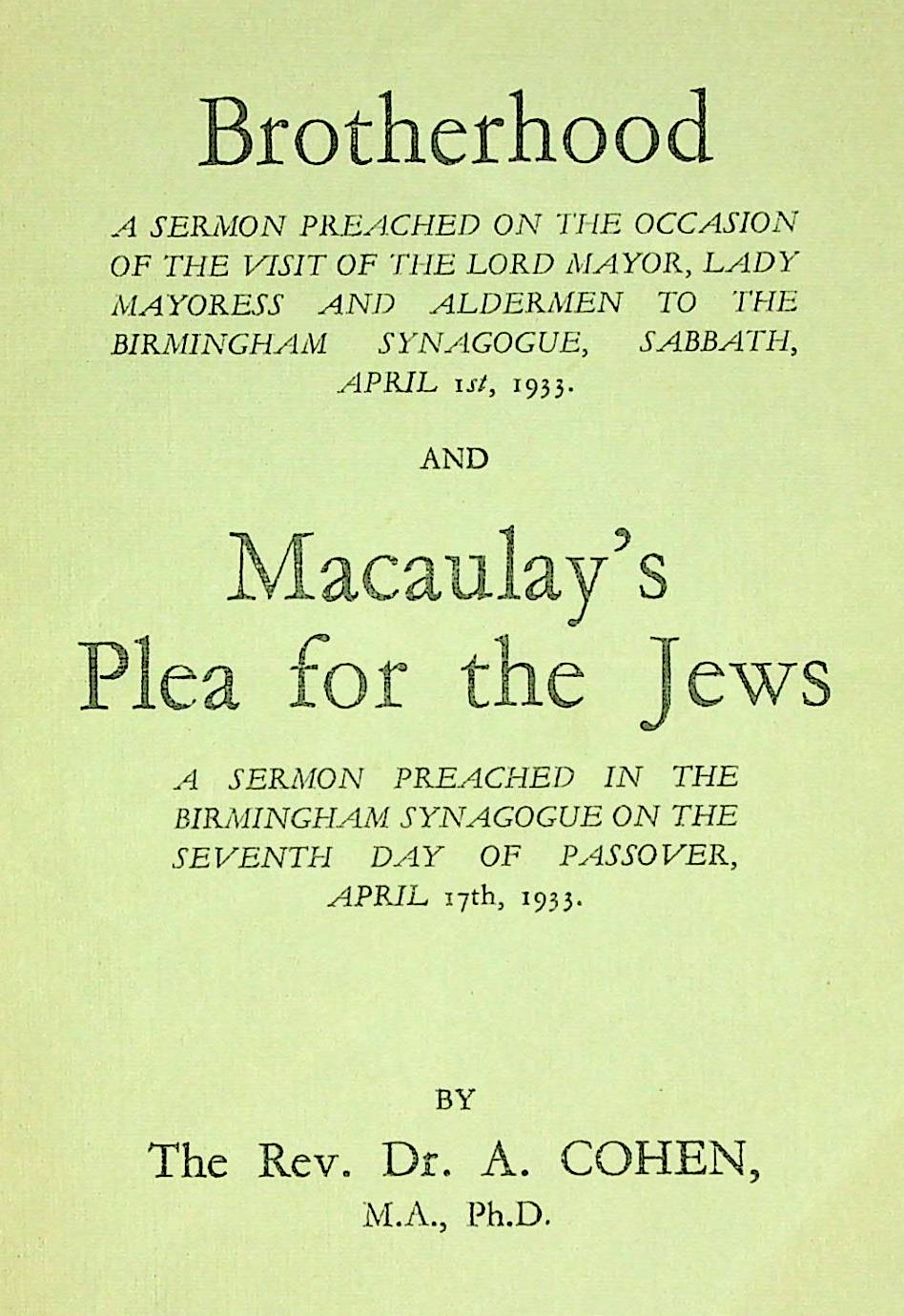
 Rabbi Dr. Abraham Cohen was born in Reading, Berkshire, in 1887. He was a notable Anglo-Jewish clergyman, scholar, and communal leader. He was brought up in the East End of London, and educated at the Jews’ Free School and the Central Foundation School before going to Jews’ College. He went to Cambridge University and later received his Ph.D. from London University. He became a minister in Manchester in 1909 and in 1913 minister to the Birmingham Hebrew Congregation, at the historic Singers Hill Synagogue, where he remained for 36 years. I have previously written about the stained glass windows at Singers Hill.
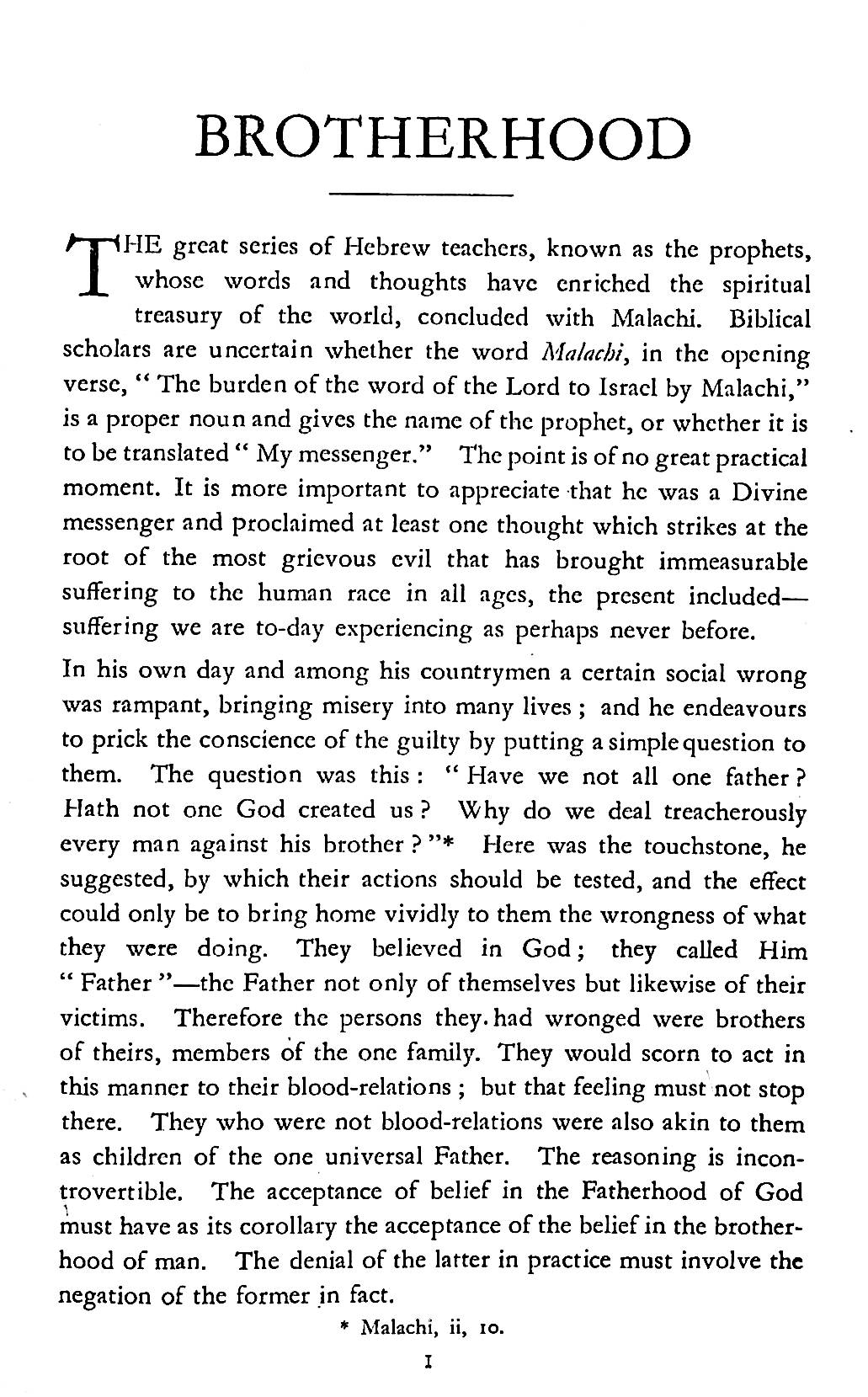
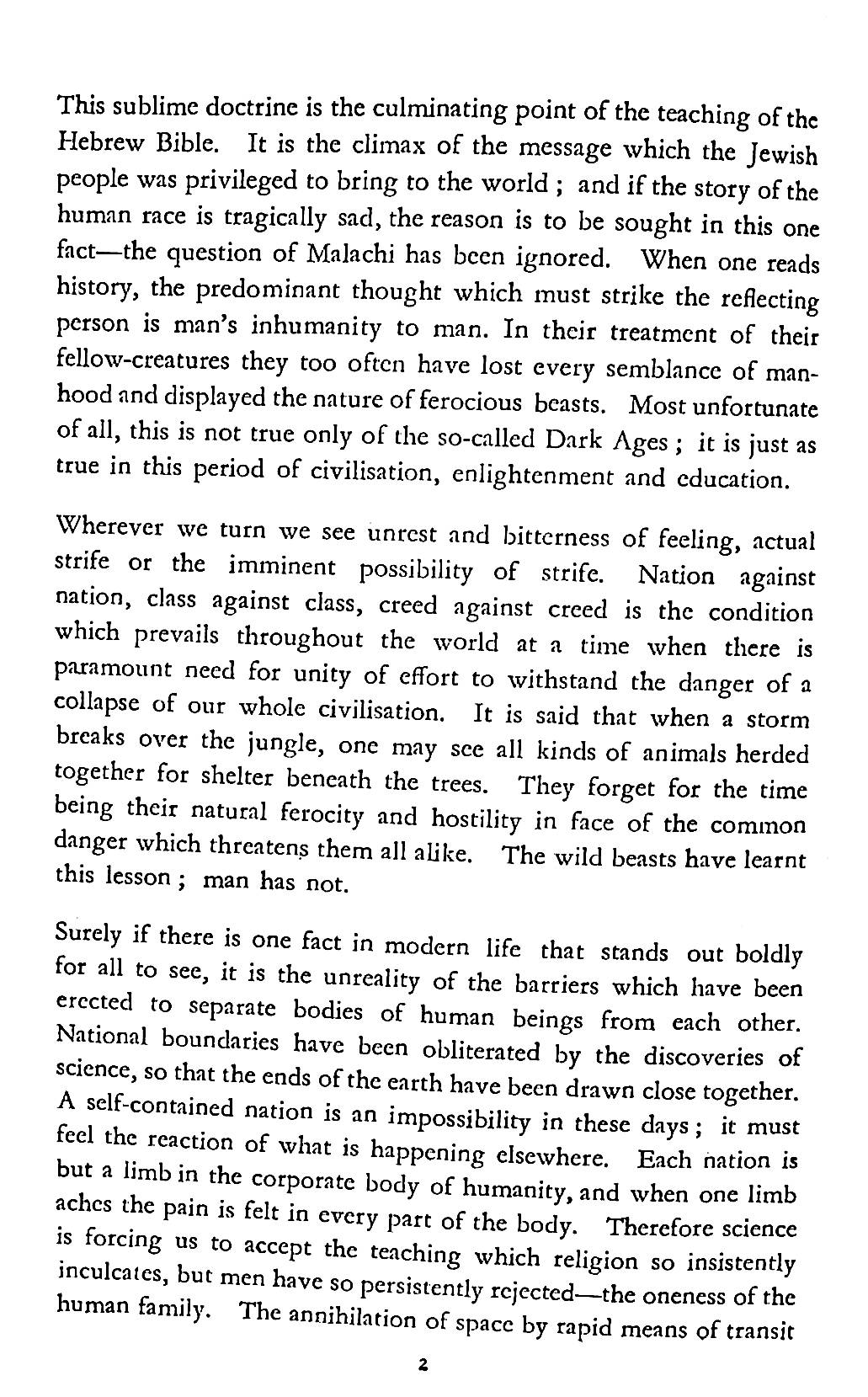
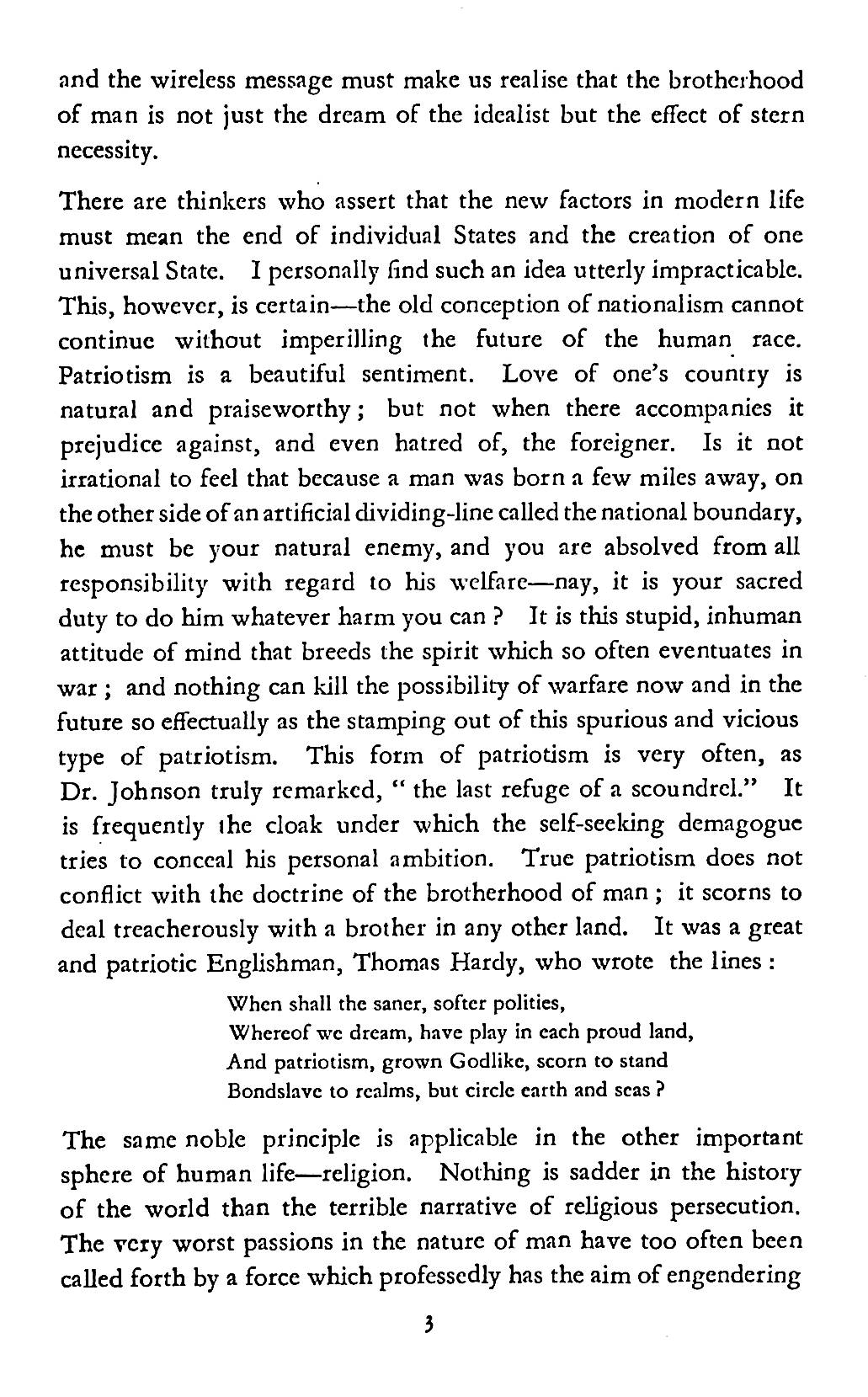
As the spiritual head of the Birmingham Jewish community, he cooperated closely with the city’s clerical and civic leaders, and was said to have encouraged his congregants to play a full part together with their fellow-citizens in worthy causes. The first sermon, Brotherhood, was preached on the occasion of the visit of the Lord Mayor of Birmingham to Singers Hill Synagogue on April 1st, 1933. The second was preached two weeks later, on the seventh day of Pesach (Passover).
As well as being a scholar, Abraham Cohen was active in the World Jewish Congress and in the Zionist movement. In 1949 he resigned from Singers Hill and moved to London following his election as President of the Board of Deputies (the first minister of religion to become the “lay leader” of Anglo Jewry). He accepted the position of emeritus minister at Birmingham.
 500 manuscripts of his sermons are in the special collections at the University of Southampton.
My copy has the stamp of Yeshivas Etz Chaim, which was an important indigenous Yeshiva (Rabbinical College) in London.
Click here for the Yeshiva magazine, HaChayim, from 1940.


 Jewish Miscellanies