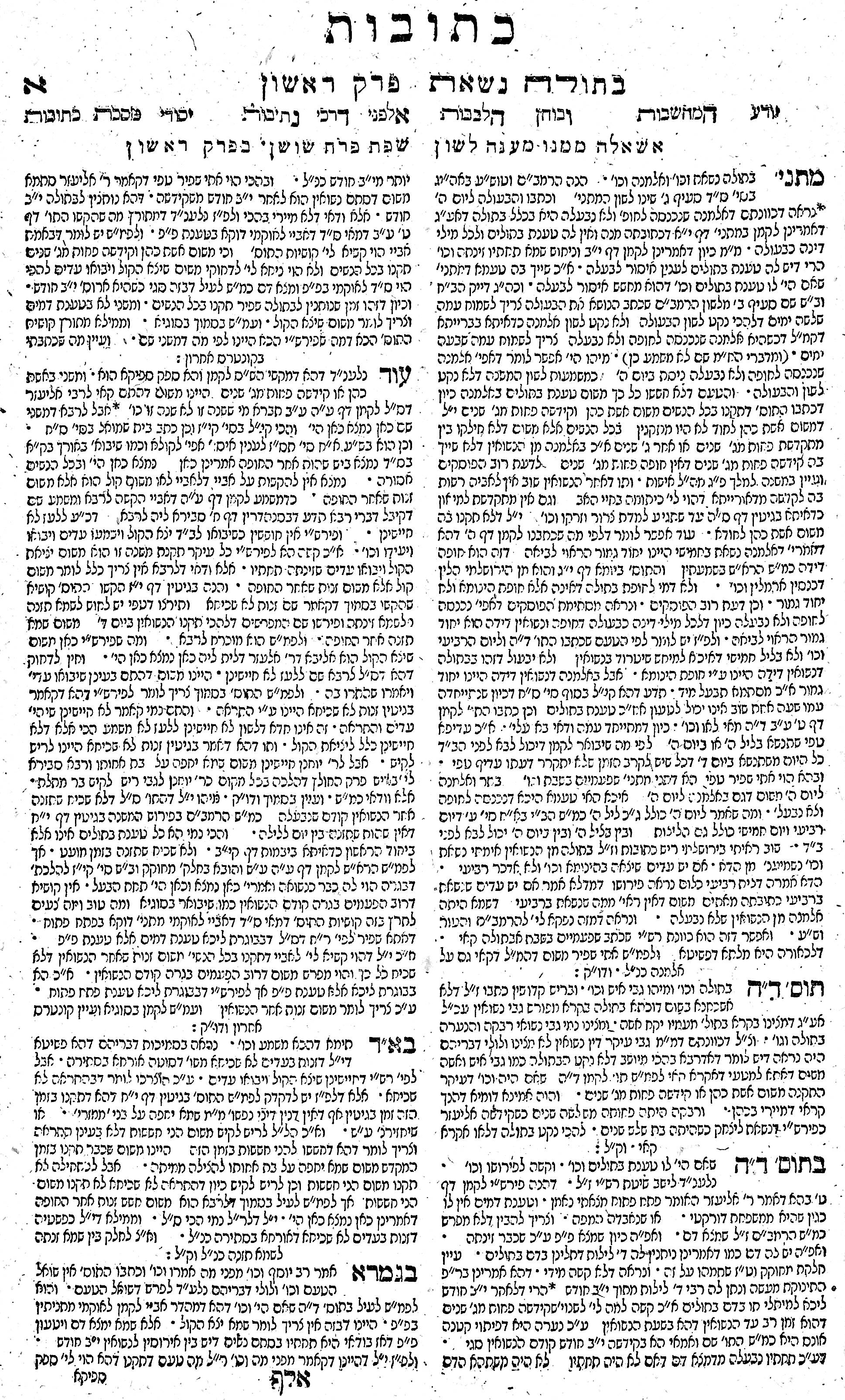
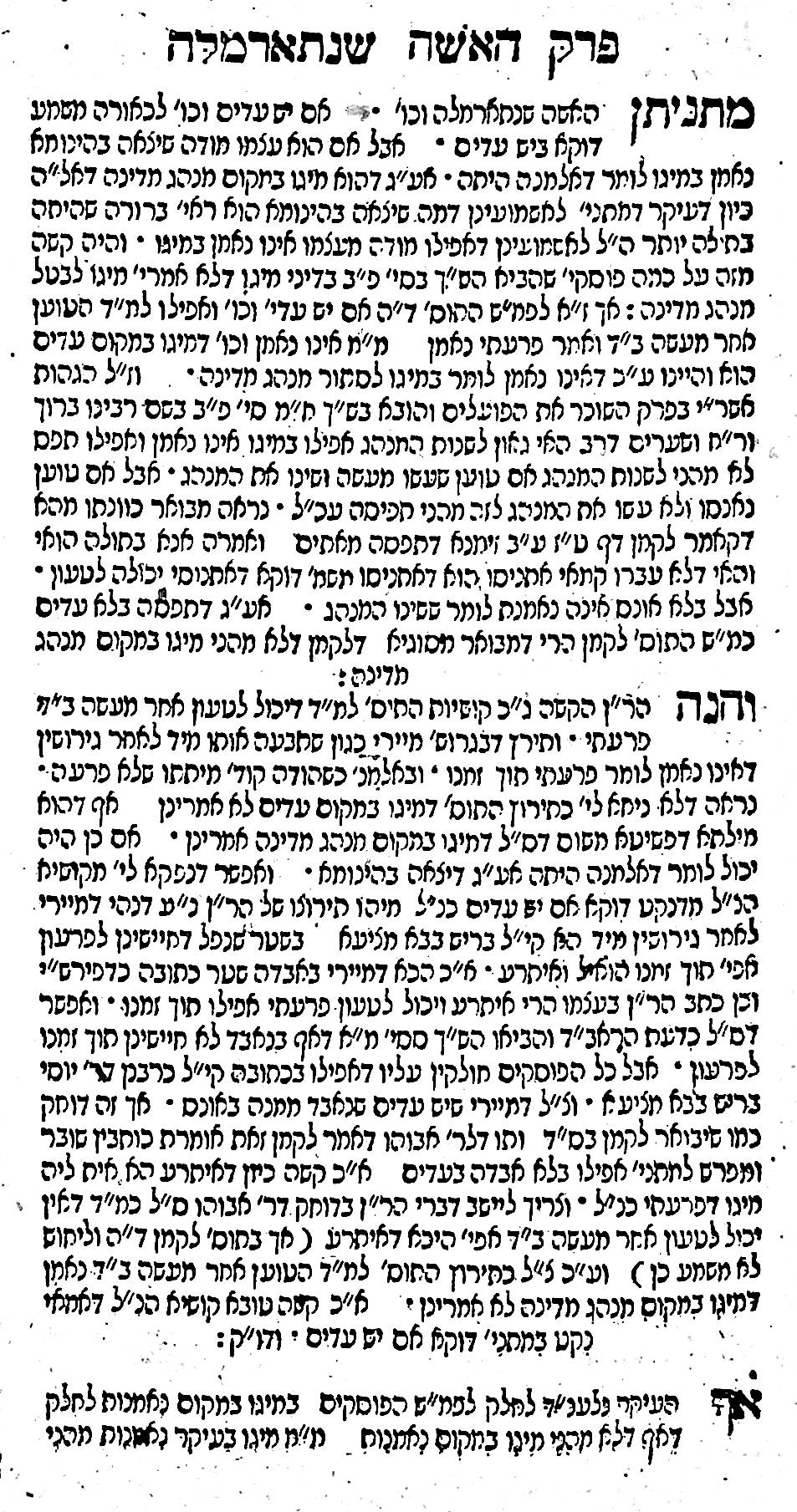
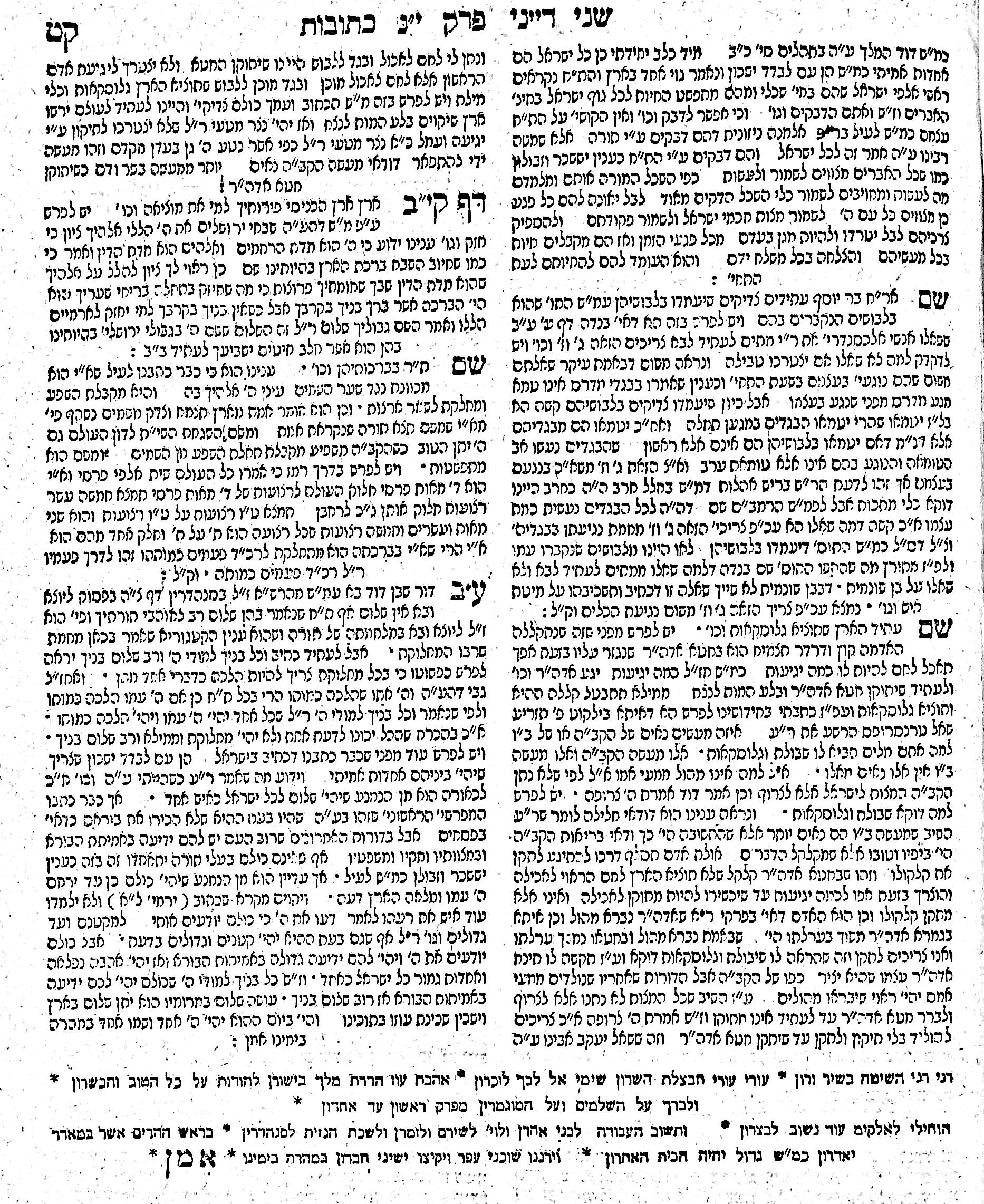
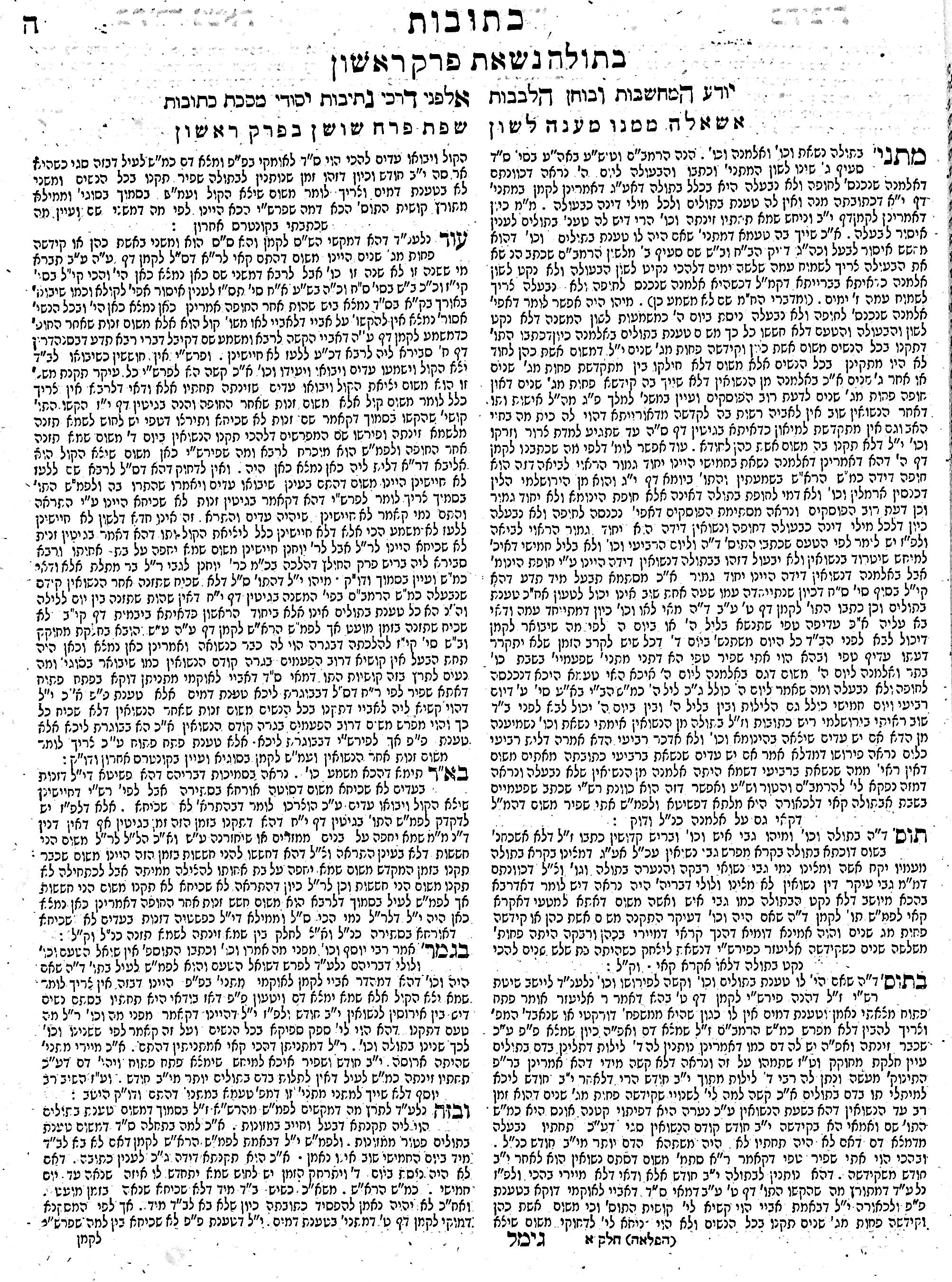
 I have two editions of this fundamental and basic book, which consists of Novellae (Chidushim) on Tractate (Masseches) Kesuvos. This important Tractate of the Talmud covers marriage contracts, but also many other important discussions which are relevant today. For, example, whether a hostage who says that she was not violated while a hostage can marry a Cohen.
In his introduction to Shu”t Noda B’Yehuda, Rabbi Yaakov Landau writes that his father said that Rabbi Pinchas Halivi Horowitz did wonders (niflah) with the Sefer Hafla’a.
Rabbi Pinchas, the son of Rabbi Tvi Hirsch Horowitz, was born in Czortkow, Poland, where his father was rabbi, and studied with his father and two brothers, Nachum and especially Shmuel Shmelke Horowitz of Nikolsburg. The two brothers were attracted to the circle of and visited Rabbi Dov Ber of Meziririch. Rabbi Pinchas also met Rabbi Schneur Zalman of Lyady.
In 1771 Rabbi Pinchas was appointed Rabbi of Frankfurt, a poition that he held until his death in 1805. Included among his prominent pupils were Rabbi Moses Sofer, author of the Chasam Sofer.
 An important previous owner of my 1816 copy was Rabbi Eliyahu Menachem Goitein (1838-1902). He was the son of Rabbi Zvi Hirsh – Rabbi of Högyesz, and was a disciple of the Ksav Sofer, Rabbi Avraham Shmuel Binyomin Sofer, the eldest son of the Chasam Sofer, so that there is a direct connection between the author and the later owner of this volume. Rabbi Eliyahi Menachem Goitein succeeded his father as Rabbi of Högyesz in 1860.
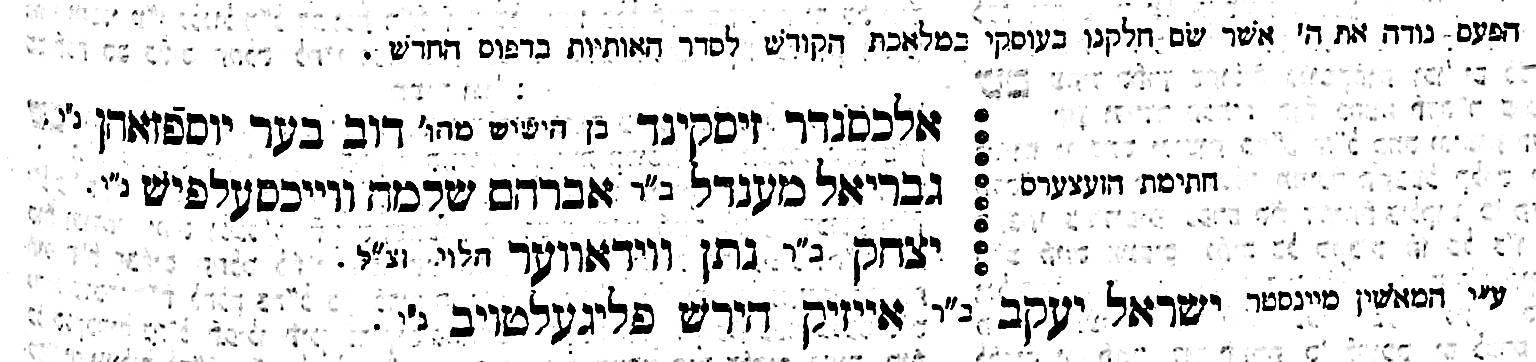
 Sefer Hafla’a was first published in Offenbach in 1786. My 1816 copy includes a short correction – a paragraph omitted due to a printer’s error. Interestingly, my 1861 printing is an exact copy of the 1816 edition, including omitting the missing paragraph and printing the same correction as 1816. My 1861 printing was previously owned by the Hebrew Teachers College of Boston, Massachusetts.
Rabbi Pinchas Horowitz was a pilpulist who represents the developed stage of rabbinical dialectics. He opposed secular education and progressive Judaism and any slight change in the traditional form of worship. However, in 1803 he endorsed Wolf Heidenheim’s translation of the Machzor.









 Jewish Miscellanies