 This is a single bound volume in my collection, printed in London in 1791 by Alexander Alexander. It includes two short books by Rabbi Chaim Yosef David Azulai, known as the Chida (from his initials).
The Chida was born in Jerusalem, and came from a prominent rabbinic family. He was the great-great-grandson of Moroccan Rabbi Abraham Azulai. His main teachers were the Jerusalem rabbis, Isaac HaKohen Rapoport, Shalom Sharabi, and Chaim ibn Attar (the Ohr HaChaim) as well as Jonah Nabon. He was recognized as a scholar at an early age. He came to have a great influence on the Sephardic community in London.
In 1755, he was chosen as a shaliach (fund-raising emissary) for the small Jewish community in the Land of Israel, and he travelled around Europe and North Africa extensively.
In 1755 he was in Germany, where he met the Pnei Yehoshua, Rabbi Yaakov Yosef Falk. In the 1750s, as recorded in his travel diary, Ma’agal Tov, the Chida was in London where he visited the Royal Menagerie at the Tower of London (the predecessor of the modern London Zoo) and saw lions and eagles.
In 1764 he was in Egypt, and in 1773 he was in Tunisia, Morocco, and Italy. He probably remained in Italy until 1777, occupied with the printing of the first part of his biographical dictionary, Shem HaGedolim, (Livorno, 1774), and with his notes on the Shulhan Aruch, entitled Birke Yosef, (Livorno, 1774–76). In 1777 he was in France, and in 1778 in Holland. Wherever he went, he would examine collections of manuscripts of rabbinic literature, which he later documented in his Shem HaGedolim.
Rabbi Chaim Yosef David Azulai died in Leghorn (Livorno) in 1806.
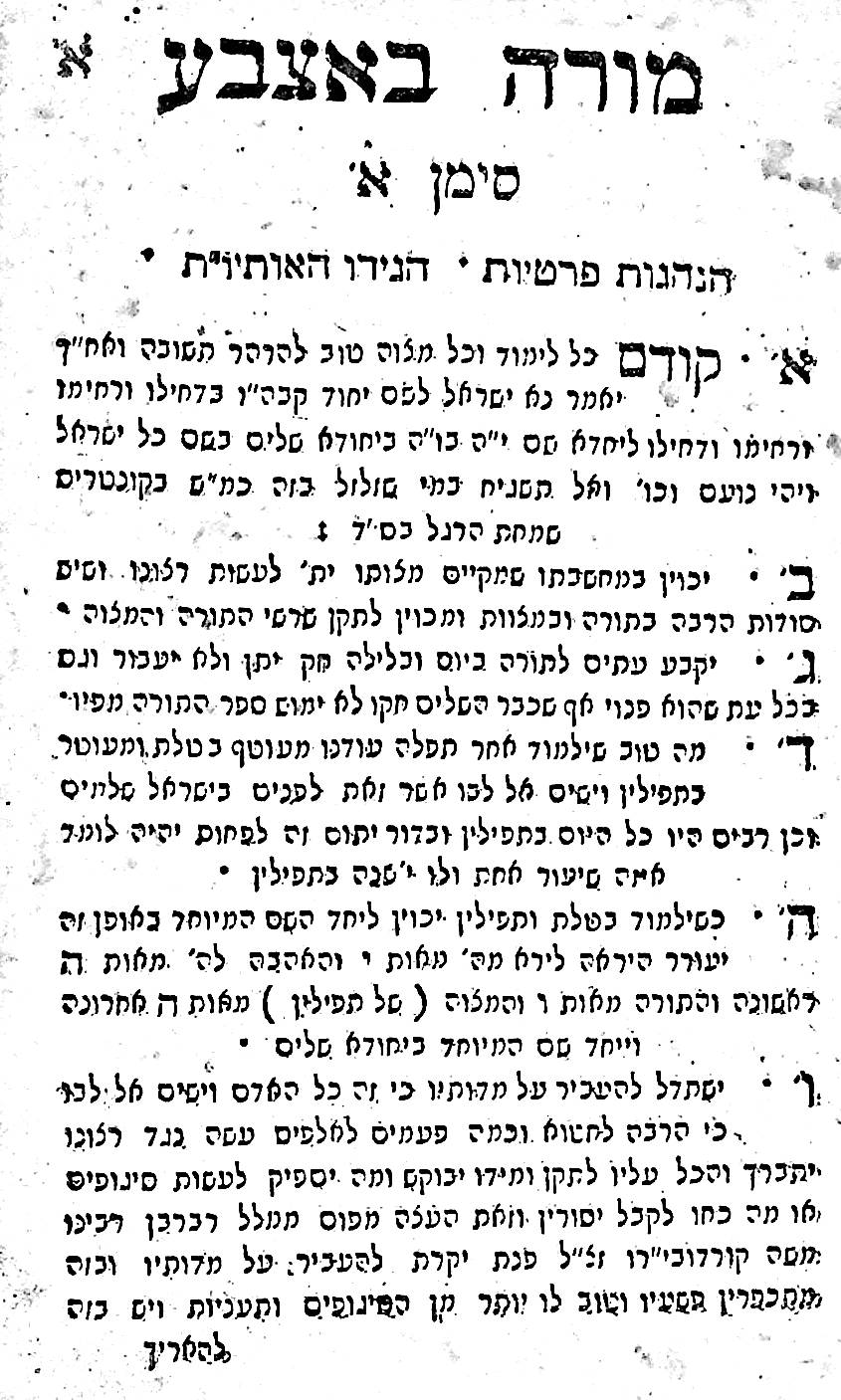
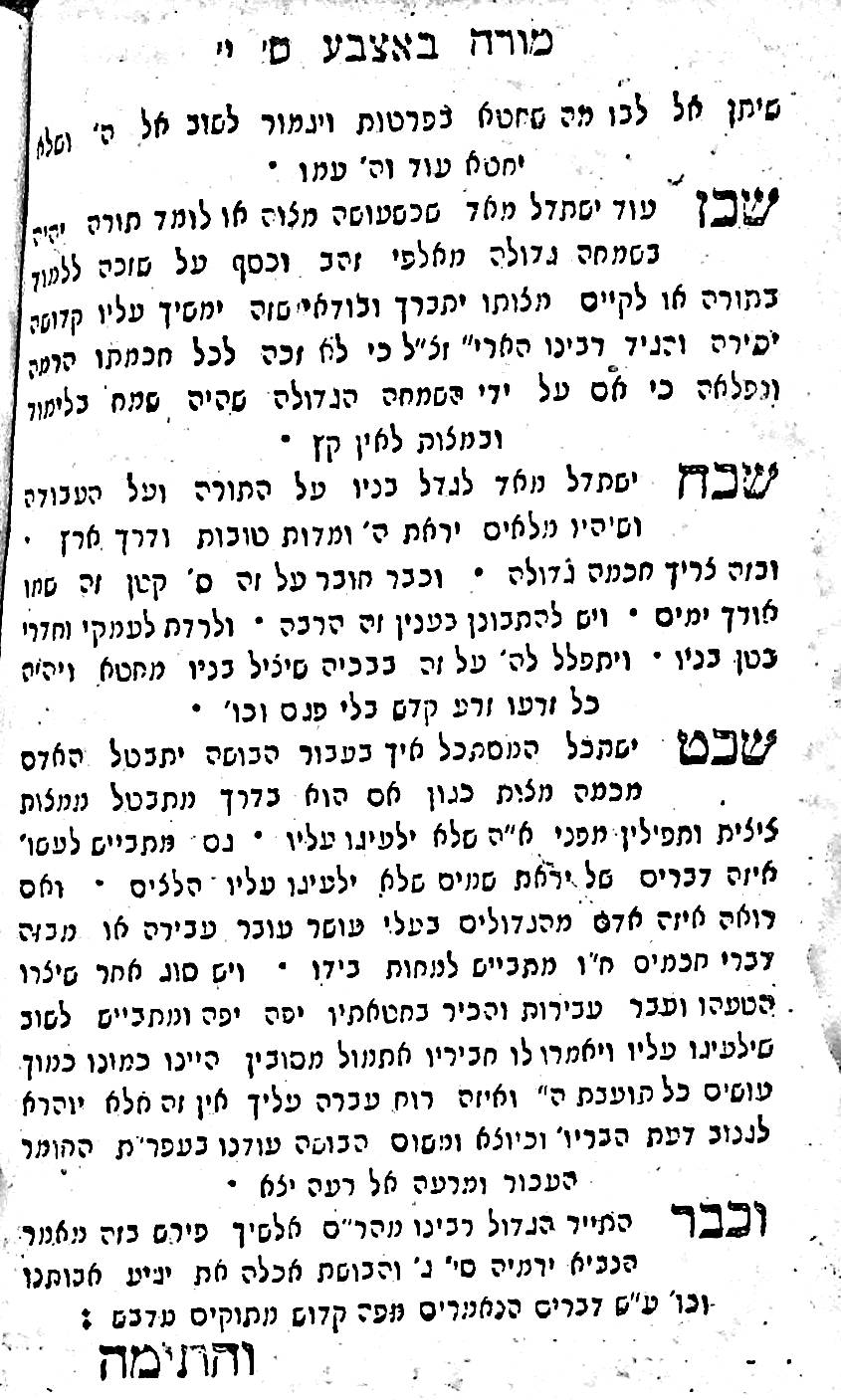
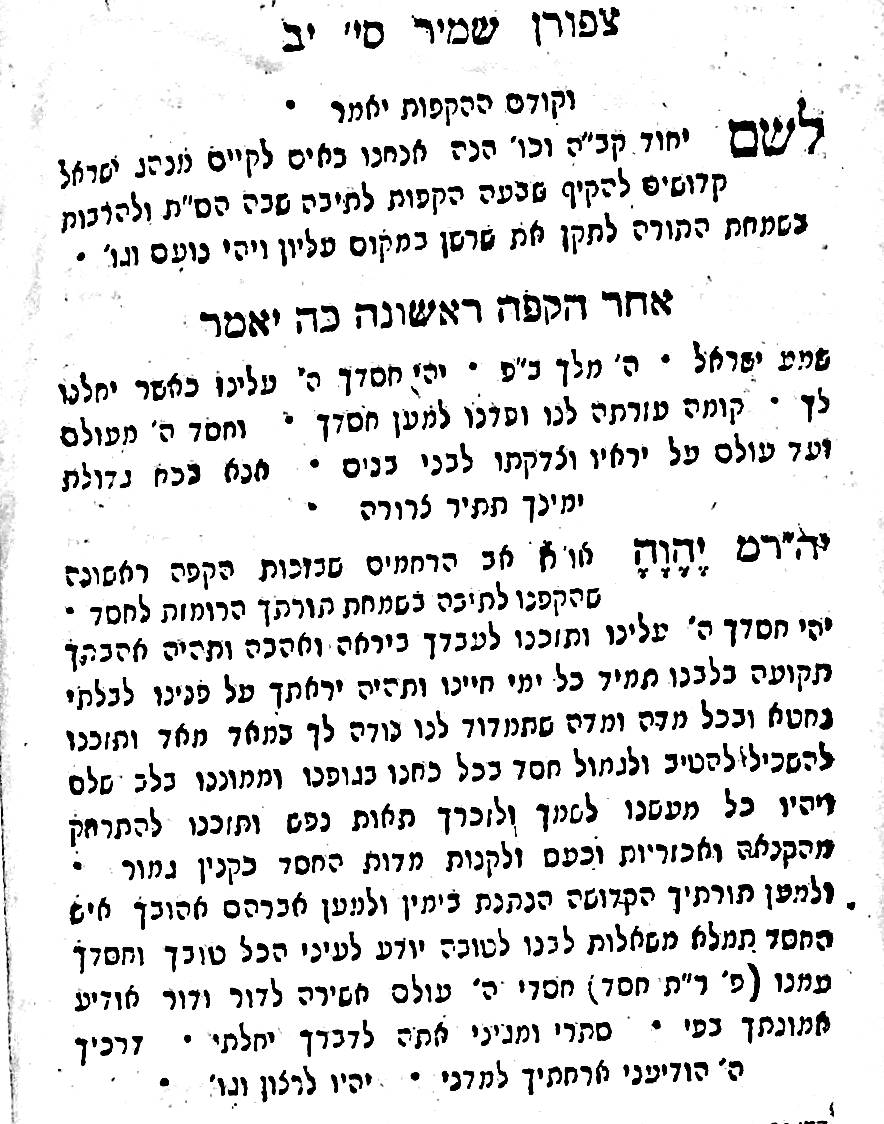
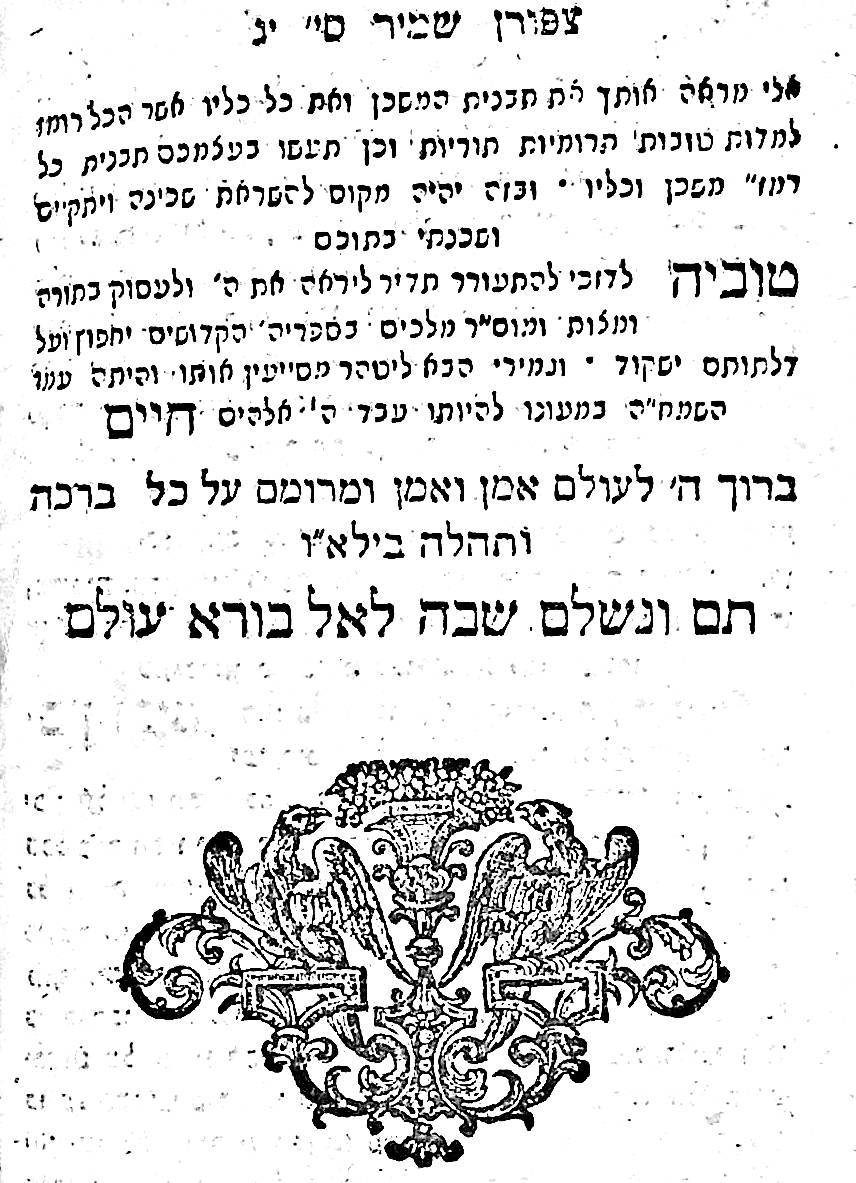
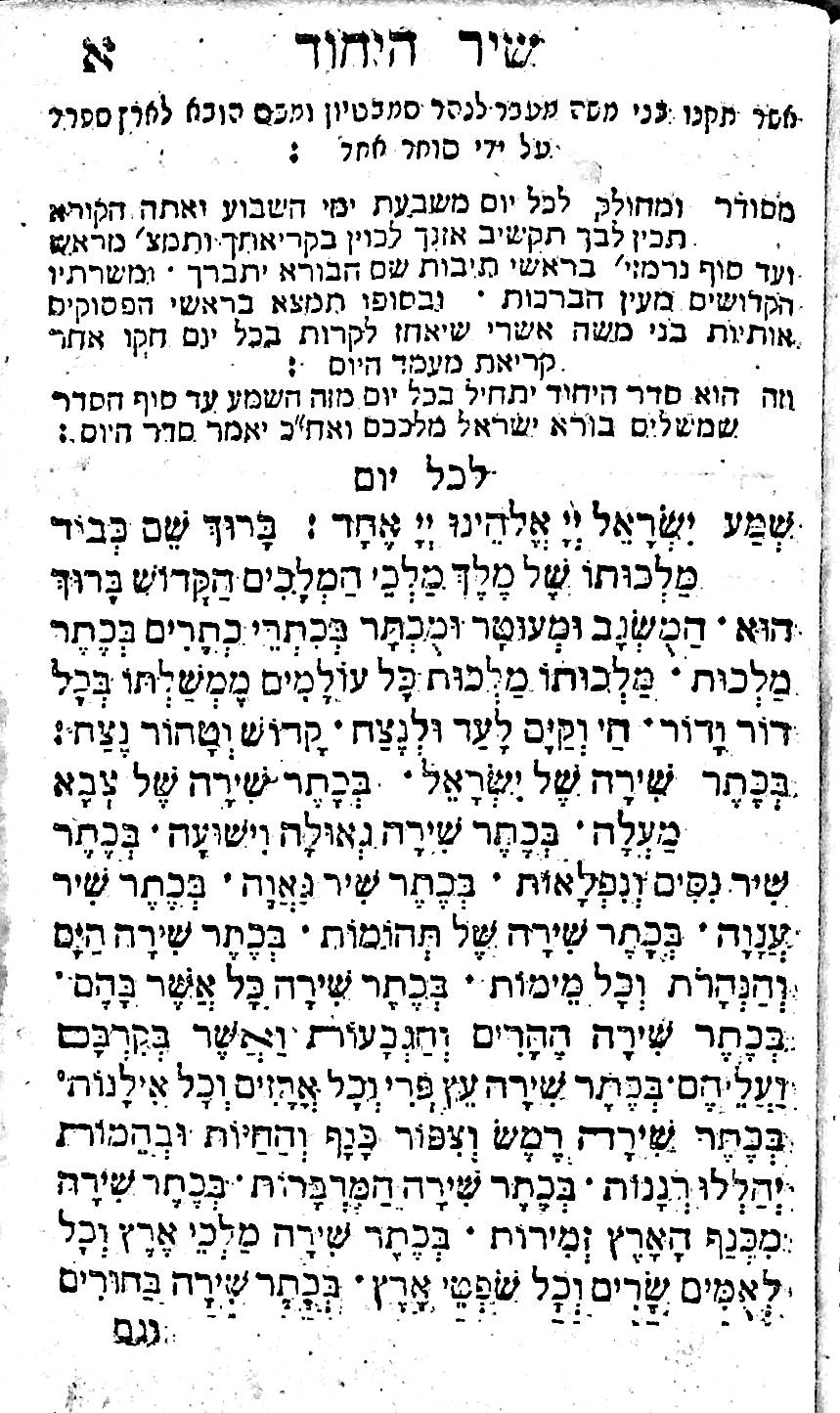
The books printed in this edition are called Moreh B’Etzba and Tziporon Shamir. They are both parts of a longer publication called Avodat Hakodesh (Work of Holiness). They are bound with seven pages of the Shir Yachud and a haskamah (approbation) signed by three Dayanim of the Sephardic London Beit Din.
Moreh BeEtzba (“Instructing with a Finger”) addresses proper conduct and customs, including recommendations like not to eat too much at night, to refrain from anger, and to learn Torah immediately after praying.
Tziporen Shamir (the point of a diamond) is a work of Jewish law, custom, and ethics. The text provides practical instructions on prayer and daily conduct, incorporating Talmudic, rabbinic, and kabbalistic teachings.
The three members of the London Sephardic Beit Din who signed the Haskamah were:
- Dayan Aaron de Saa Silveira (died 1792)
- Dayan Hasdai Almosnino (died 1800)
- Dayan David Henriques Julian
The printer was Alexander Alexander ben Judah Loeb. He founded an English family of printers and translators that flourished during the latter part of the eighteenth century and at the beginning of the nineteenth. His first publication was probably the Haggadah of 1770. He printed prayers for the fast-days (Sephardic rite), in 1776, and (for the German rite) in 1787; the Pentateuch, 1785; and daily prayers with English translation (Spanish rite), 1788, together with a special work on the Hosannas, in 1807.








 Jewish Miscellanies
One thought on “Moreh Be’Etzbah and Tziporen Shamir, by Rabbi Chaim Yosef David Azulai (the Chida), London, 1791.”