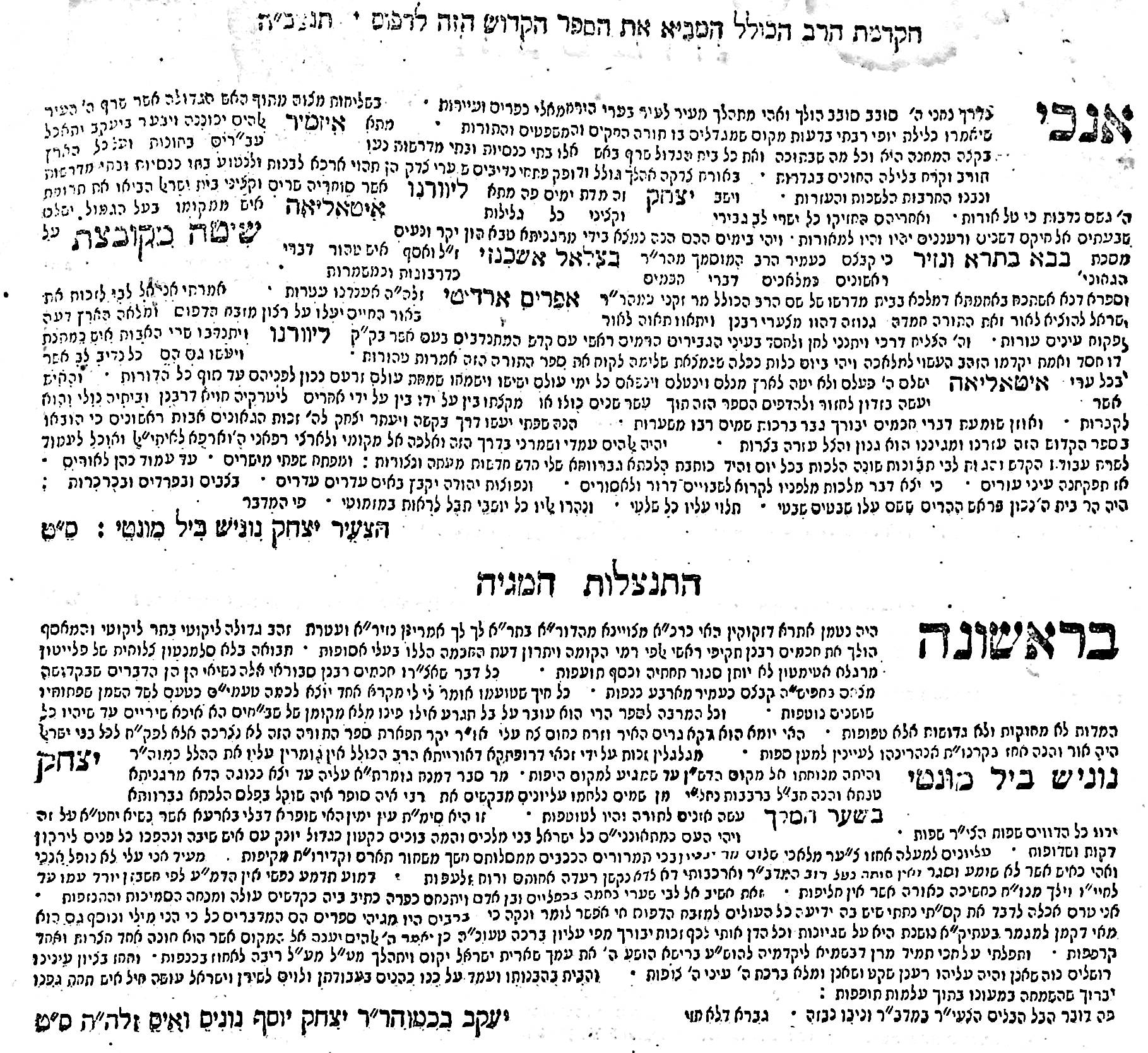
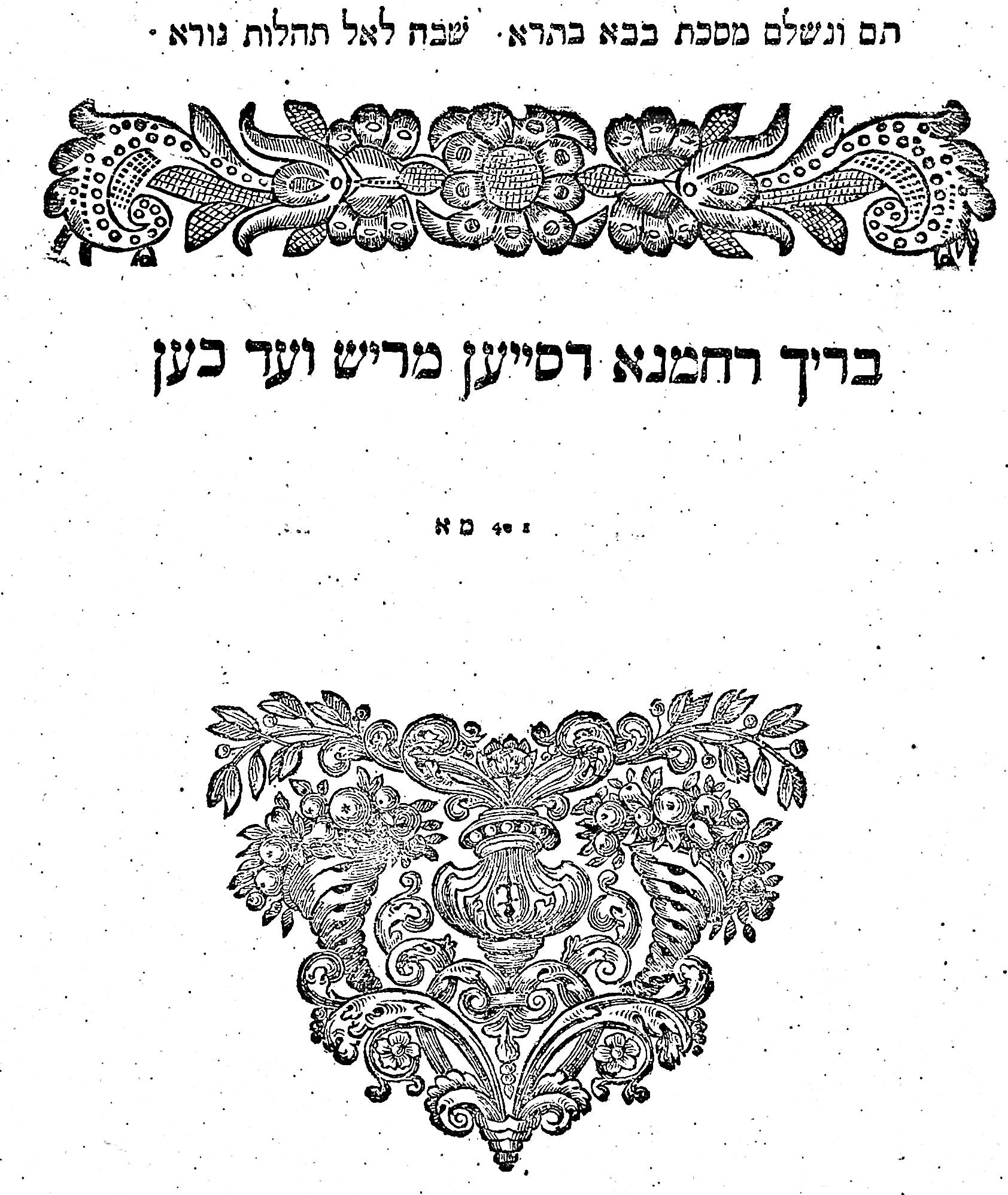
 This first edition of Asifat Zekenim (collection of elders), better known as the Shita Mekubetzet (collected method or system of gathered material), has approbations (haskamas) of the Rabbis of Livorno (Leghorn) and apparently the first published approbation by the Chida – Rabbi Chaim Yosef David Azulai.
The Chida has some interesting British connections. He was born in Jerusalem, and came from a prominent rabbinic family. He was recognized as a scholar at an early age and he came to have a great influence on the Sephardic community in London.
In 1755, he was chosen as a shaliach (fund-raising emissary) for the small Jewish community in the Land of Israel, and he travelled around Europe and North Africa extensively.
 In 1755 as recorded in his travel diary, Ma’agal Tov, the Chida was in London. He was taken to the Tower of London on the 12th of the month of Iyar, by David De Castro, who was the Hazan of the Bevis Marks synagogue from 1749 to 1783. He writes about his visit to the Tower, which included the Royal Menagerie (the predecessor of the modern London Zoo). There he saw lions, an eagle, and an Indian cat. At the Tower he saw displays of guns and weapons of war, and a famous display of the Kings of England – statues of iron with suits of armour. He also saw the royal crown, displayed in a darkened room, and a golden goblet.
In the year 5538 (1777) he was apparently back in London and wrote about the London stock market, where the drop in share prices due to the war with the Americans affected his fundraising.
From 1773 to 1777 the Chida was in Italy, where the first part of his biographical dictionary, Shem HaGedolim, (Livorno, 1774) was printed, and also his notes on the Shulhan Aruch, entitled Birke Yosef, (Livorno, 1774–76). This is when he provided the approbation to this book, printed in 1774.
This volume, Asifat Zekenim, consists of Novellae (Chidushim) on talmudic tractates Bava Basra and Nazir.
The author, Rabbi Bezalel ben Abraham Ashkenazi was born in Jerusalem or in Safed, about the year 1520. About 1540 he went to Egypt where he studied in Cairo under Rabbi David ben Solomon ibn Abi Zimra. Later he founded a yeshivah there which numbered among its scholars Rabbi Isaac Luria and Rabbi Abraham Monson. When Rabbi David ben Solomon ibn Abi Zimra went to Erez Israel (c. 1553), Rabbi Ashkenazi succeeded him as head of the Egyptian rabbis. He left Egypt due to a bitter quarrel. In 1587 he was head of the rabbis of Jerusalem, apparently succeeding Rabbi Hayyim Vital.
Rabbi Ashkenazi put new life into the Jerusalem community, instituting numerous communal enactments, exempting scholars from taxation, and persuading the Ashkenazi community to assist in bearing the burden of taxation, though most of them were officially exempt as aliens. He traveled as an emissary to a number of countries, collecting money for the community and encouraging immigration to the Land of Israel. He persuaded the Jews of various countries to set aside Purim as a special day for making contributions to the Land of Israel.
Rabbi Ashkenazi occupied himself a great deal with copying and editing old manuscripts, even hiring scribes to help him. He copied the novellae of the geonim and rishonim on the Babylonian Talmud, and these served as the basis for his classic Asefat Zekenim, better known as the Shitah Mekubbezet. Through this collection, much of the commentaries and responsa of Gershom b. Judah, Hananel, Joseph ibn Migash, Meir ha-Levi Abulafia, and others, was preserved. The book in its different parts has been republished many times, and it serves as a supplement to the tosafot, and the other classical early commentators.
Much of the Shitah Mekubbezet is still in manuscript. Part of it has been lost, but is occasionally referred to in books by other authors. All of the available material on some tractates has been published; but only selections of others.
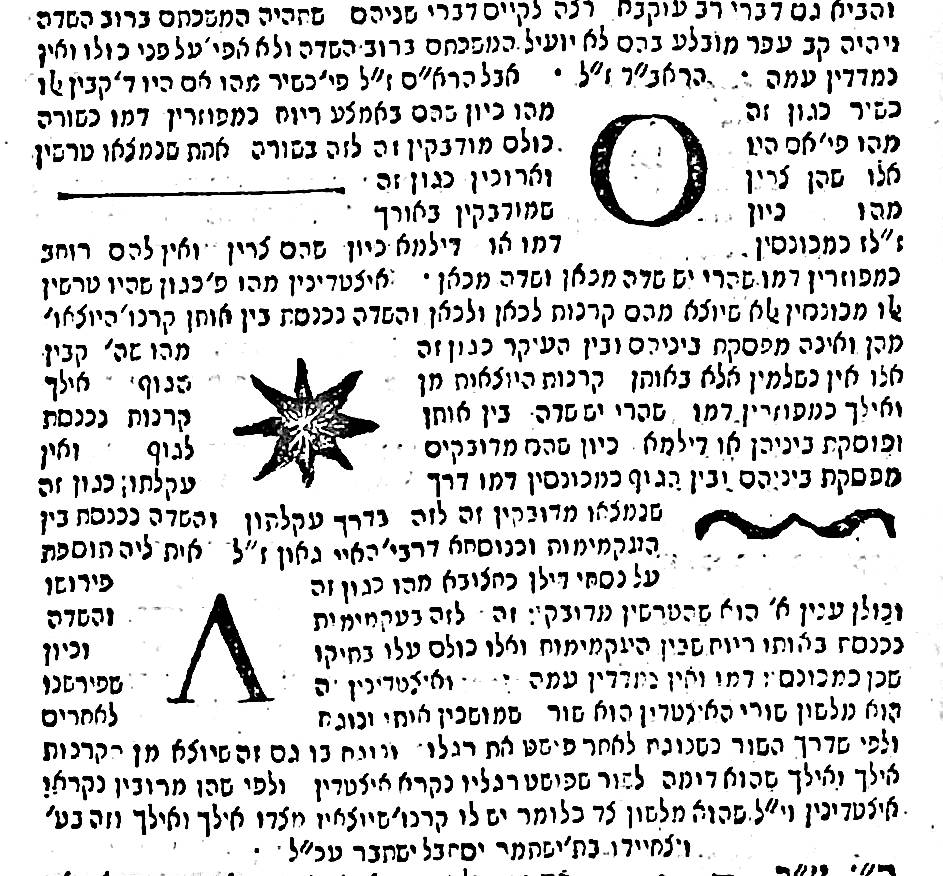
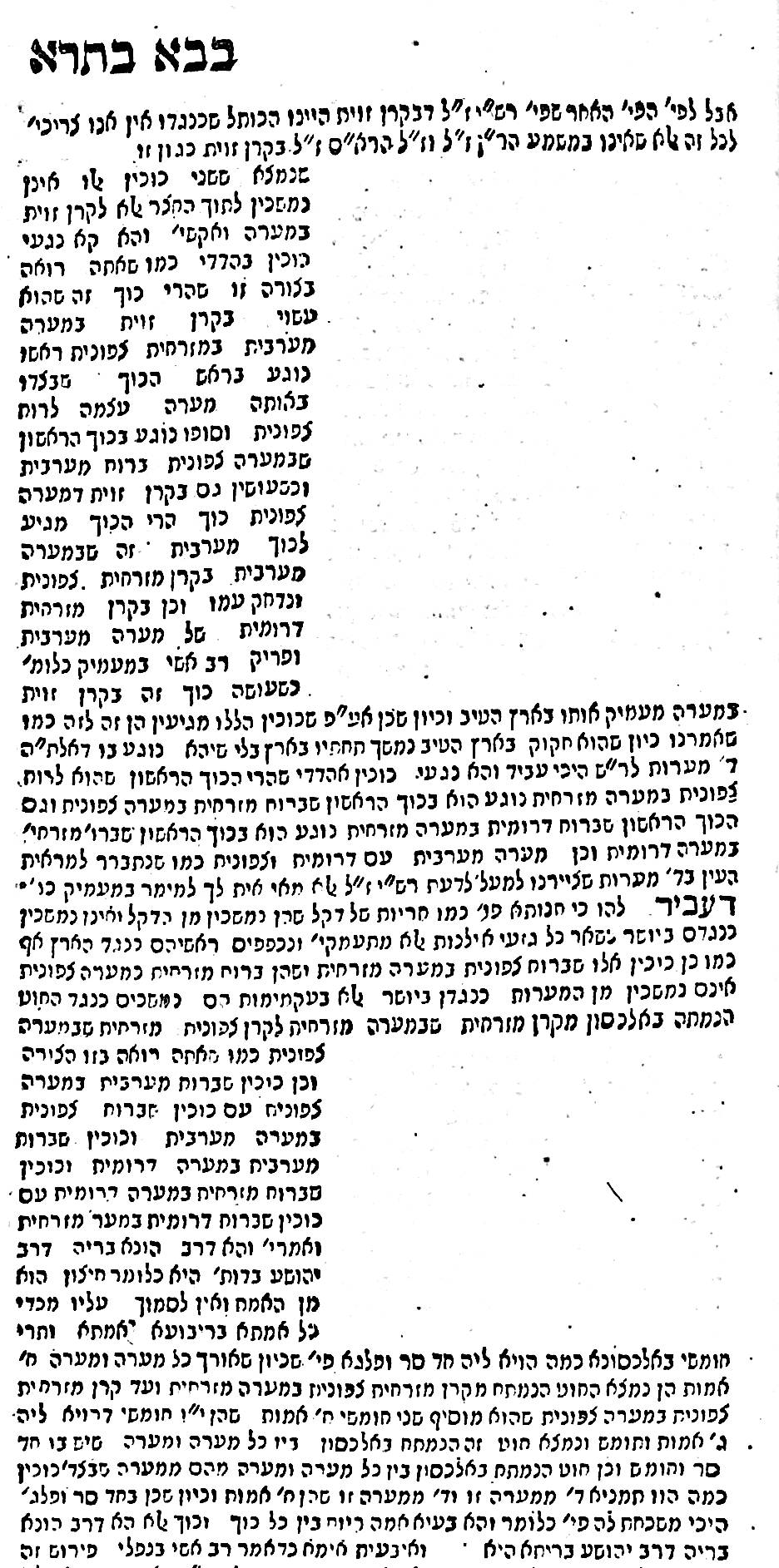 This volume also demonstrates how the occasional illustrations in the text were apparently printed. Bava Kamma 101a and b have diagrams of burial vaults and caves. However, in this volume there are blank white spaces where the diagrams should be. Apparently, the wording was printed first with blank spaces and the engraved diagrams were printed afterwards. In my copy, three diagrams are missing.





 Jewish Miscellanies