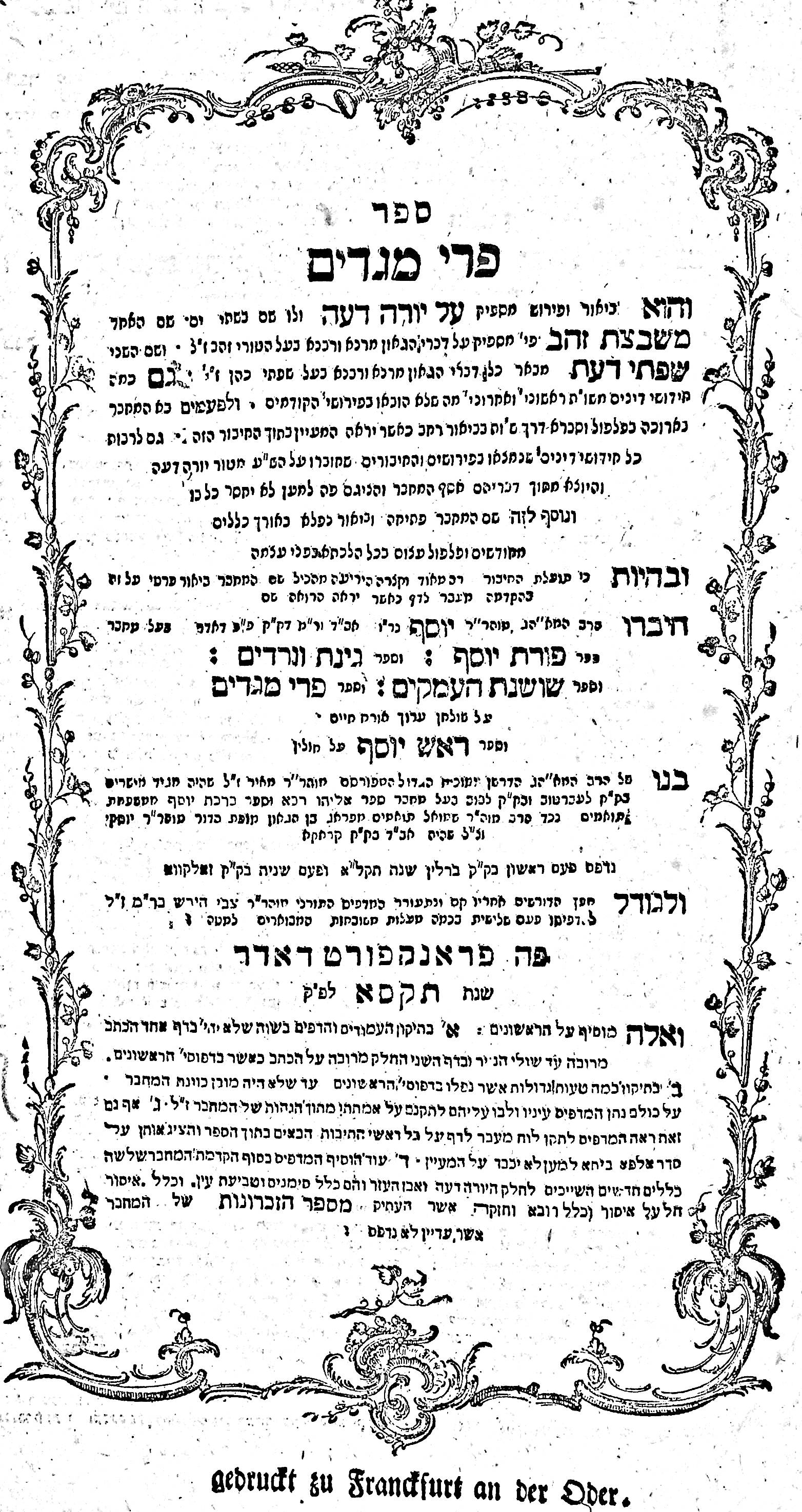
 Pri Megadim (Choice Fruits) is by Rabbi Yosef Meir Teomim, head of the rabbinical court of Frankfort on the Oder. It is a deep and comprehensive learned explanation of two previous commentaries on the Shulchan Aruch and is often quoted by the Chofetz Chaim in his Mishnah Berurah.
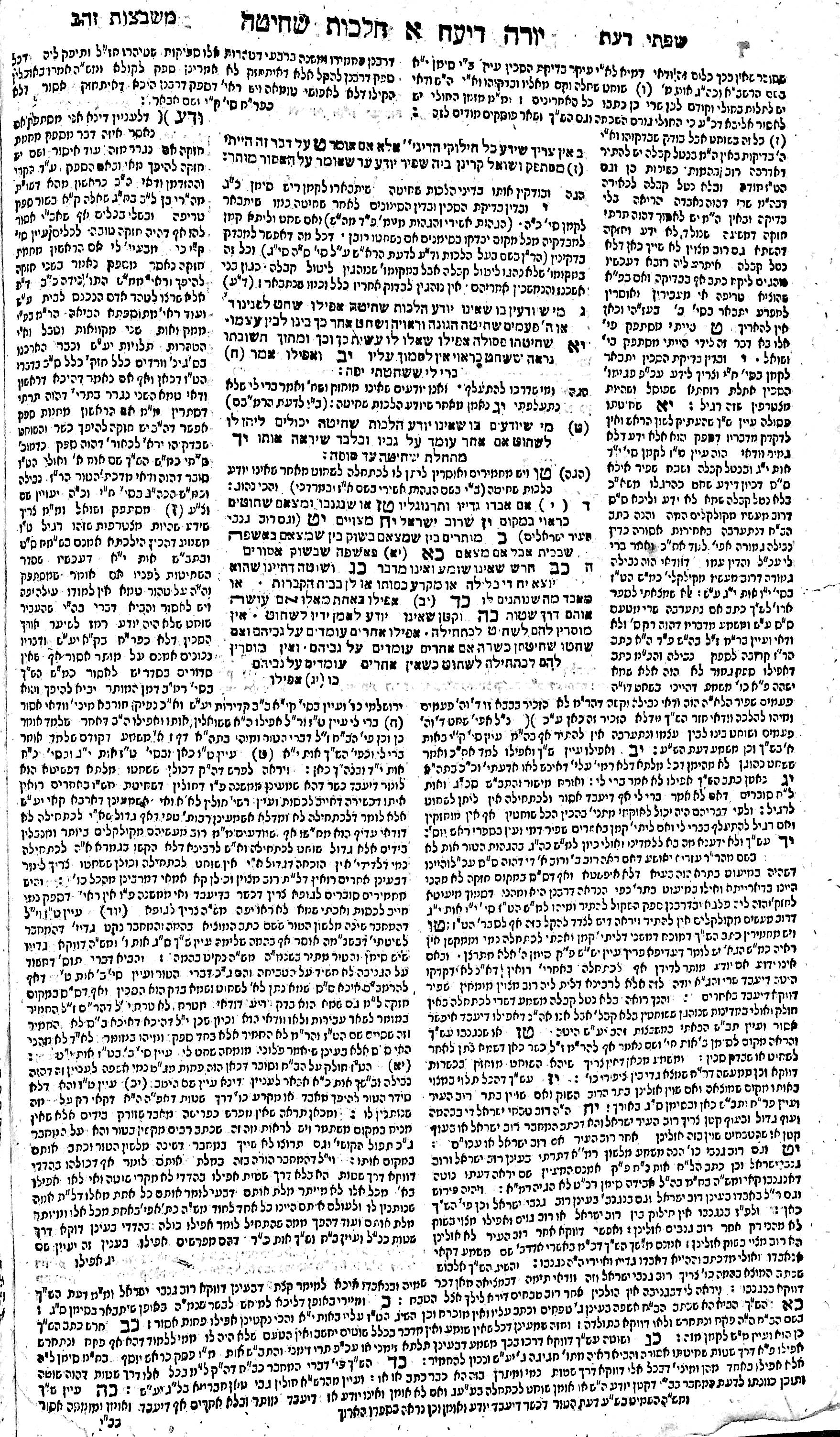
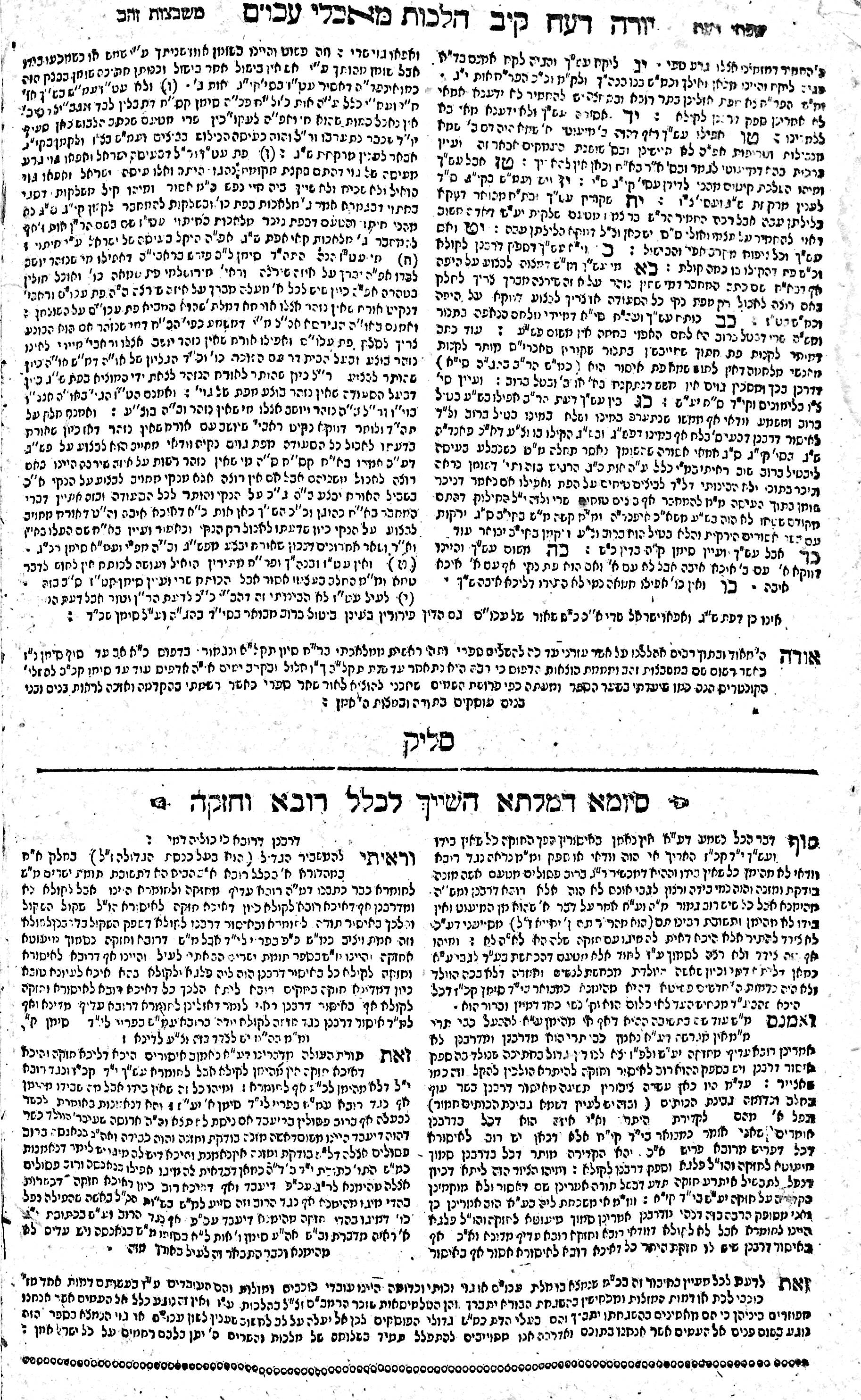
This is the third edition, printed in 1801.
The Shulchan Aruch is printed in the centre of each page. The commentary Mishbetzos Zahav, which is printed as the inside column of each page is on the Taz (short for Turei Zahav), a work written by Rabbi David Halevi Segal.
The commentary Sfasei Daas, which is printed on the outside of each page, is on the Shach, by Rabbi Shabbatai HaCohen.
The author, Rabbi Yosef ben Meir Teomim (1727–1792) was a Galician rabbi born near Lemberg (Lviv in the Ukraine today). While still young he succeeded his father in the position of preacher and rabbinical instructor in the yeshivah of Lemberg. Later he went to Berlin, where he stayed several years in the beis hamedrash of Daniel Itzig Yaffe.
In 1770, Rabbi Teomim’s father, Meir, passed away in Lemberg and the community leaders requested that he fill his father’s place as a Dayan (rabbinical judge) and Maggid (preacher) At the time, Rabbi Teomim was in the middle of working on this book, Pri Megadim, in Berlin. He published the first edition of the book in Berlin in 1772, which was widely accepted as a major work of halacha (Rabbinical law). He returned to Lemberg in 1774.
In 1781, after seven years in Lemberg, Rabbi Teomim moved to Frankfurt an der Oder, (not to be confused with Frankfurt am Main) where he was appointed rabbi and served until his death in 1792. He was buried on the Jewish cemetery at Frankfurt on the Oder.
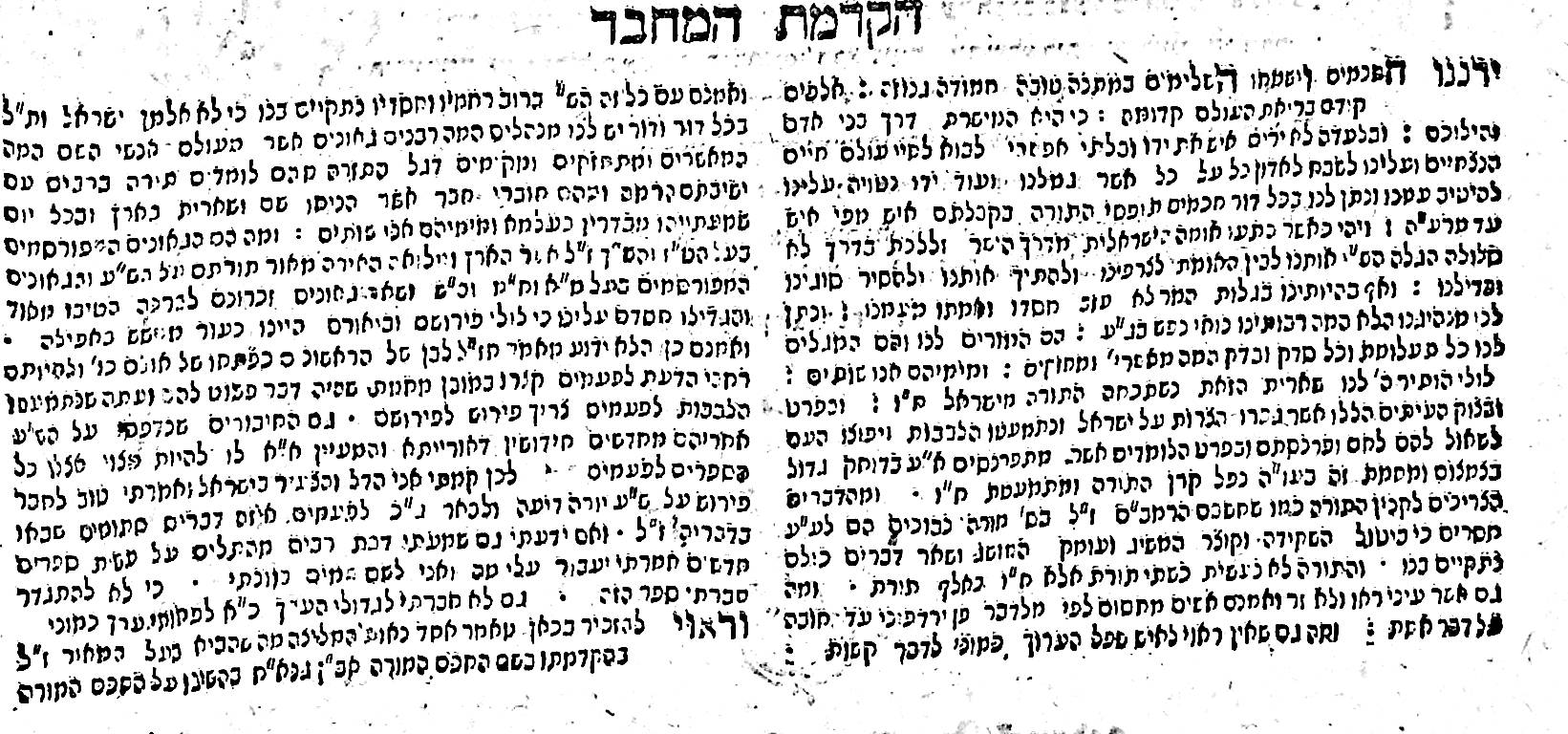
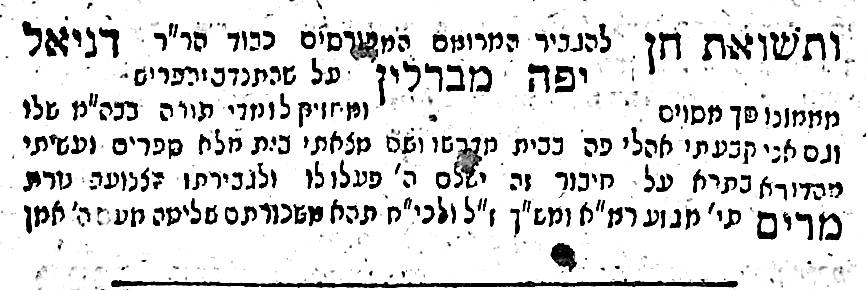 In his introduction, Rabbi Yosef Teomim praises his generous benefactor Daniel Yaffe and describes the contents of the remarkable library of Hebrew books to which he was granted access.
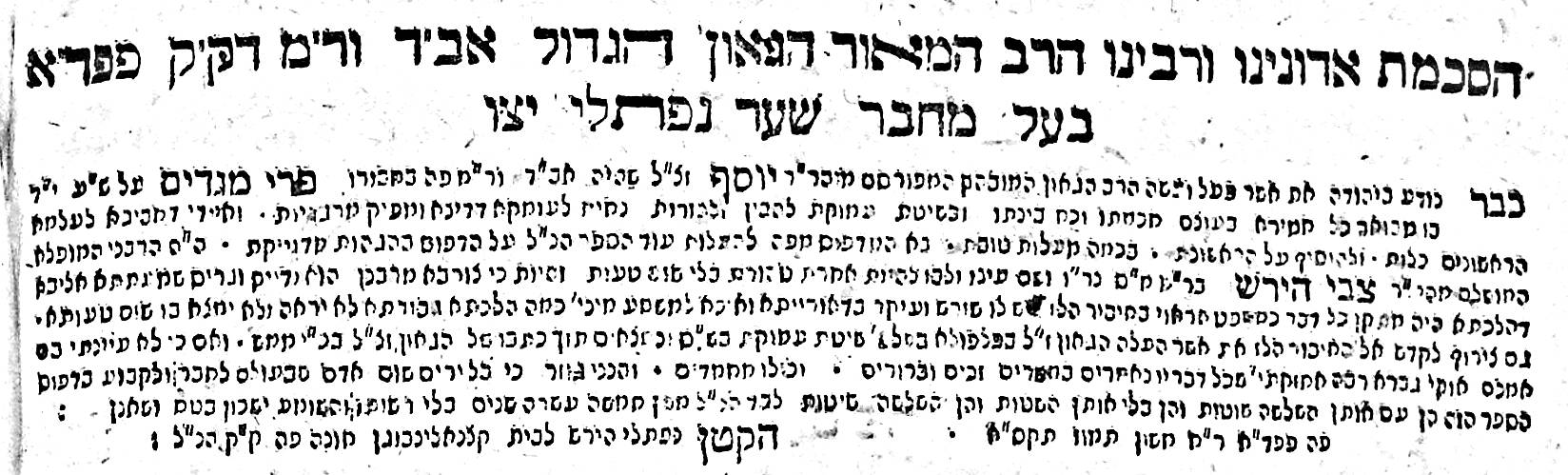 There is a list of past haskomos (approbations) from previous editions, but there is one new one for this edition. This is from Rabbi Naphtali Hirsch Katzenellenbogen of Frankfort on the Oder, the son of Rabbi Eliezer (Lazarus) Katzenellenbogen of Bamberg and subsequently of Hagenau. Naphtali Hirsch was one of the Rabbis at the Paris Sanhedrin, 1806, and had the reputation of being an excellent preacher. He published “Sha’ar Naftali” (Frankfurt-on-the-Oder, 1797), a commentary to a part of Even haEzer, together with seventeen responsa.

 Jewish Miscellanies