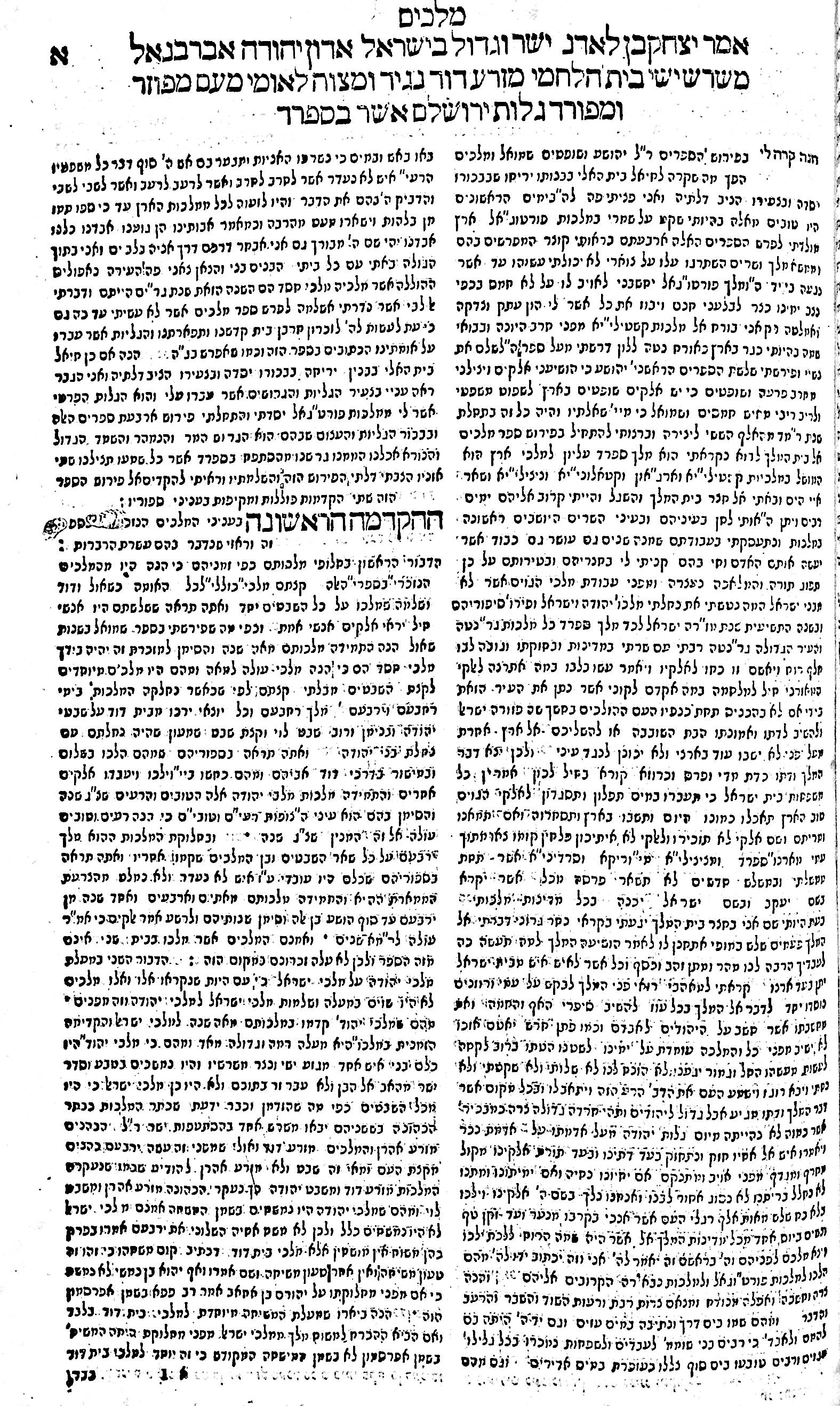
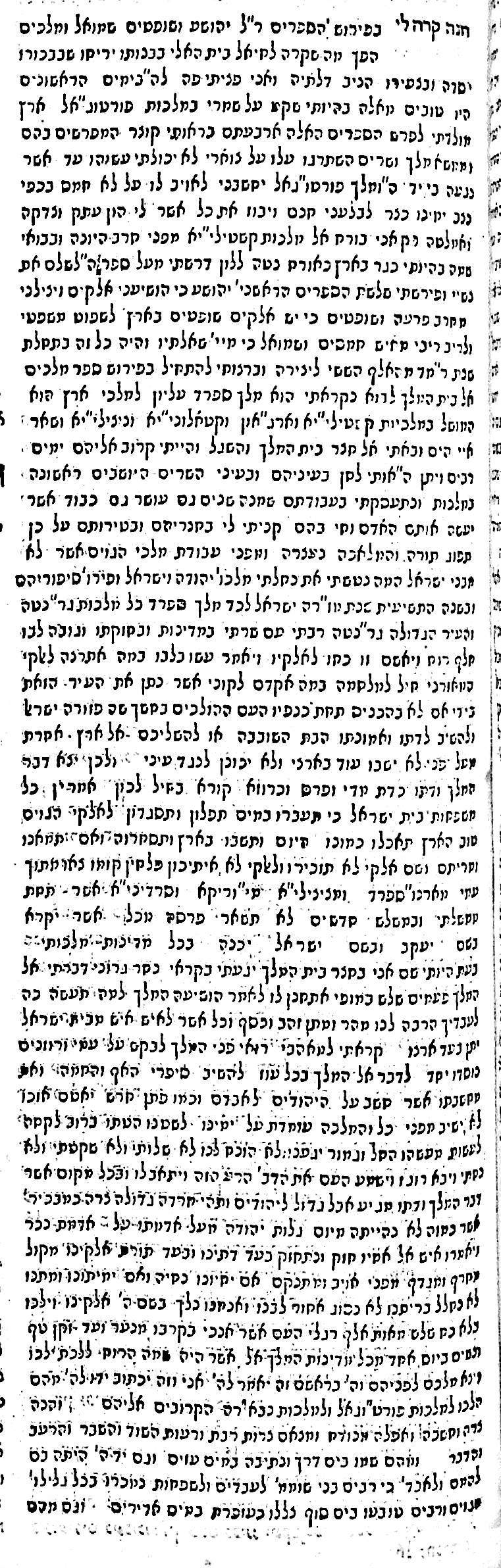
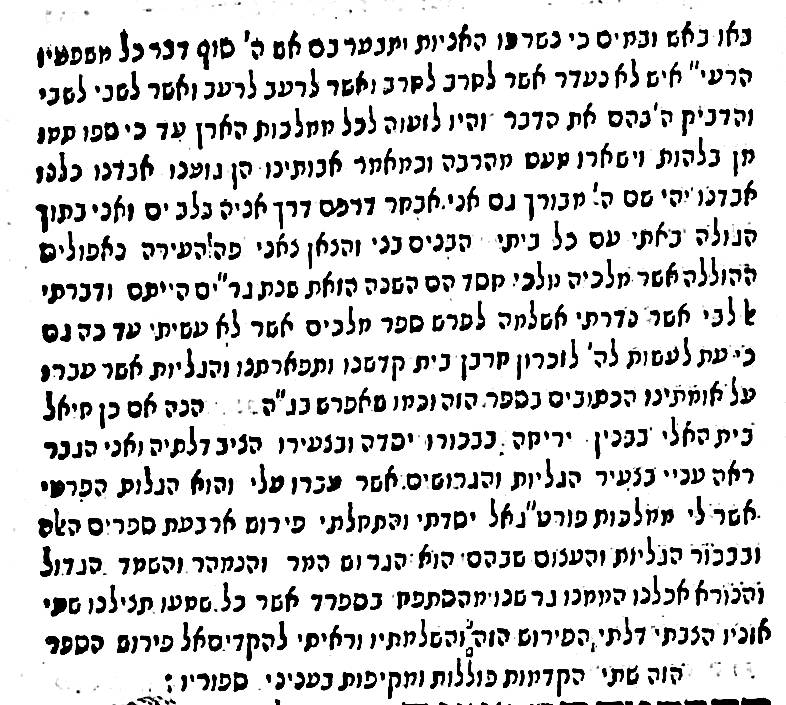
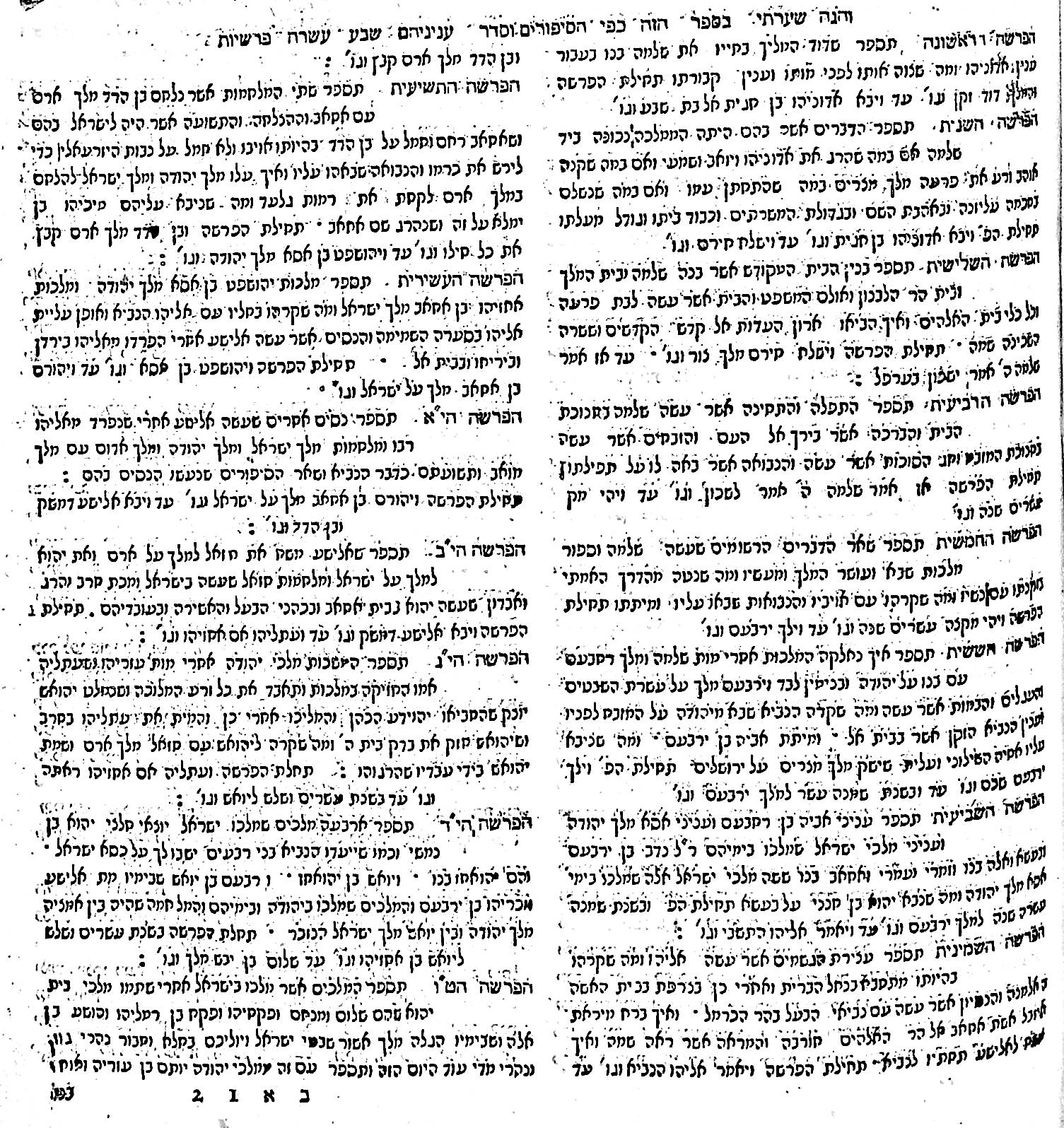
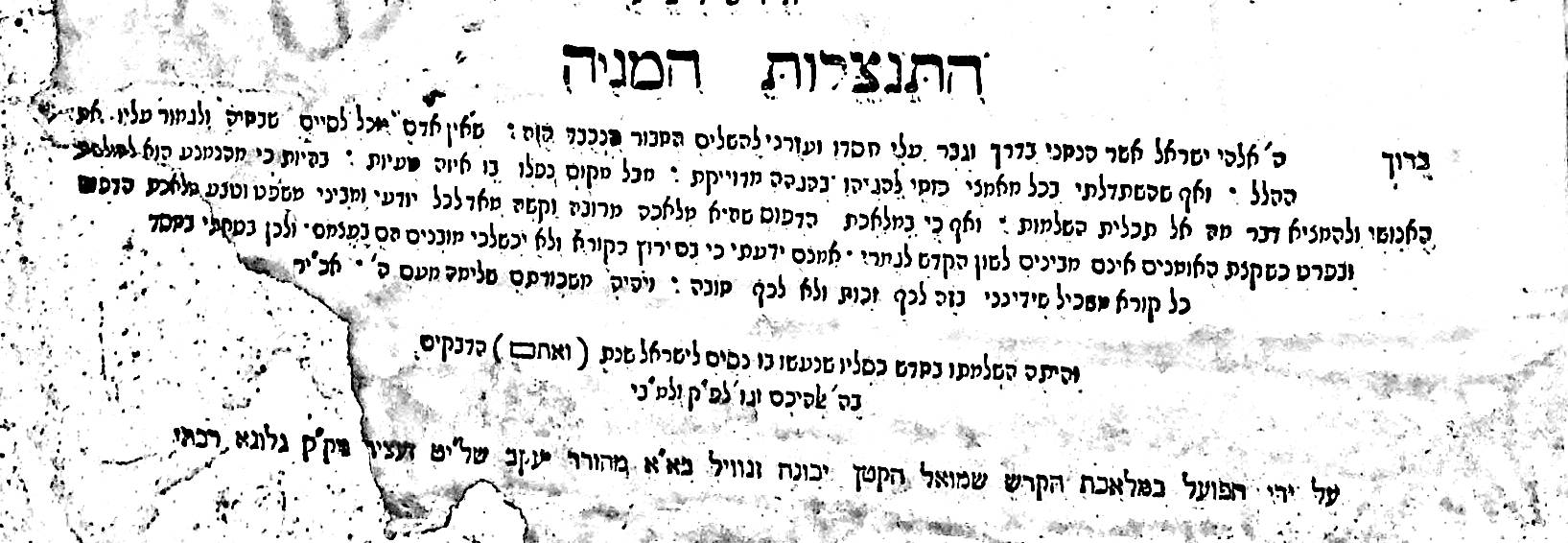
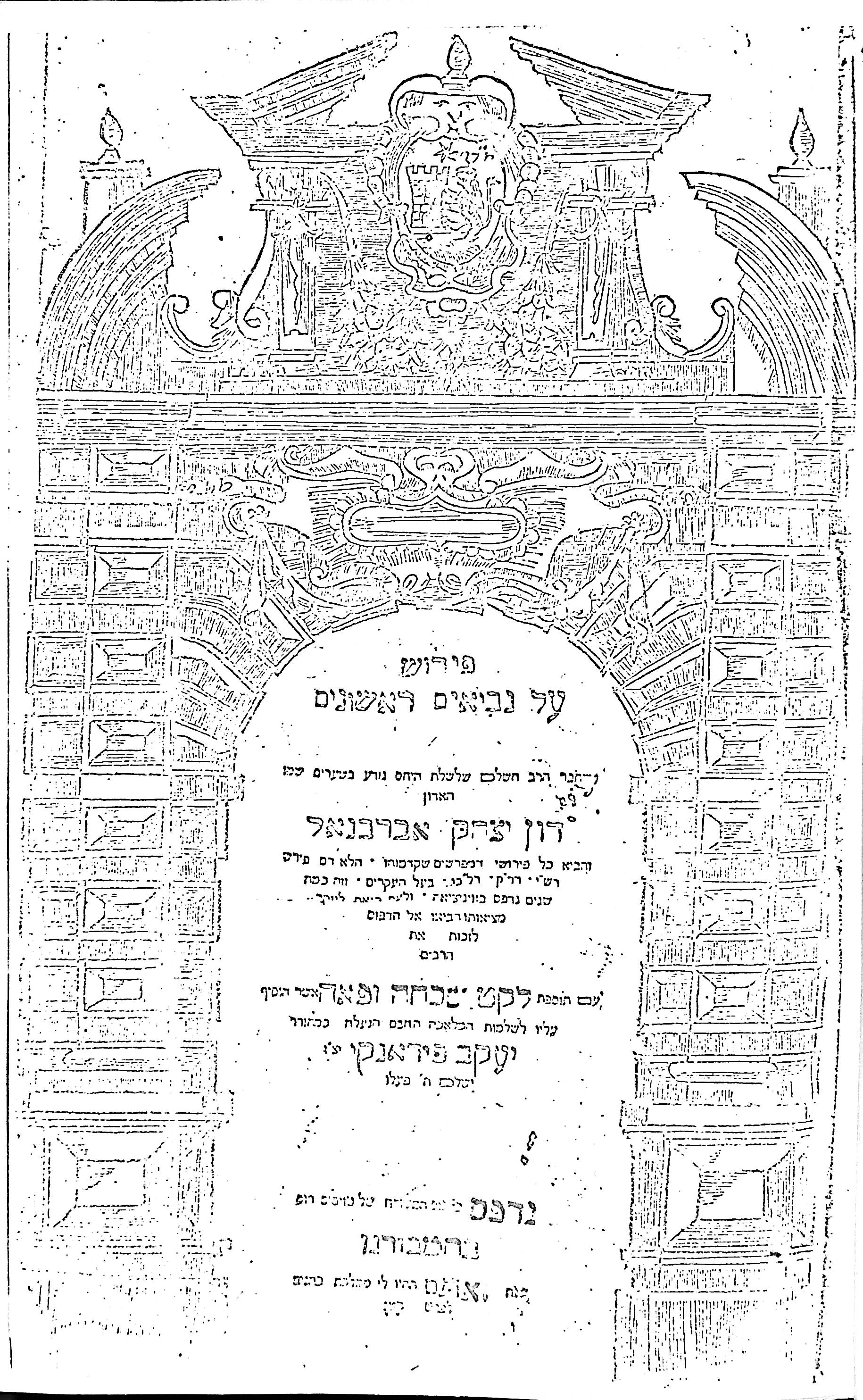
 While browsing through Abarbanel’s commentary on the early prophets, I came across his introduction of the Book of Kings. Writing about kings, he starts writing about the King of Spain and the expulsion of the Jews in 1492, including himself, of which more below.
I am not the first person to notice this, and I saw that Akiva Aaronson writes about the same edition as mine and this particular page in his excellent and recommended book, People of the Book.
Rabbi Don Isaac ben Judah Abarbanel was a Portuguese rabbi, scholar, Bible commentator, philosopher, and statesman. He was born into a wealthy and learned family in Portugal. His father Judah was state treasurer of Portugal, and a great favorite of Alfonso V, king of Portugal. Isaac received a thorough Jewish education, and took a keen interest in languages and philosophy. Later he succeeded his father in the service of the king.
He was a financier and diplomat, influential among the wealthy Christians in Portugal and was a powerful figure in the Portuguese court. However, with the accession of John II in 1481, and anti-Jewish sentiments in the church, R. Abarbanel escaped over the border into the Spanish town of Segura de la Orden in 1483. The following year King Ferdinand invited him to be the collector of royal revenues, even though the Spanish Inquisition was in full swing. After having provided Ferdinand and Isabella with the monies needed to take Grenada, Abarbanel was shocked to learn that they had decided to expel all Jews from Spain.
In May, 1492, Abarbanel found himself under tremendous pressure to convert and retain his status in the Spanish court. He refused, and headed for Naples.
In Naples, he planned to concentrate on writing his commentary to the Bible. However, he was again employed by the king to be the prime tax collector. He and the king had to flee from the French. Abarbanel lost his library. He finally settled in Venice in 1503, where he died in 1508, on the 10th Av.
The introduction to the book of Kings includes this extract (Akiva Aaronson’s translation):
And in the ninth year of the kings reign, in the year 5252 (1492) the king of Spain captured the whole kingdom of Granada, including its capital city and surrounding areas. Feeling mighty and with a sense of arrogance, he attributed this power to his god…
Then the word of the king went forth… go out and say to all the families of Israel; If you convert, the land will be good for you; you will dwell in it and trade. But if you refuse and rebel, and the name of my god you will not mention, and you will not bow down to mt god, then get up and go out from my people, from Spain, Sicily, Mallorca and Sardinia, which are under my rule. Within three months, not so much as a footstep of one called by the name of Israel will remain in all the lands of my kingdom.
When I (Abarbanel) was in the king’s palace, I cried out until I was hoarse.I spoke to the king two or three times and pleaded with him, saying: “Save us, your Majesty! Why do you do this to your servants? Demand payments from us, gold and silver, and whatever any Jew possesses he will give on behalf of his land.” I called upon my friends in the royal court, begging for my people. The nobles gathered together to speak with the king forcefully, to rescind the edict which had been issued in anger and his plan to destroy the Jews. But like a deaf person he closed his ears and did not rescind anything. The queen was standing by his side to incite him on… we tried but to no avail. I did not rest and I was not silent…
The people heard the evil decree and mourned, and wherever the king’s decree reached there was great mourning among Jews. There was a terrible trembling – pain like that of a mother giving birth.Theer had never been anything like it since Yehudah (the nation of Israel) was exiled from his land to a foreign one. People said to each other: “Let us be exceedingly strongin our faith and in the Torah of our God, in the face of those who blaspheme, from before our enemies. If they let us live, we will live. And if they kill us, we will die. But we will not profane our covenant, and in our hearts we will not retreat. We will go in the name of Hashem our God.”
They went without strength – three hundred thousand on foot, myself among them, youth and elderly, small children and women, on a single day , from all the provinces of the king – wherever the wind took them, they went.