 Rabbi Yechezkel Landau was born in Apta, Poland, in 1713, and died in Prague in 1793. He was a great talmudic scholar, whose responsa (answers to questions) which he called Noda BiYehuda, have great clarity and are mostly accepted today as halachic (Jewish legal) law. The name Noda BiYehuda comes from the beginning of Psalm 76, and means ‘renowned in Judah’.
My book is the second volume of Noda BiYehuda, called Medura Tinyana, which includes Rabbi Landau’s responsa, published posthumously, together with some further responsa from his son, Shmuel. In it are several questions from London, mostly from Rabbi Landau’s contemporary, David Tevele Schiff, who was Chief Rabbi in London from 1765 to 1791.
I have written previously about Chief Rabbi Schiff and his book, Sefer Lashon Zahav. Under Rabbi Schiff, in the 1760s and 1770s Ashkenazi Jewish life in London began to flourish. The rebuilt Great Synagogue was dedicated in 1766, and Hebrew printing in London started in 1770 with what was probably the first book by Jewish printers and typesetters, the Selichos book, of which I have previously written about my copy. At about the same time (1770), the first Siddur in Hebrew with an English translation was printed in London by Alexander Alexander and Baruch Meyers.
Rabbi Landau also posthumously impressed a later Chief Rabbi, Rabbi Hermann Adler, who was sent by his father in the 1860s to get semicha (his rabbinical diploma) in Prague.
Hermann Adler writes to his father, Chief Rabbi Nathan Adler on 7th January, 1862 and asks whether he has the Tzion Lenefesh Chaya in his library. This book, abbreviated to Tzelach, is also by Rabbi Yechezkel Landau. Hermann Adler writes, “What he did for Prague is impossible to say. It is only through him that they realised what ‘learning’ really means. Even to this day he is still to everybody here ‘Der Rebbe’. For more on this, see my article on Tzelach.
Here is the end of the introduction by his son. The Shmuel Hillman mentioned is an ancestor of Dayan Samuel Isaac Hillman of the London Beth Din.:

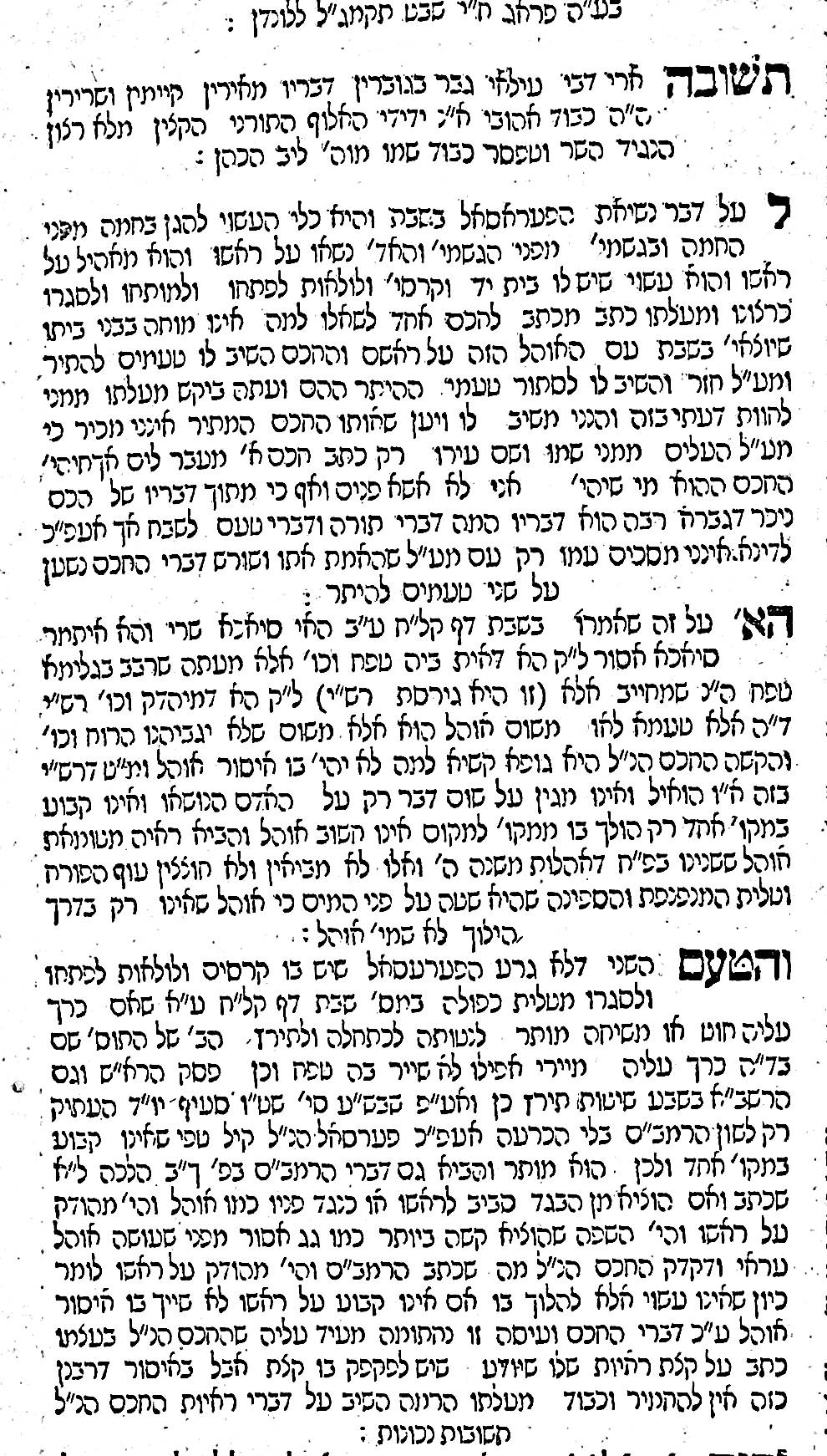
Here, below, are some extracts from the Noda BiYehuda, second volume that have London references. The first is Orech Chayim 30, on whether one is permitted to carry an umbrella on Shabbos. The umbrella first became popularly used by men in Britain in 1750, so this would have been a question about a relatively new gadget that was important in a rainy country. It is because of the Noda BiYehuda’s opinion that opening an umbrella was like building a tent that most (but not all) opinions are that opening an umbrella on Shabbos is not permitted today.
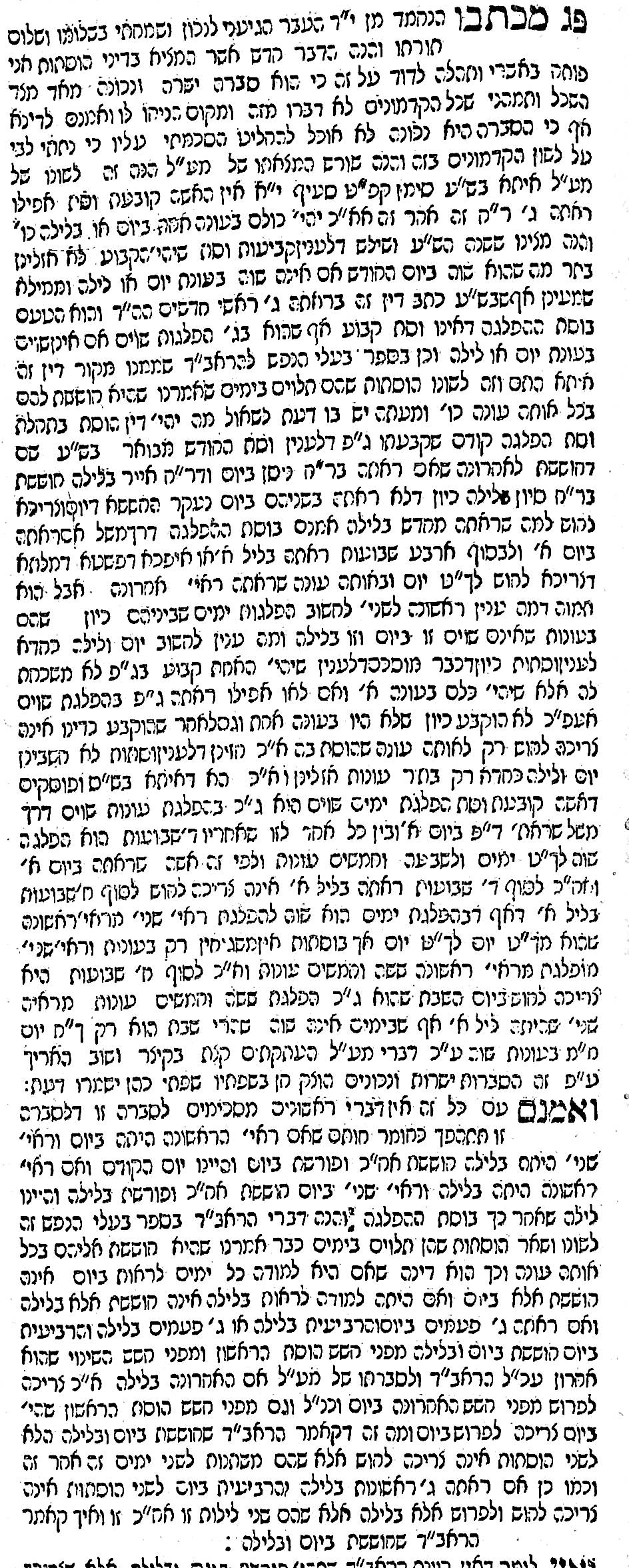
This one is Yoreh Deah 83, on Niddah and is an answer to Rabbi Landau’s friend Rabbi David Tevele HaKohen Schiff, the Chief Rabbi in London:

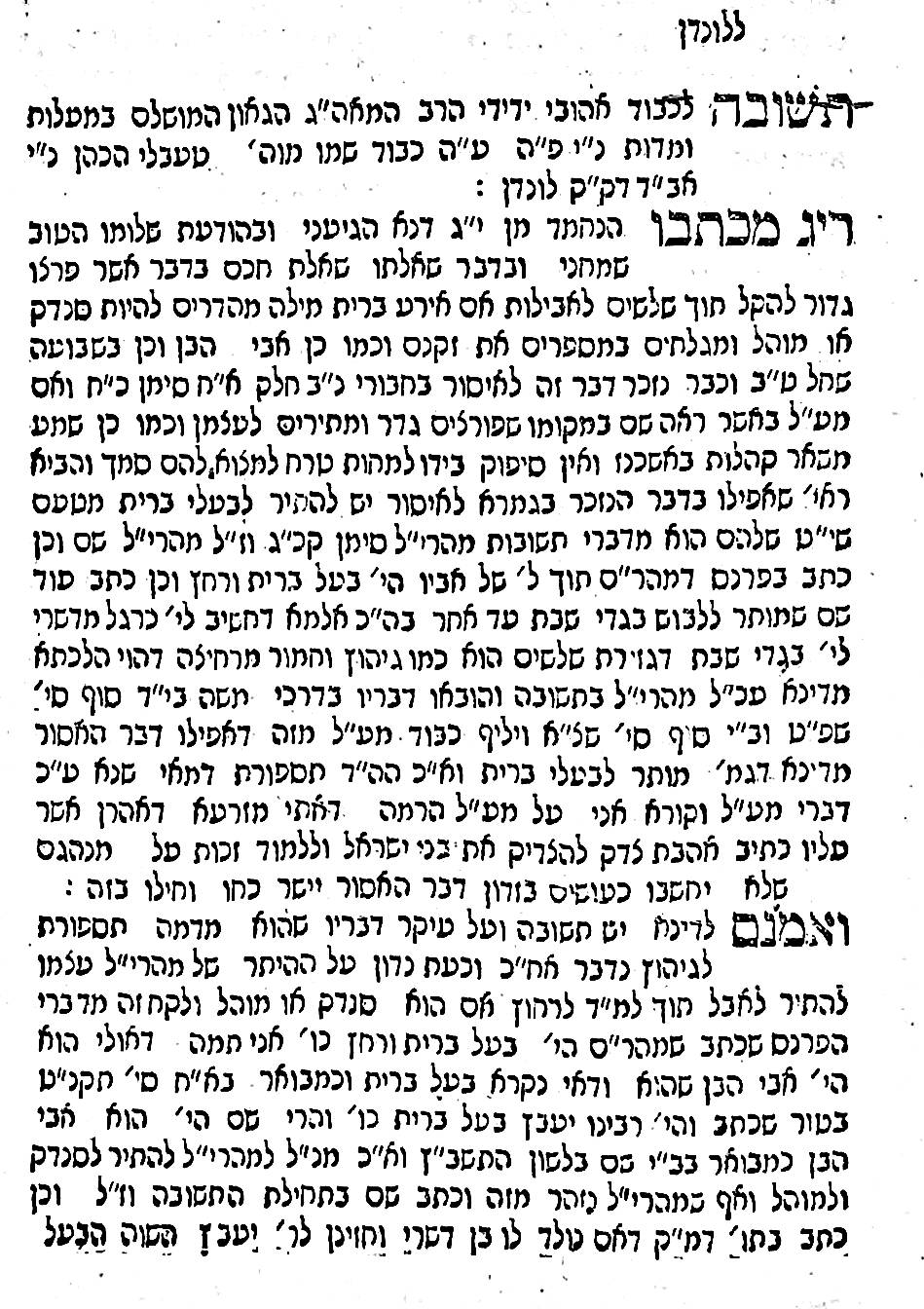
This next one is a famous medical responsa, often quoted. It was asked by Rabbi Leib Fischels:
To my friend, my relative-by-marriage, my confidant, my beloved, the wonderful rabbi, outstanding in Torah, the esteemed teacher and rabbi Leib Fischels, may the Merciful One protect and redeem him.
Regarding your treatise, which you sent to me, and which offers a presentation of the issue that you were asked about by the holy community of London: It happened that someone was ill with a gallstone. The physicians performed surgery, as usual for such an affliction, but it did not cure him, and he died. The sages of that city were asked if it is permissible to dissect the cadaver in that place to see evidence of the root of the affliction, and to learn from it for the future practice of medicine, so that if such a case occurs again, they know how to perform the surgery necessary for a cure without incising him too much, thus minimizing the risks of the surgery. Is this prohibited because it constitutes desecration and disgrace of this corpse, or is it permitted because it leads to the future saving of lives, so that they may take the utmost caution in their craft.
Rabbi Landau continues with some detail and concludes that an autopsy is not allowable unless there is a definite and specific patient whose life may be saved – an autopsy, in his opinion, is not allowed for the furtherance of science.
It is also difficult to distinguish between concern for the need arising in the near future and concern for the need arising in the distant future. Heaven forfend that such a thing should be permitted. Even gentile physicians do not gain surgical experience with just any corpse, but only with those put to death by the law or with those who themselves consented to it while living. If we, God forbid, are lax in this matter, they will operate on every corpse to learn anatomy and physiology, so that they may know how to cure the living. Therefore, this is all unnecessarily lengthy, and there is no lenient approach whatsoever. In my opinion, your Excellency was mistaken in rushing to respond leniently.


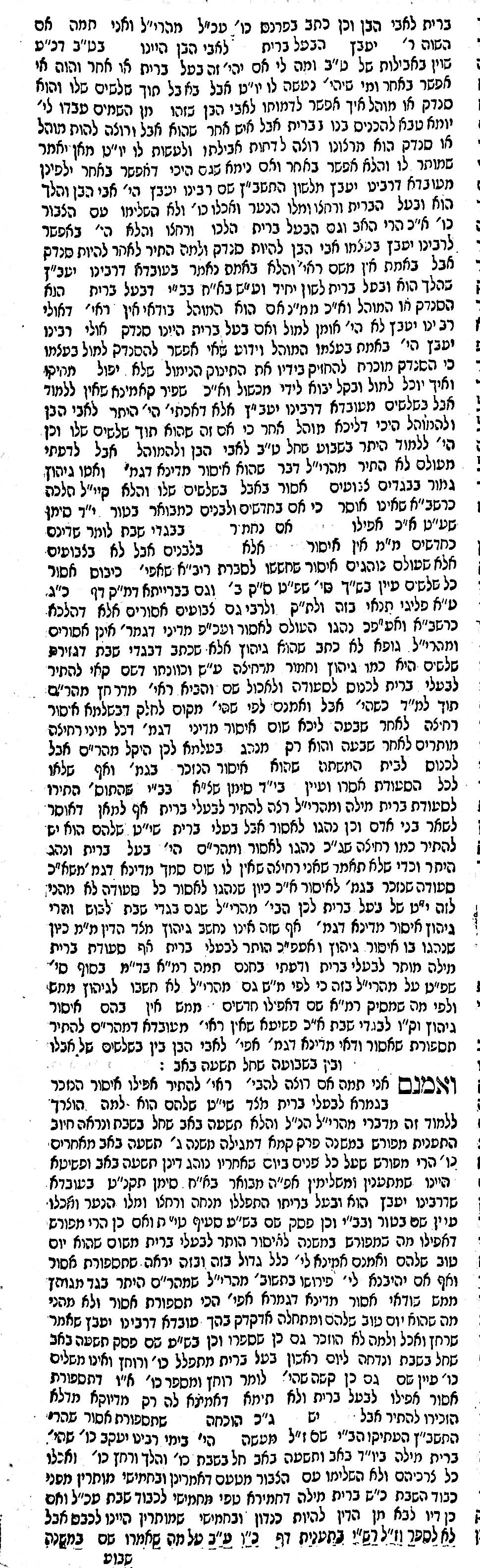
This next one, Yoreh Deah 213, is a question from British Chief Rabbi David Tevel Schiff:


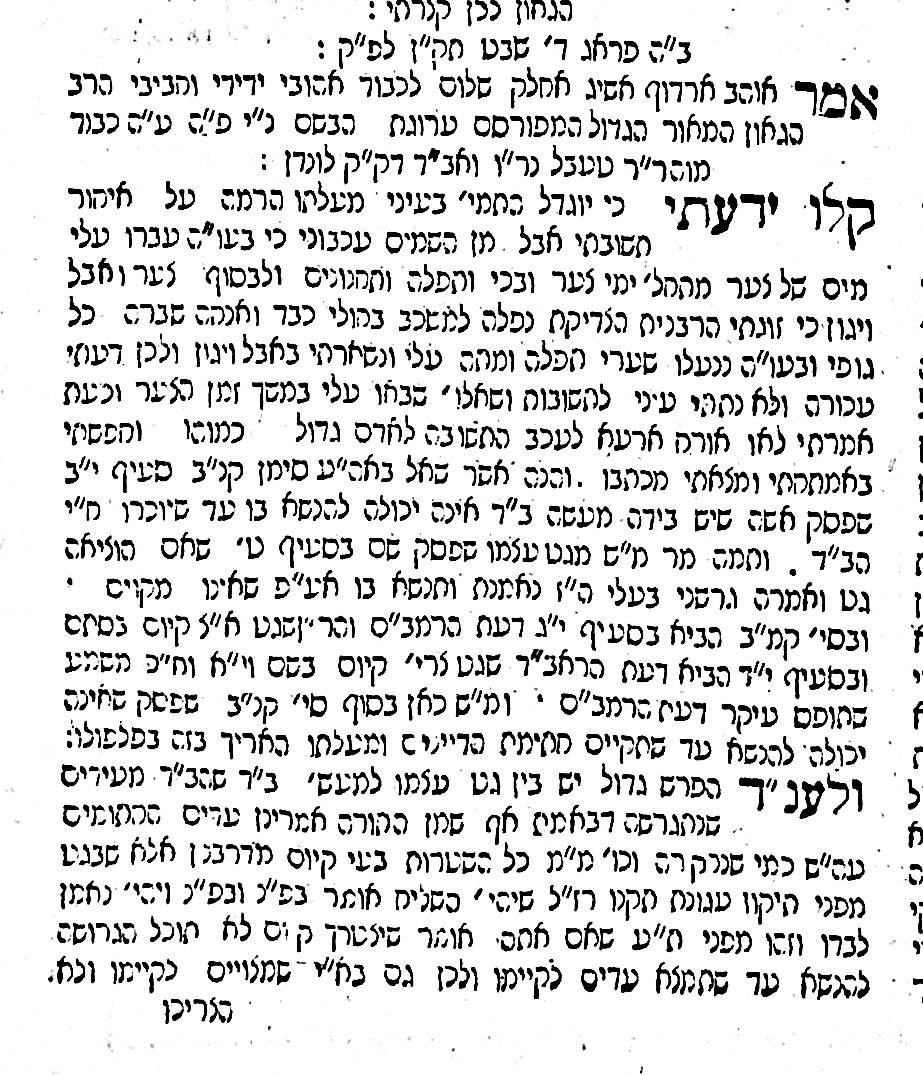
Finally, here is another – Even Haezer 136, from Chief Rabbi Schiff of London:


 Jewish Miscellanies
One thought on “The Noda BiYehuda (Rabbi Yechekel Landau) and British Chief Rabbi David Tevele Schiff. Noda BiYehuda II, Sadlikov, 1833.”