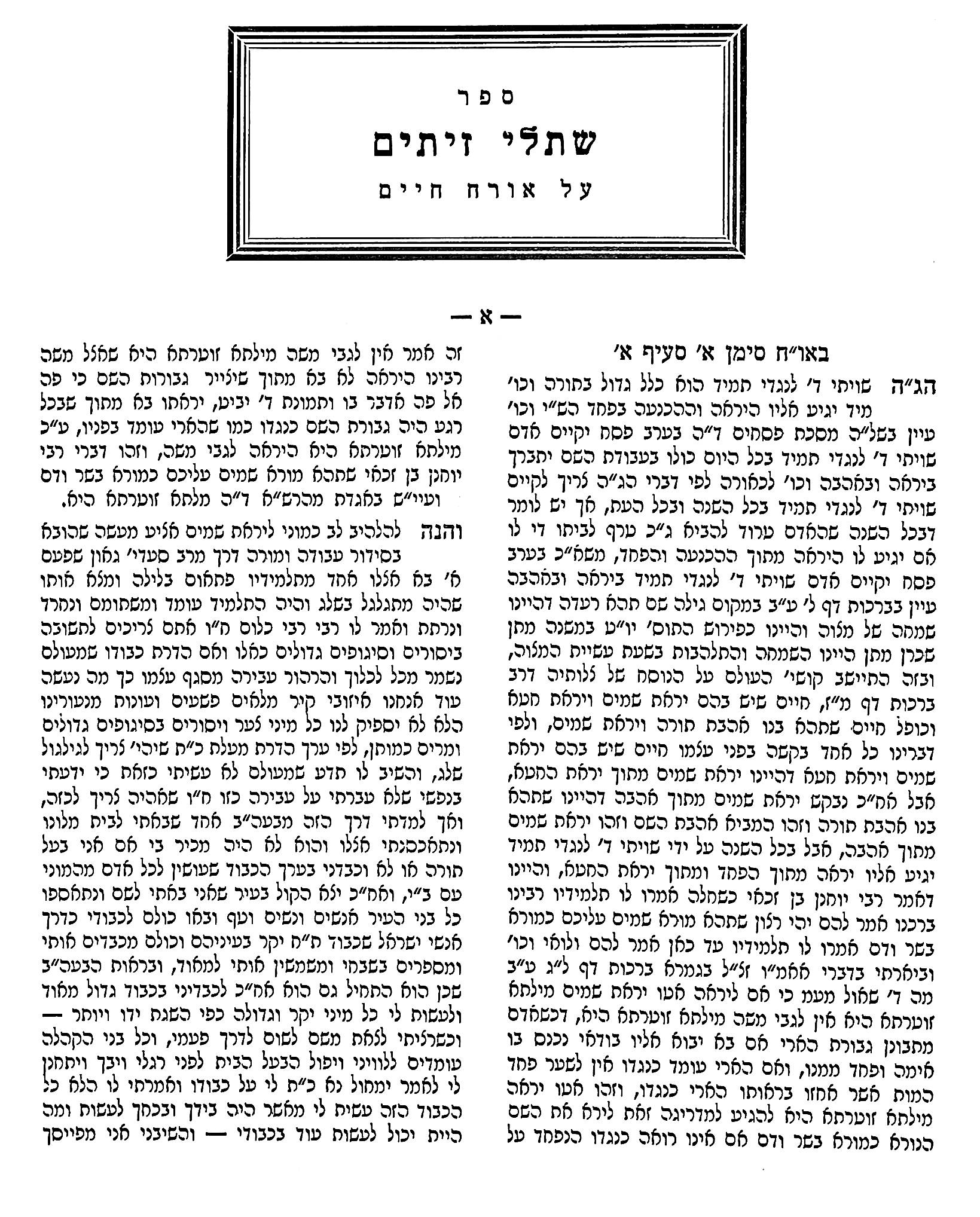
 This book is by an important Hungarian Rabbi, Shimon Krausz, who was born in Szerdahely in 1863. He was the son of another prominent Hungarian Rabbi, Yaakov Koppel Krausz. He married the daughter of Rabbi Menashe Gelb from Vylkove-Phila in 1889.
From 1895 he served as Rabbi of Karlburg, from 1896, he was Rabbi in Nagy-Szent-Miklós, from 1914, he served as a rabbi in Szarvas, and from 1915 he filled his father’s position in the Ács community. This book, “Shetilei Zaytim” , was first published just before the Second World War.
Rabbi Krausz struggled to make a living as a rabbi in a small community, but was known as a great Talmudic scholar who provided answers to questions submitted to him.
Rabbi Yonasan Steif, head of the Rabbinical Court (Av Beis Din) of Budapest, consulted with him on weighty halakhic questions and delighted in engaging in Torah discussions with him.
Rabbi Shimon Krausz had several sons who settled in England and one in Switzerland. He, however, remained in Hungary and was murdered at Auschwitz with his wife and the families of his two daughters. During the Holocaust, almost all copies of his book and most of his handwritten works were lost.
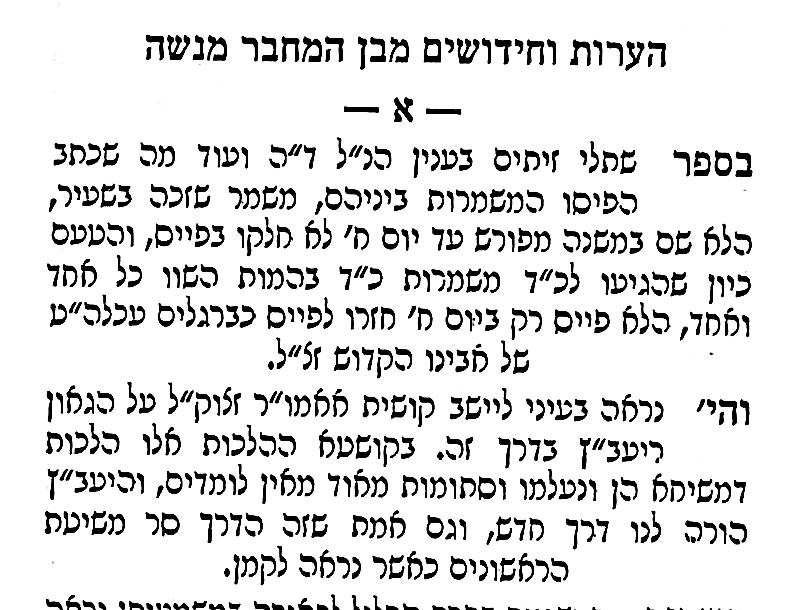
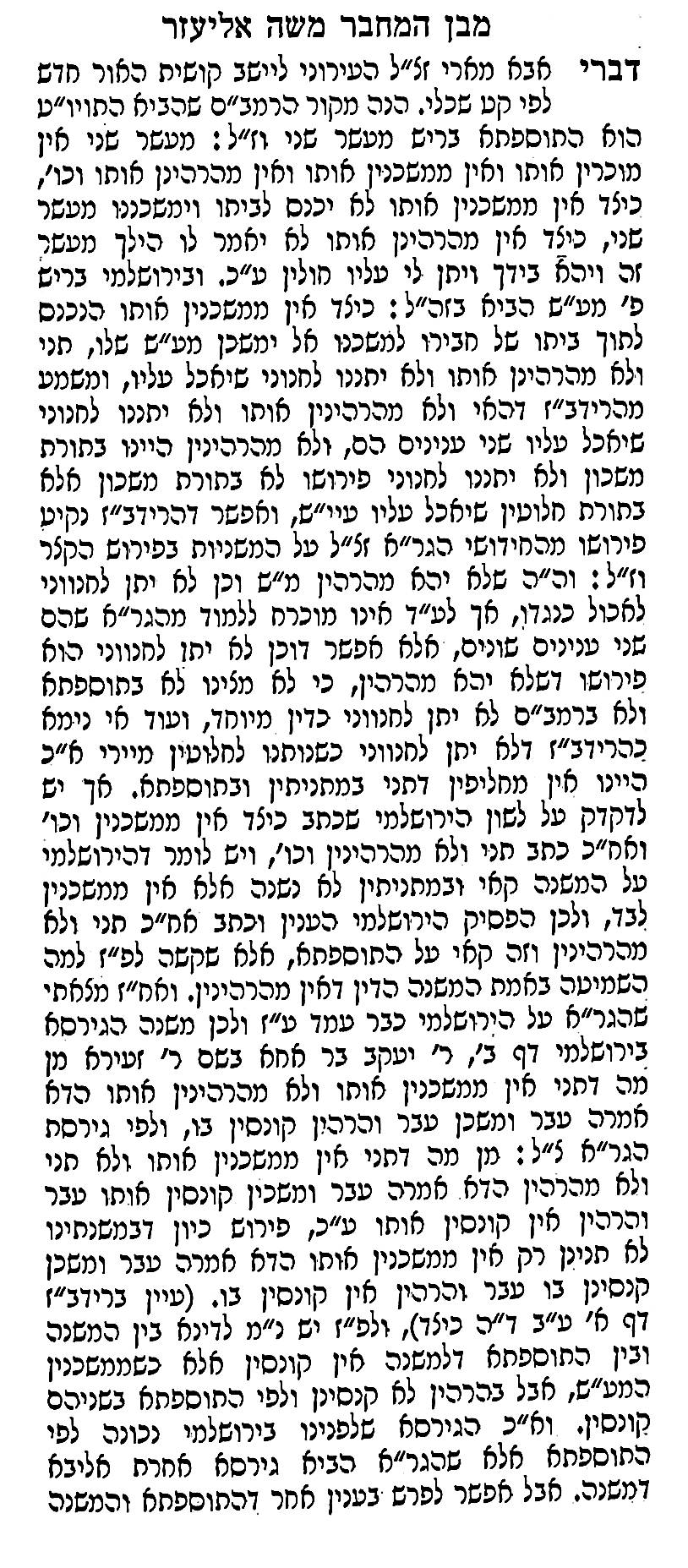
This book, consisting of some of Rabbi Shimon Krausz’s writings, which had been saved, were edited and published by is son, Rabbi Moshe Eliezer Krausz (known as Rabbi Dr. Maurice Krausz).
Proof reading was done by his brother, Rabbi Menashe Krausz of Basel, Switzerland, who later published another edition. The book was financed by another brother, Armin (Tzvi Yehuda) Krausz. The book includes notes by Rabbi Shimon Krausz and his father on innovations in the writings of Rabbi Yonatan Eybeschütz and others.
Rabbi Moshe Eliezer Krausz (who published the book) was born in Hungary, and received semicha (his rabbinical certification) at the Pressburg Yeshiva and obtained a doctorate in philosophy at the University of Prague. He was communal rabbi and Av Beis Din of Alba-Julia (Karlsburg) in Rumania for 17 years. In 1947 he emigrated to England and was a Dayan of the Leeds Beth Din until 1960, when he was appointed a Dayan of the Federation of Synagogues Beth Din in London. As a halachic authority he served the London Board for Shechita.
Armin Krausz, who financed printing this book, was born in Hungary and emigrated to England in the early 1920s. He met and married Leah Miller, the daughter of a Sheffield cutler. He soon flourished as a manufacturer of inexpensive stainless steel cutlery. He became a leader of the Sheffield Jewish community. He was President of the Central Hebrew Congregation in Sheffield from 1927 and was prominent in the Central Council of Jewish Religious Education, the Joint Israel Appeal, the Board of Deputies, the Zionist Federation, the Mizrachi Federation, the Hillel Foundation and the Sheffield Representative Council.
In 1964 as well as financing this book, Armin Krausz compiled and published, with the authorization of the then Chief Rabbi, Israel Brodie, an Israel Independence Day Machzor, which Sir Israel’s successor, Rabbi Dr. Immanuel Jakobovits “declined to recommend”. He also wrote a very important book on Sheffield Jewry, which was published by Bar Ilan University.
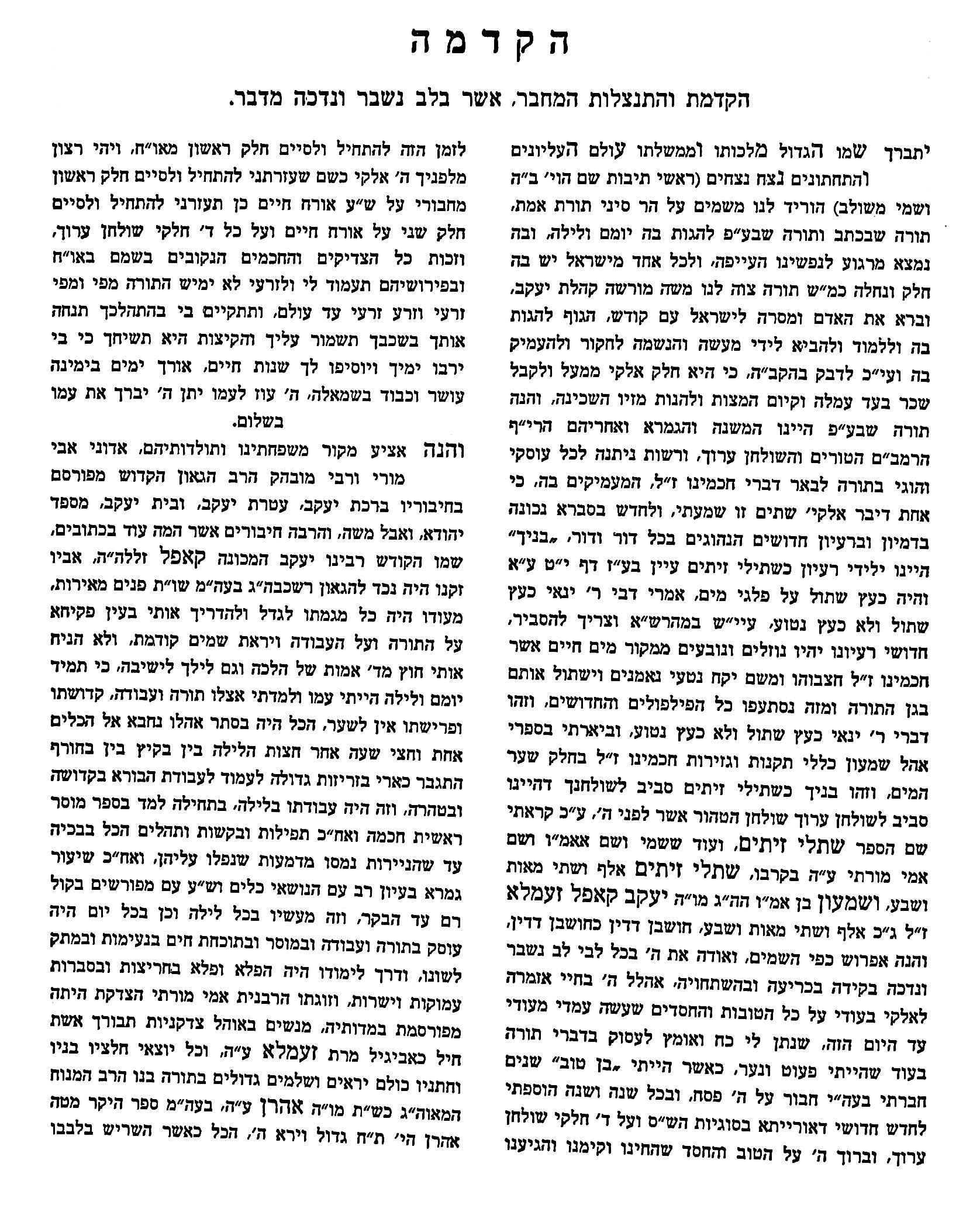
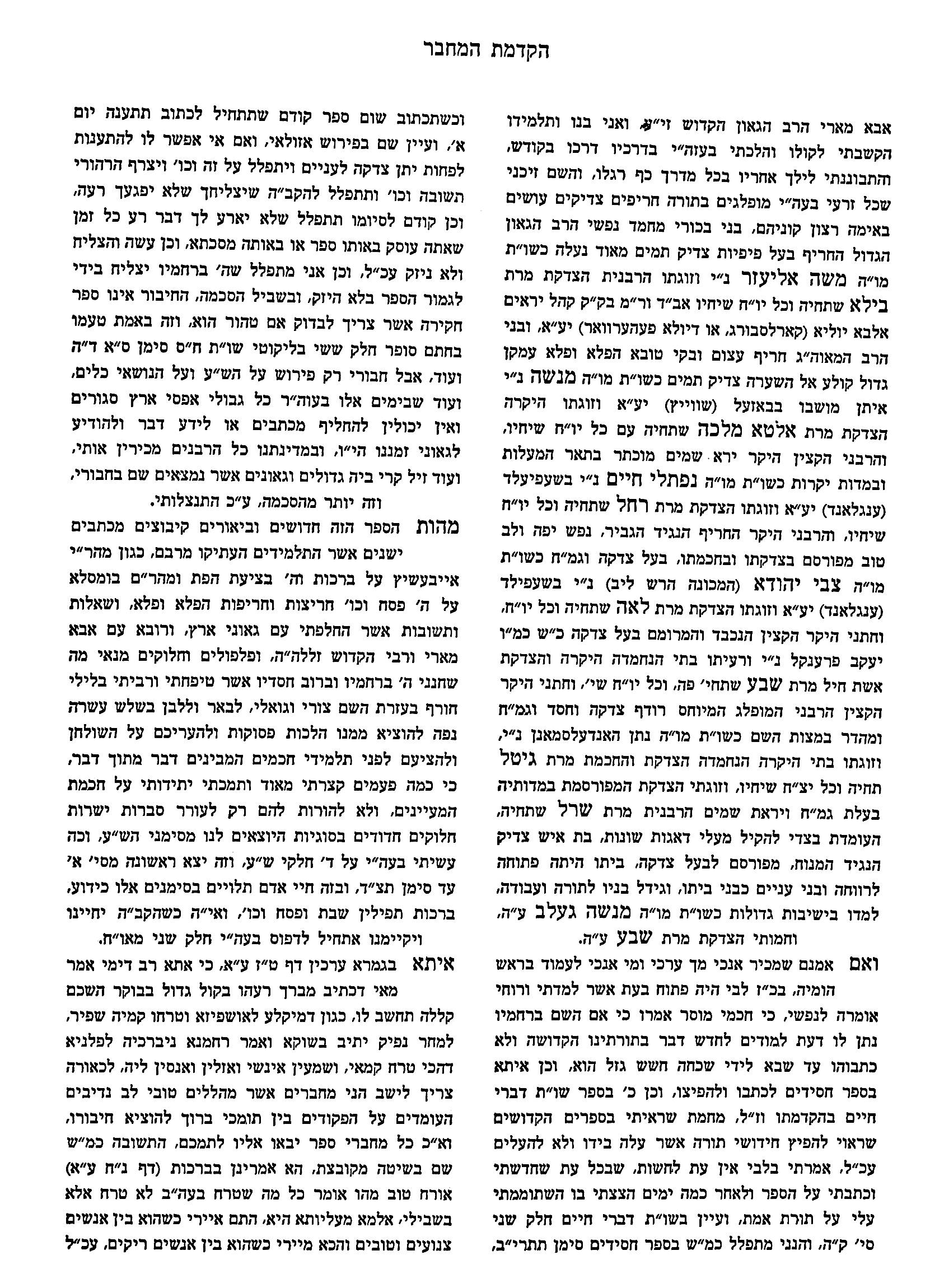
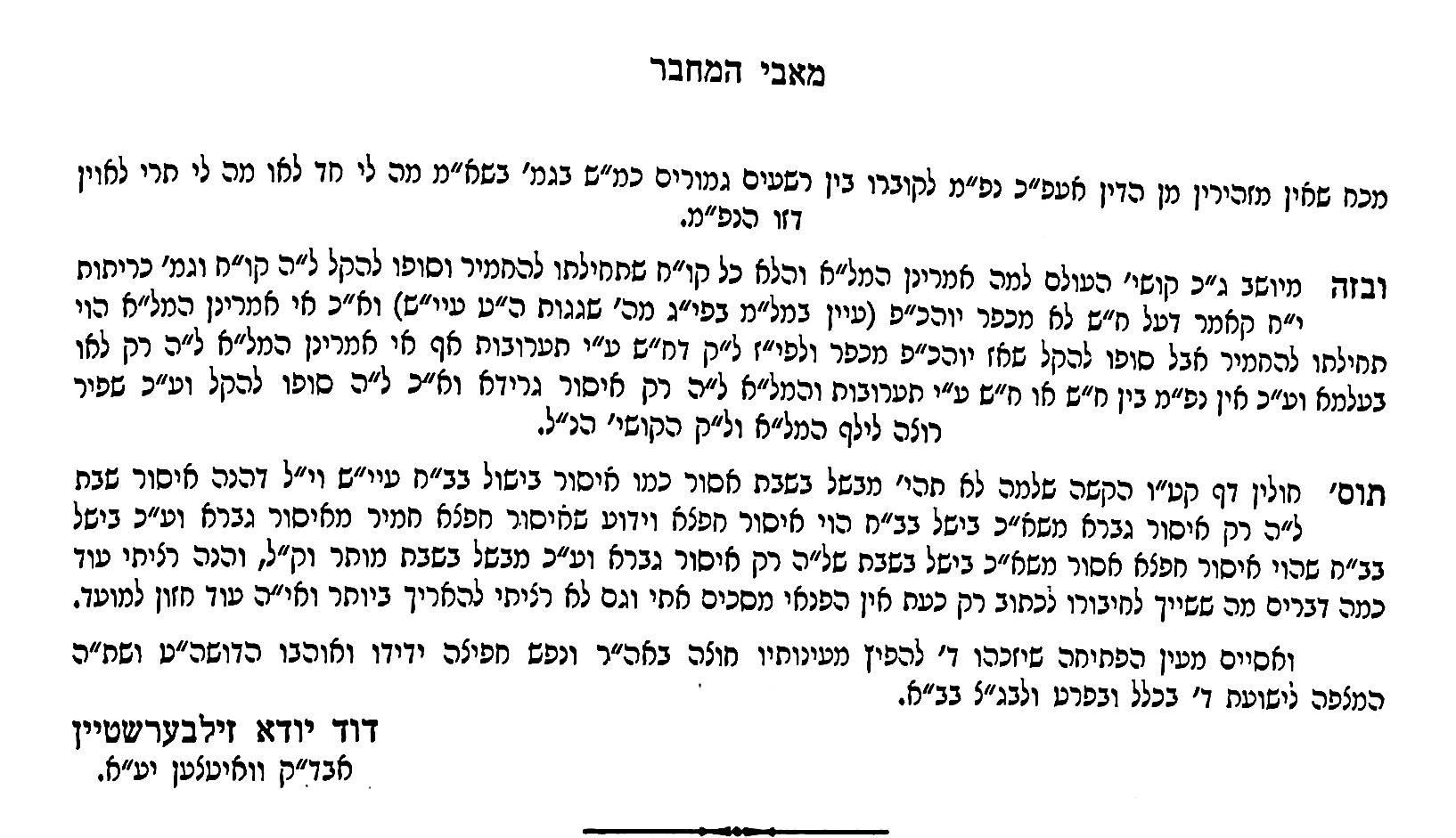
The book starts with an introduction by the author’s sons: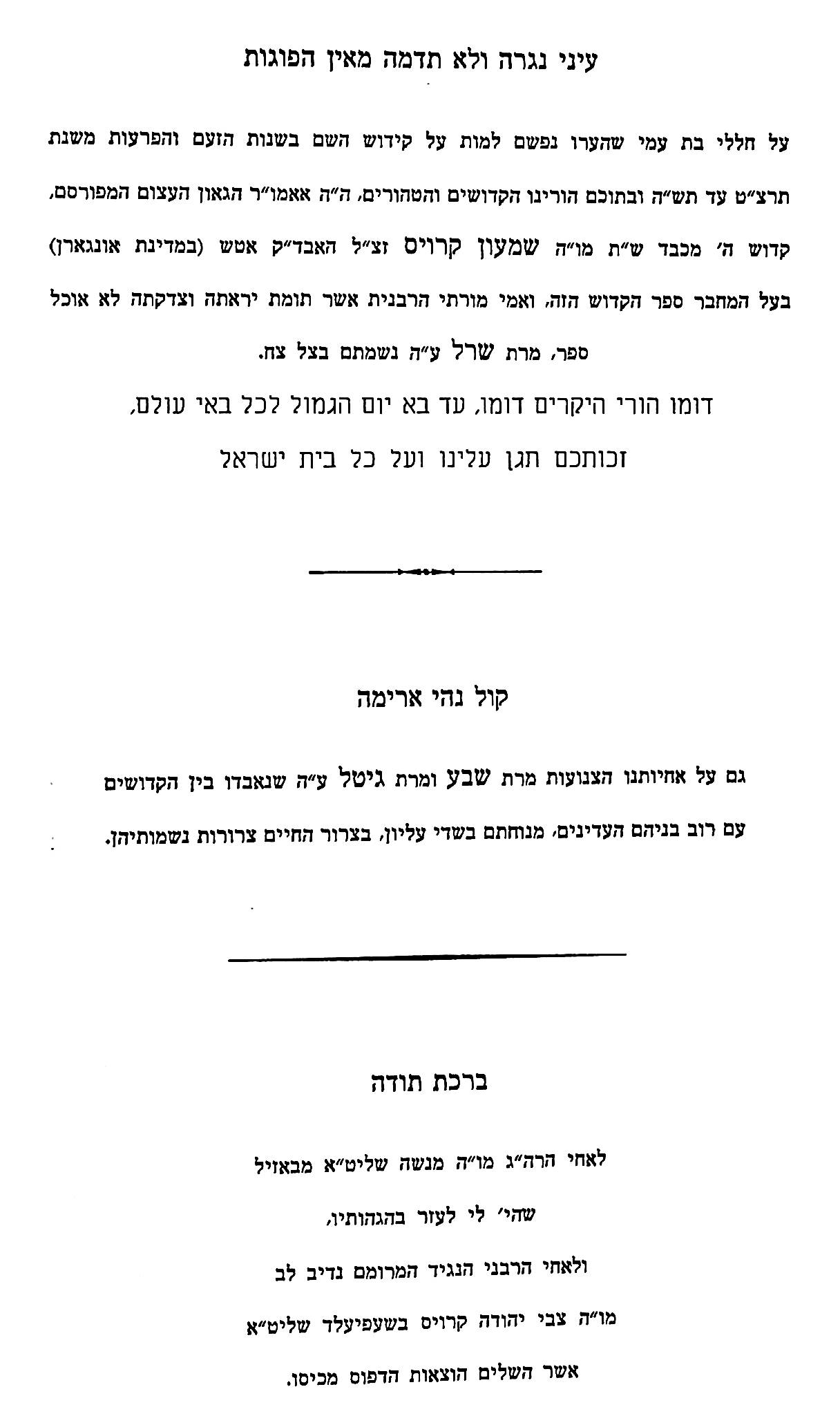









 Jewish Miscellanies
I am enjoying reading about the seforim that come into focus through this generous sharing of judaica. I have this particular volume in my library because my wife is the grand-daughter of Armin and Leah Krausz, one of the sons of Shimon Krausz, mentioned in your excellent summary. The whole extended family is recorded in detail in the publication. As for the contents, I admit that I have not studied it fully. The bulk of the work is on the laws of Pesach. It is interesting to note that in a number of places R’ Shimon quotes from sources that he found in “kisvei yad yoshon” (old manuscript documents).