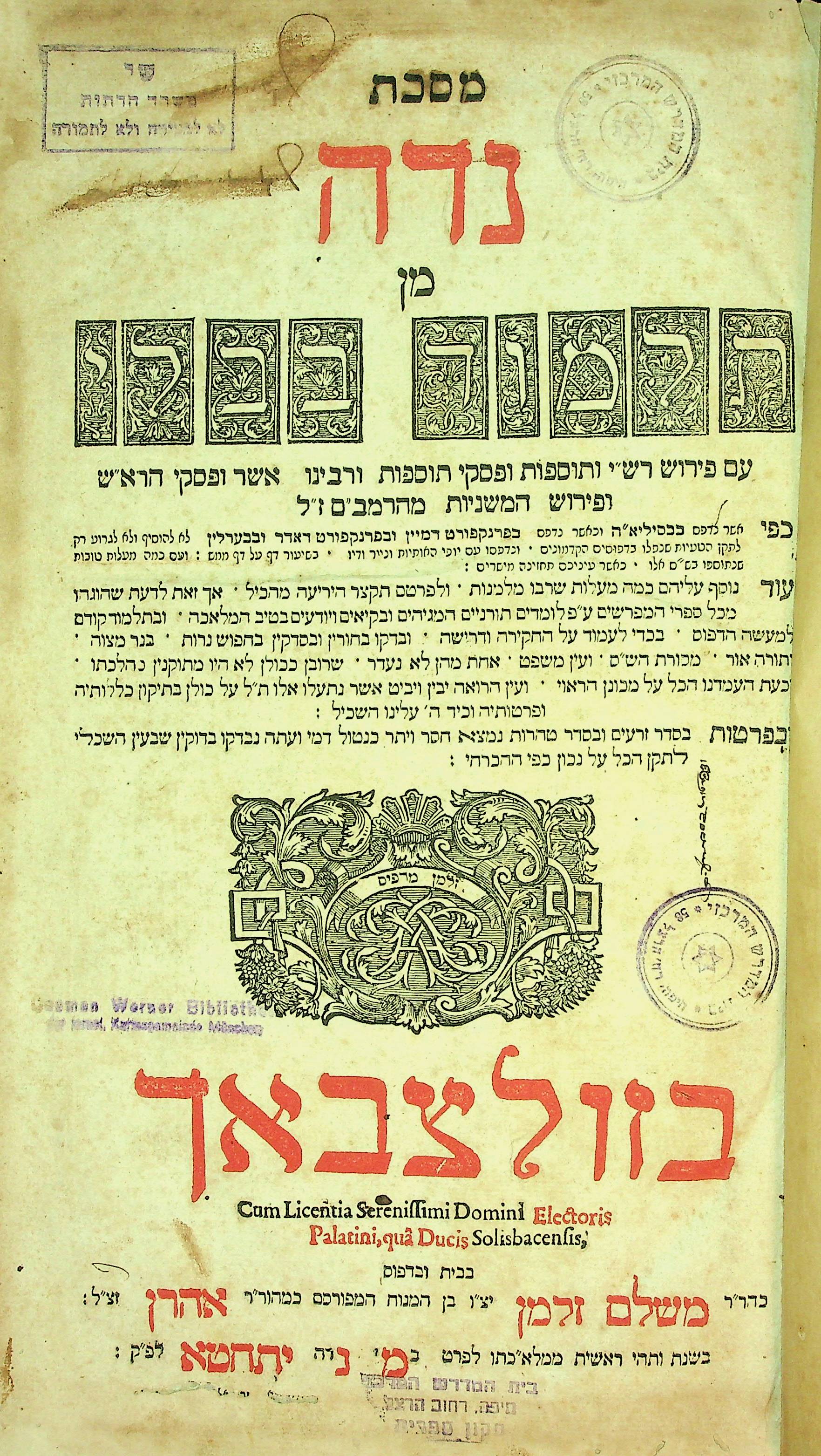
 I have a number of volumes of the Talmud, printed in Sulzbach, Bavaria, on various dates in the mid-eighteenth century. Hebrew printing had begun in Sulzbach, an old-established Jewish community, in 1669.
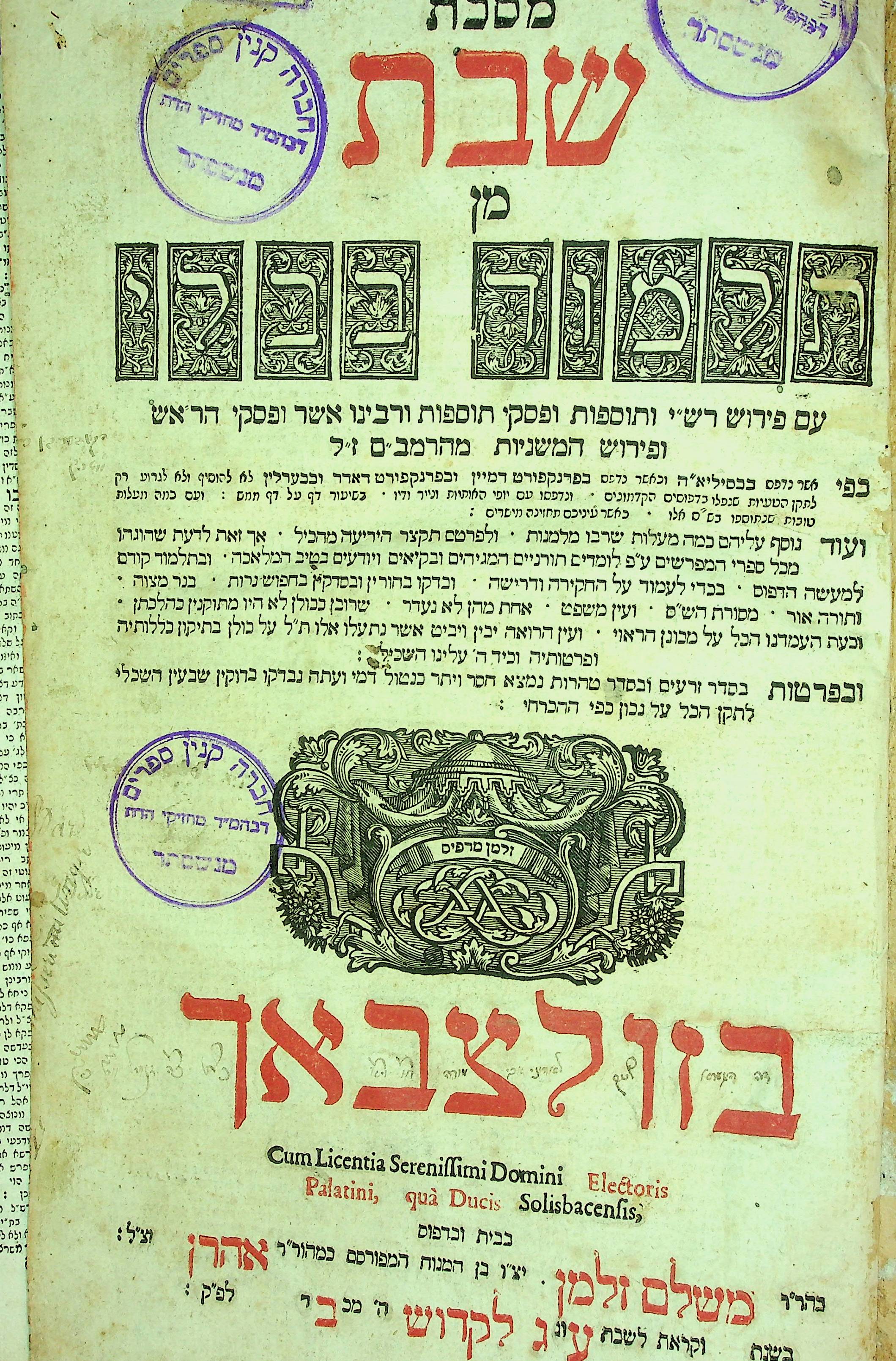
These editions of the Talmud are the second and third editions printed in Sulzbach by Meshulam Zalman (known as Zalman) son of Aharon (Fränkel), from 1755 to 1770. The earlier editions, printed from 1755, had red ink on the title pages, and so are known as the Sulzbach red Talmud. The later printings only had black ink on the title pages, and so are known as Sulzbach black.
These printings were the focus of a dispute between printers with a controversy between rabbis. Shortly after the beginning of printing the first edition, the Proops brothers, an important firm of printers in Amsterdam, appealed to the rabbis of the Council of the Four Lands with the contention that the printing of the Sulzbach edition was a violation of their printing rights. The printers in Amsterdam were then in the midst of publishing their own Talmud edition, which was an expensive undertaking. They had received rabbinic approbations granting them exclusive rights to print the Talmud for a period of twenty-five years. Many rabbis hastened to ban the Sulzbach Talmud and prohibited studying from that edition. The dispute persisted as the rabbis of Fürth, led by Rabbi David Strauss, backed Rabbi Zalman, the printer from Sulzbach.
During the course of the conflict, both sides published polemic booklets against each other. The dispute continued for a long while and eventually drew the attention of leading rabbis of that time, such as the Noda BiYehuda who intervened to mediate between the printers.
In Responsa Zichron Yosef on Chosen Mishpat, volume two, by Rabbi Yosef Steinhart of Fürth, there is an exchange of letters between himself, Rabbi Shaul of Amsterdam and another rabbi, comprising a detailed discussion of the halachic (Jewish legal) status of the Sulzbach edition of the Talmud. Rabbi Yosef Steinhart rules in his responsum: “In my humble opinion… it is permissible to study from the Talmud printed in Sulzbach, even though the printing was banned…”.
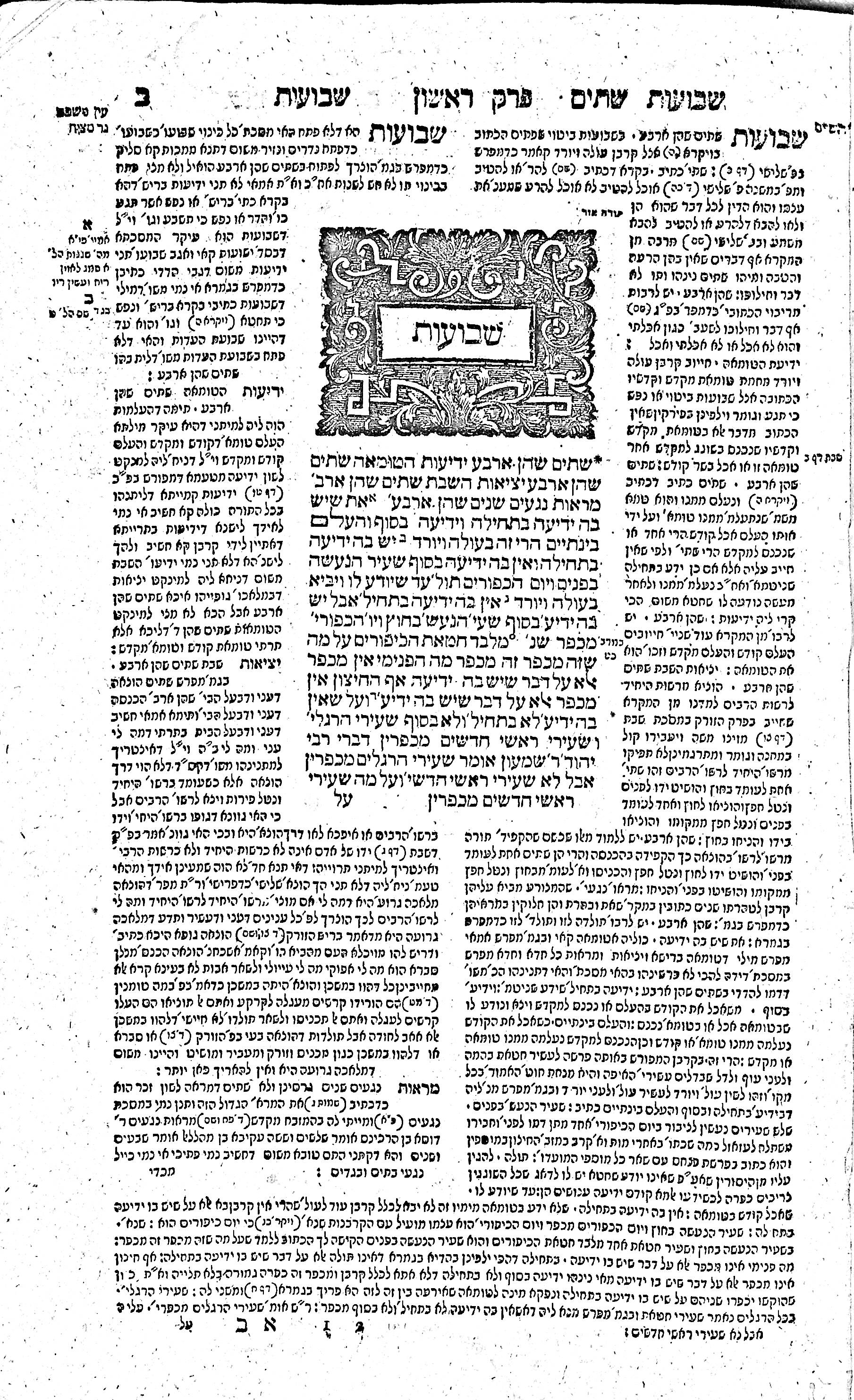
I have scanned some pages from my copies. The title pages all have the printers device with the words Zalman Madpis (Zalman printer). Masseches Shabbos came from Manchester, England. Masseches Bava Basra is followed by Masseches Avoda Zara without a title page, printed together in one volume.



 Jewish Miscellanies