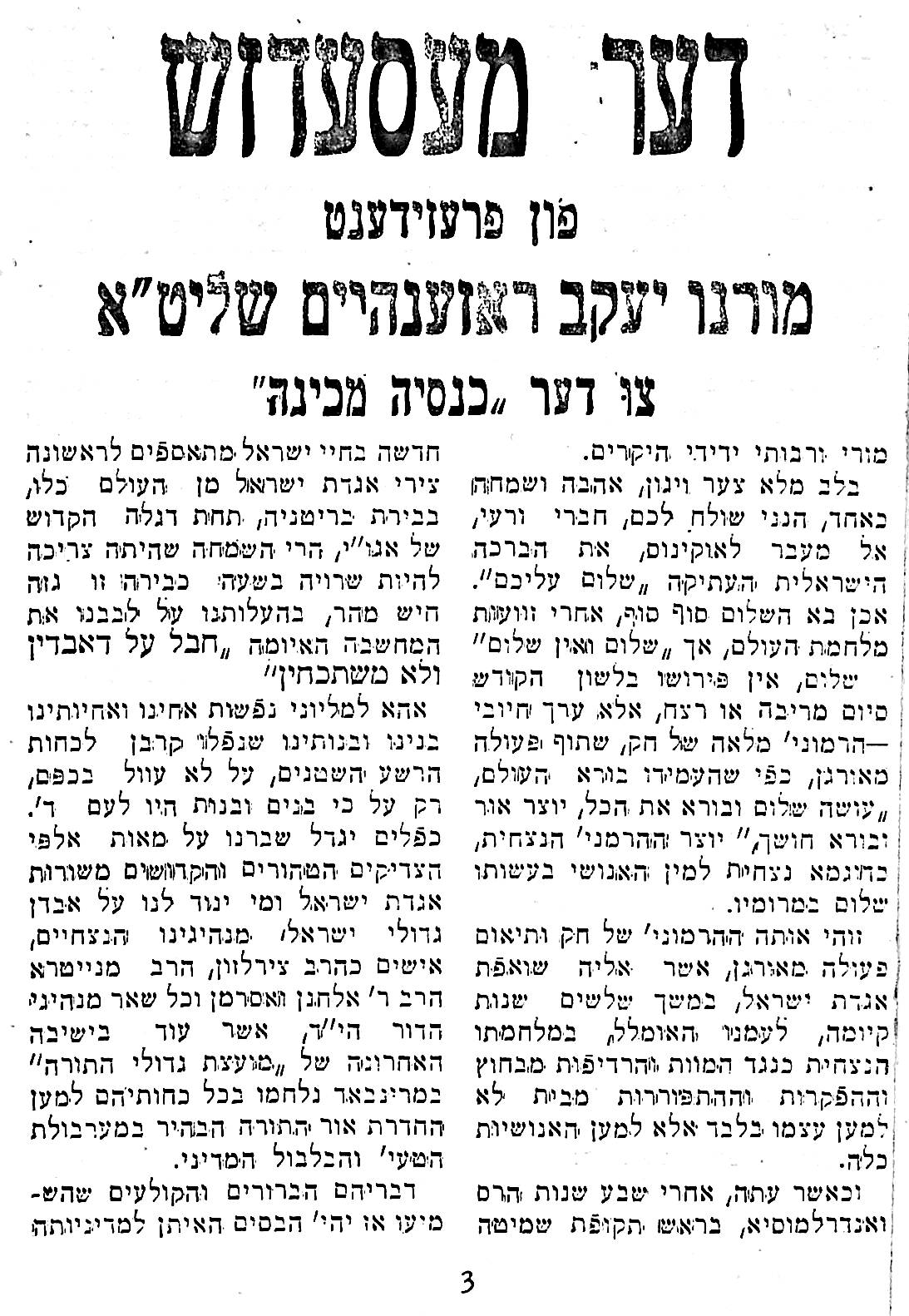
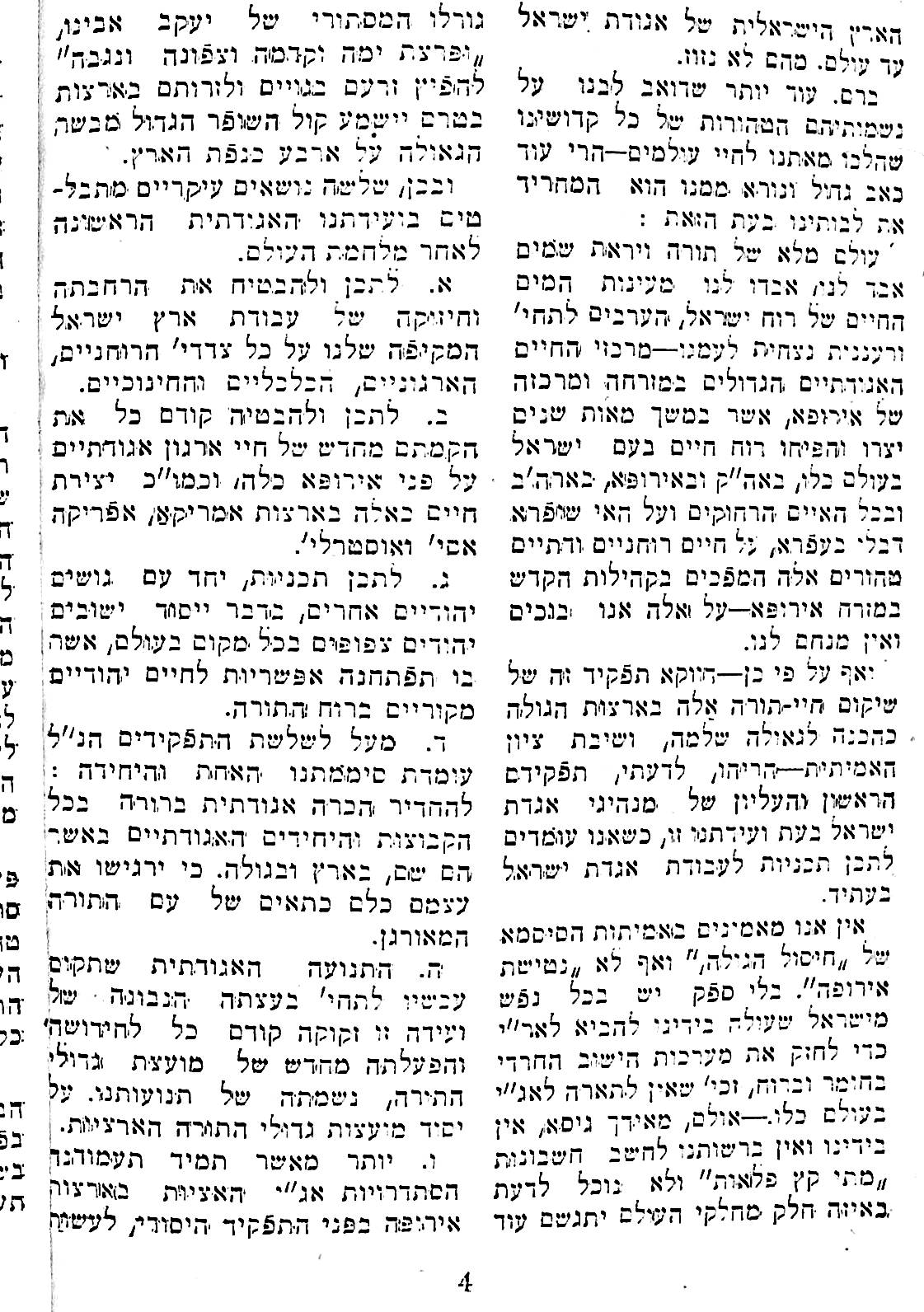
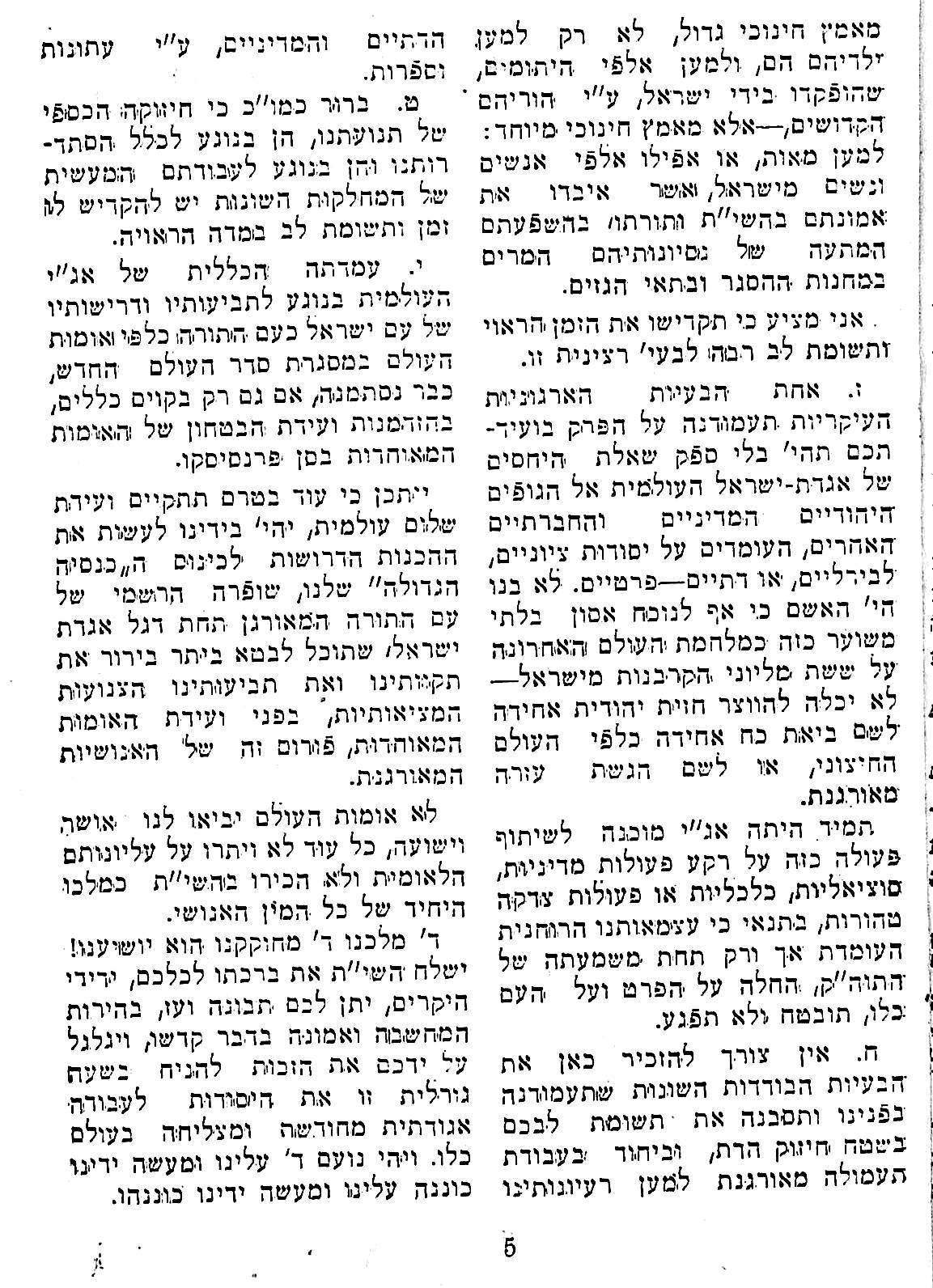
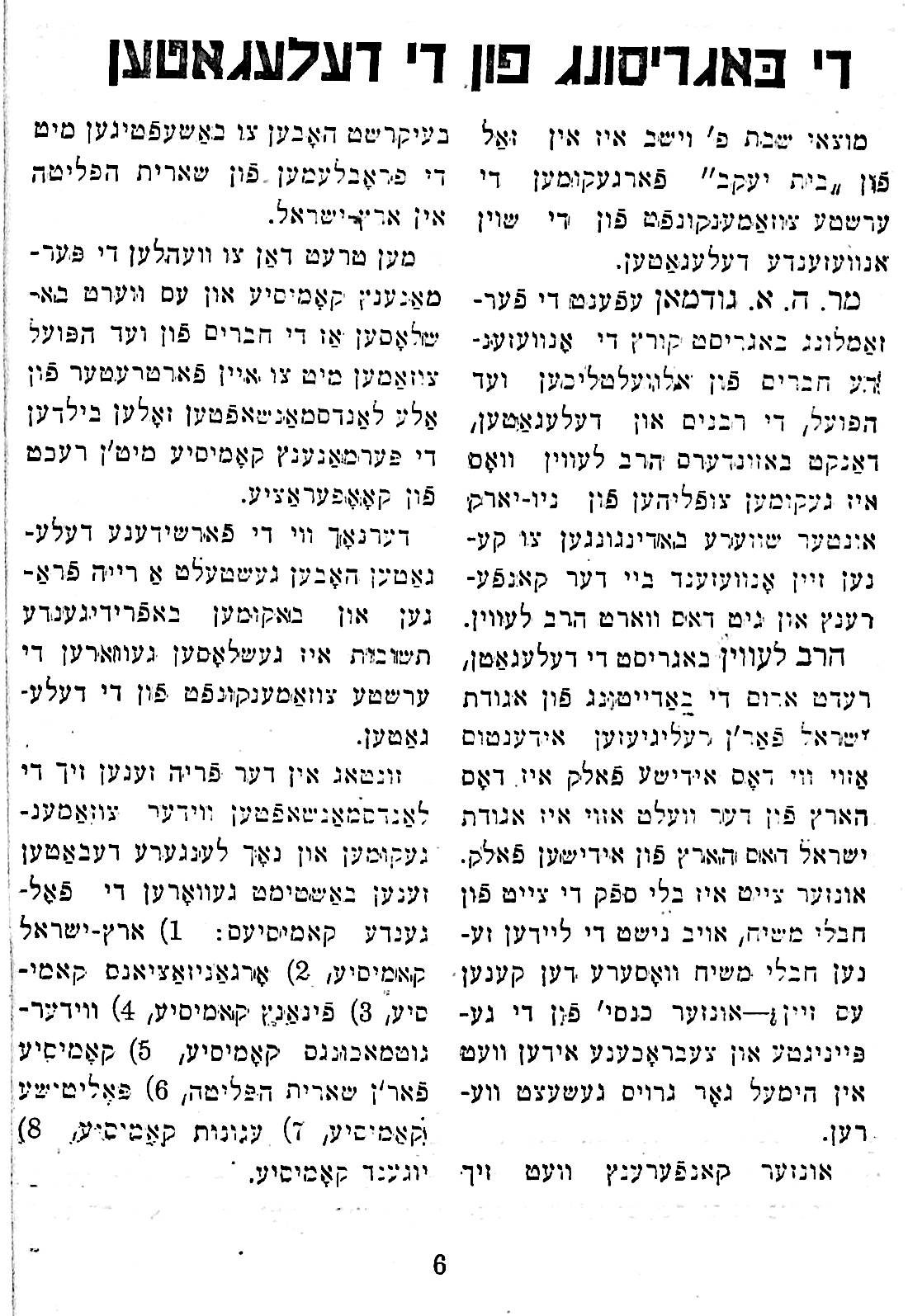
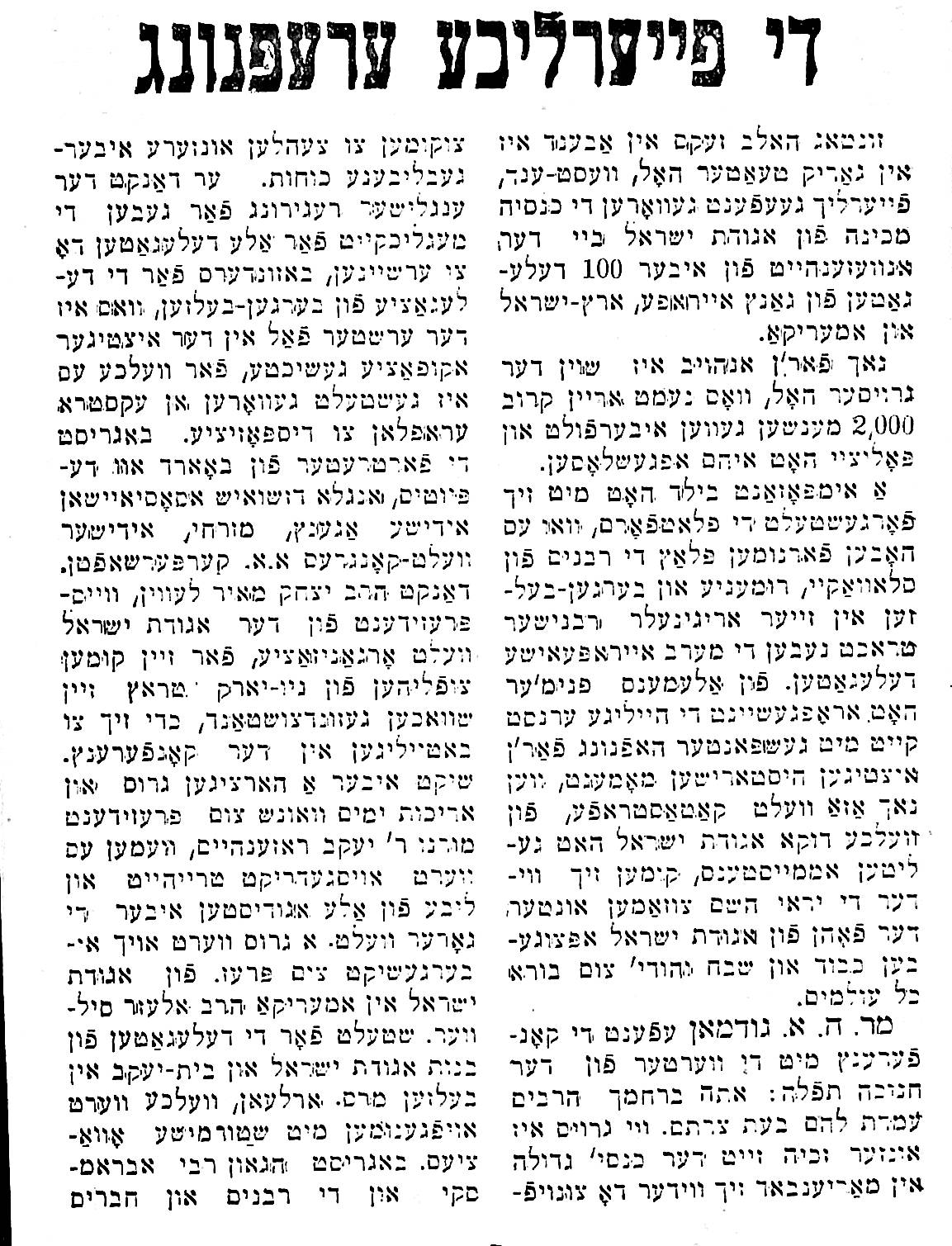
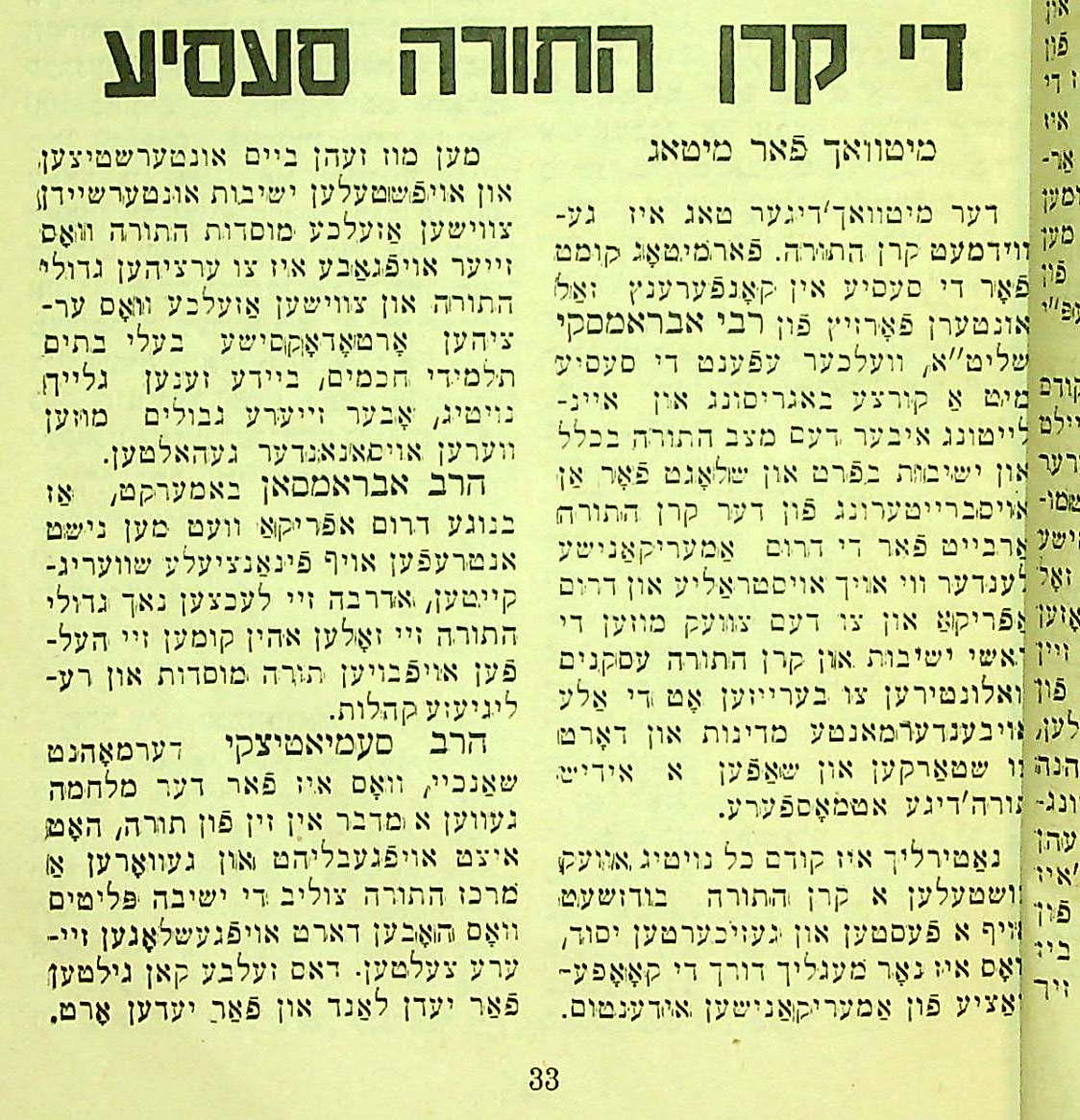
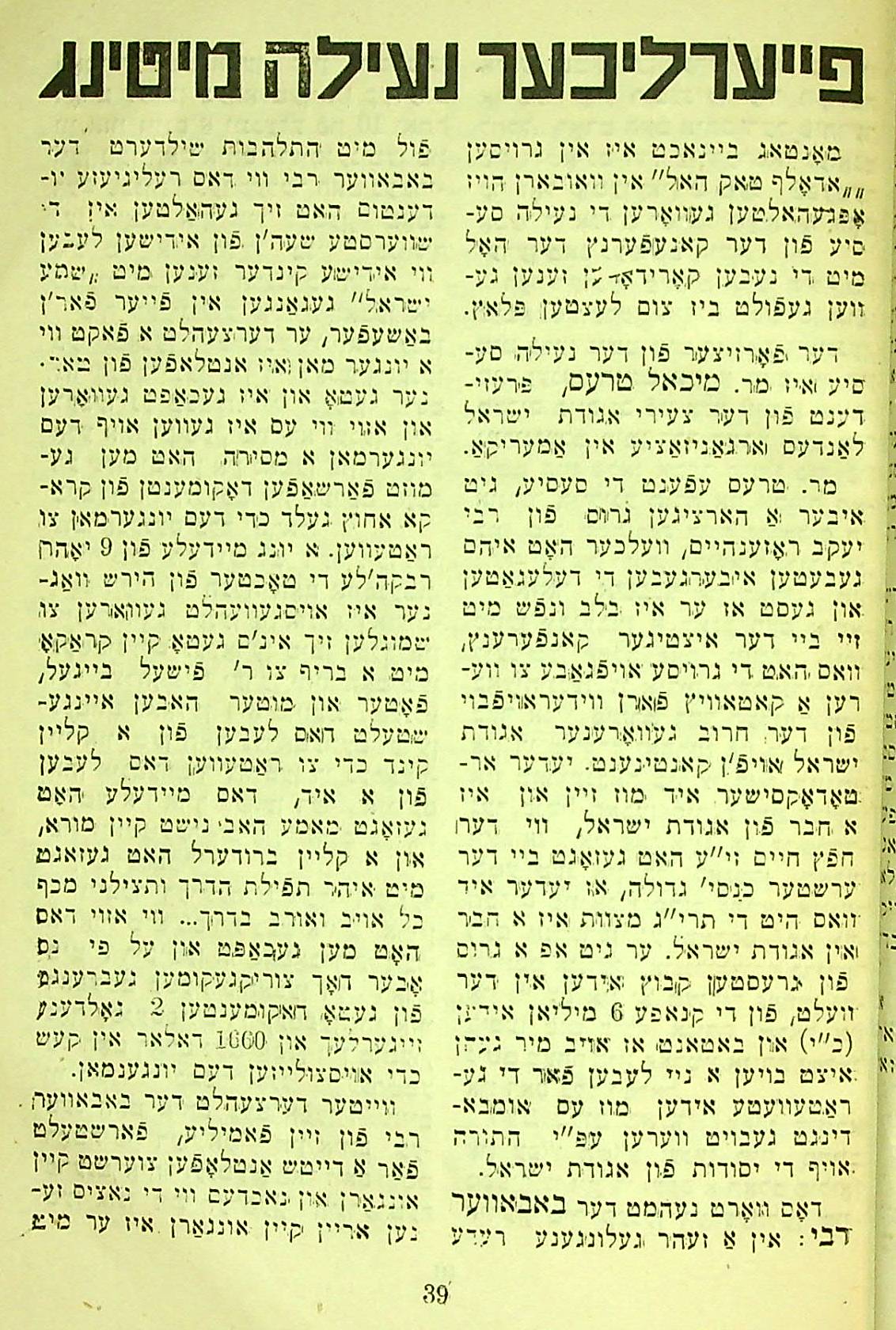
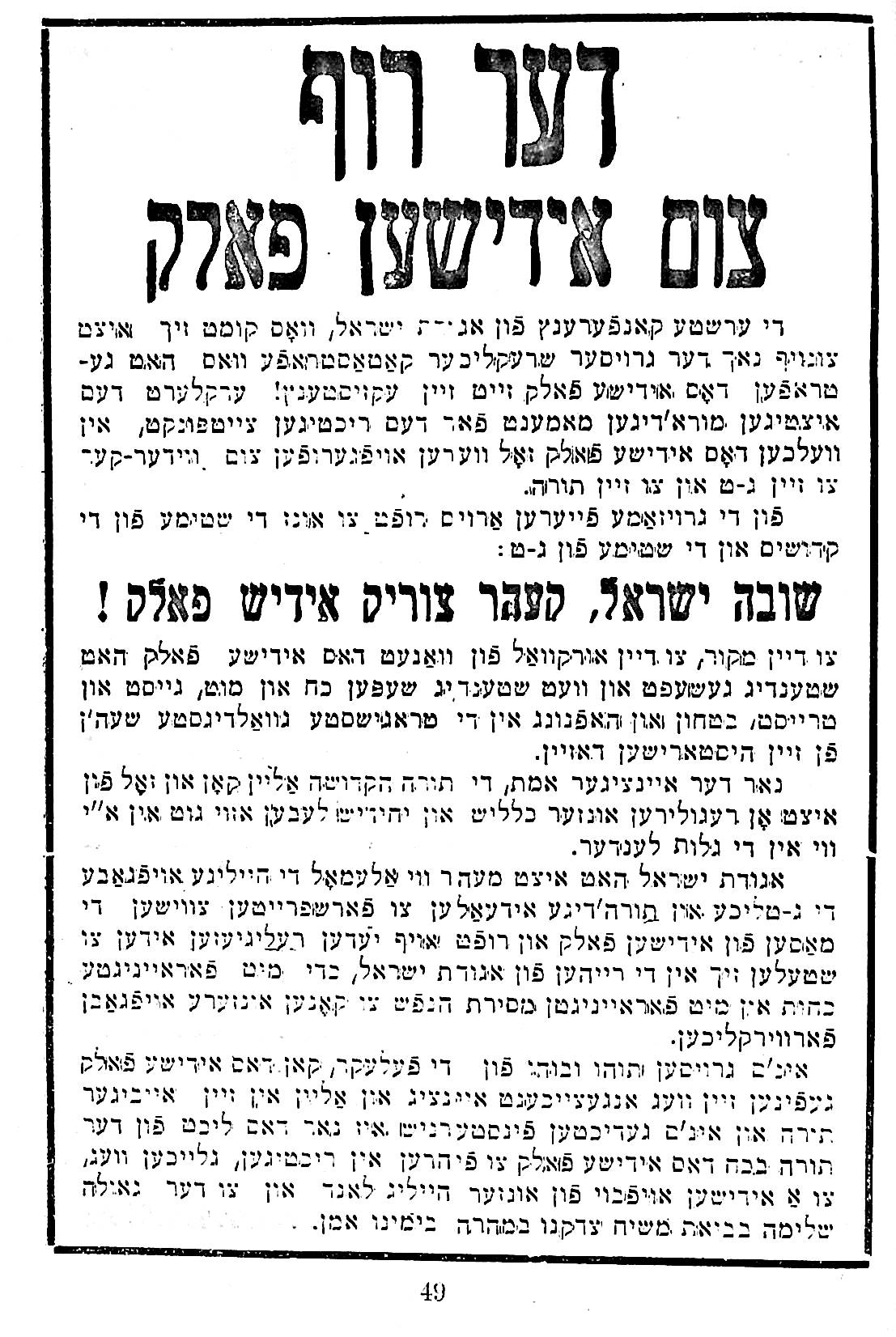
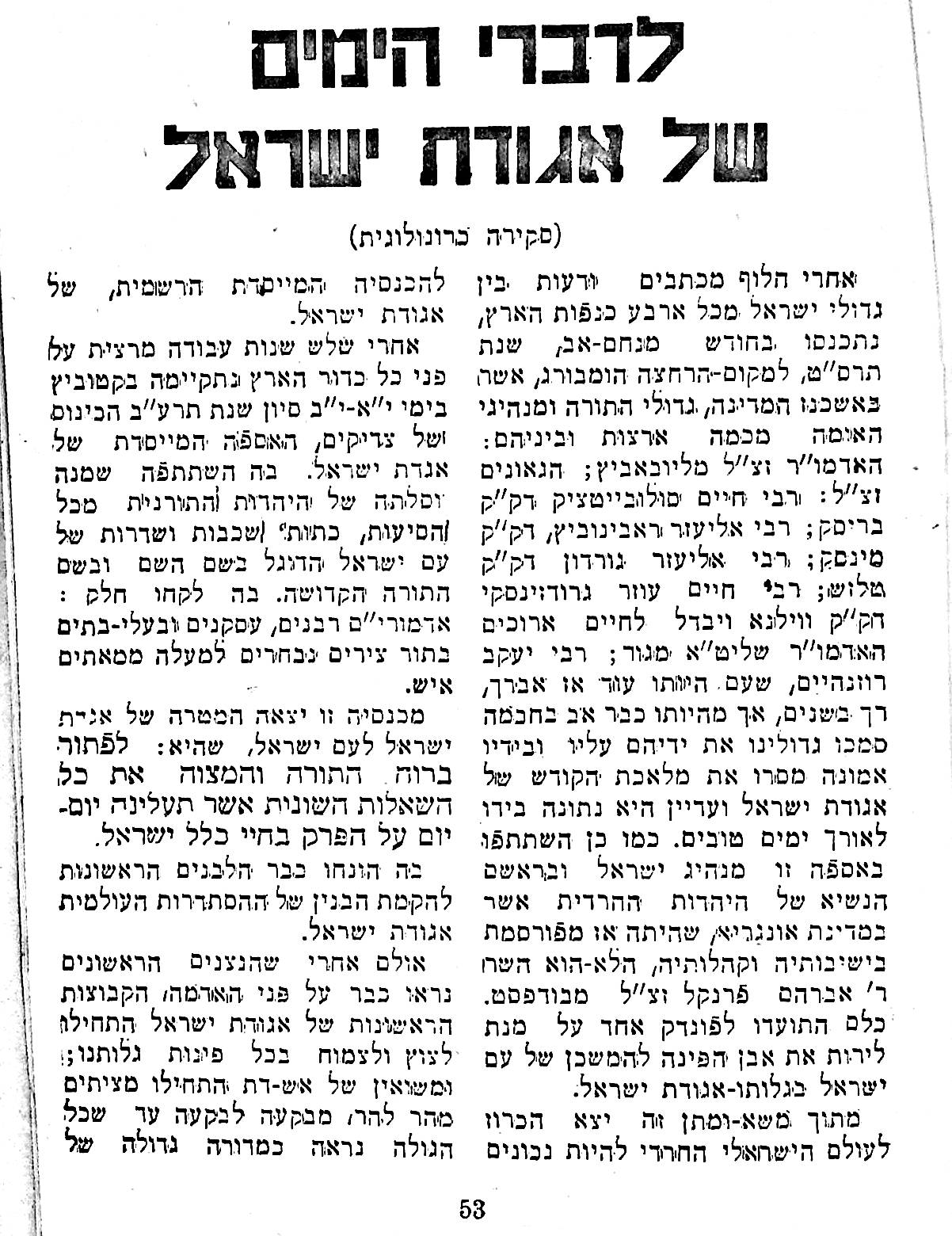
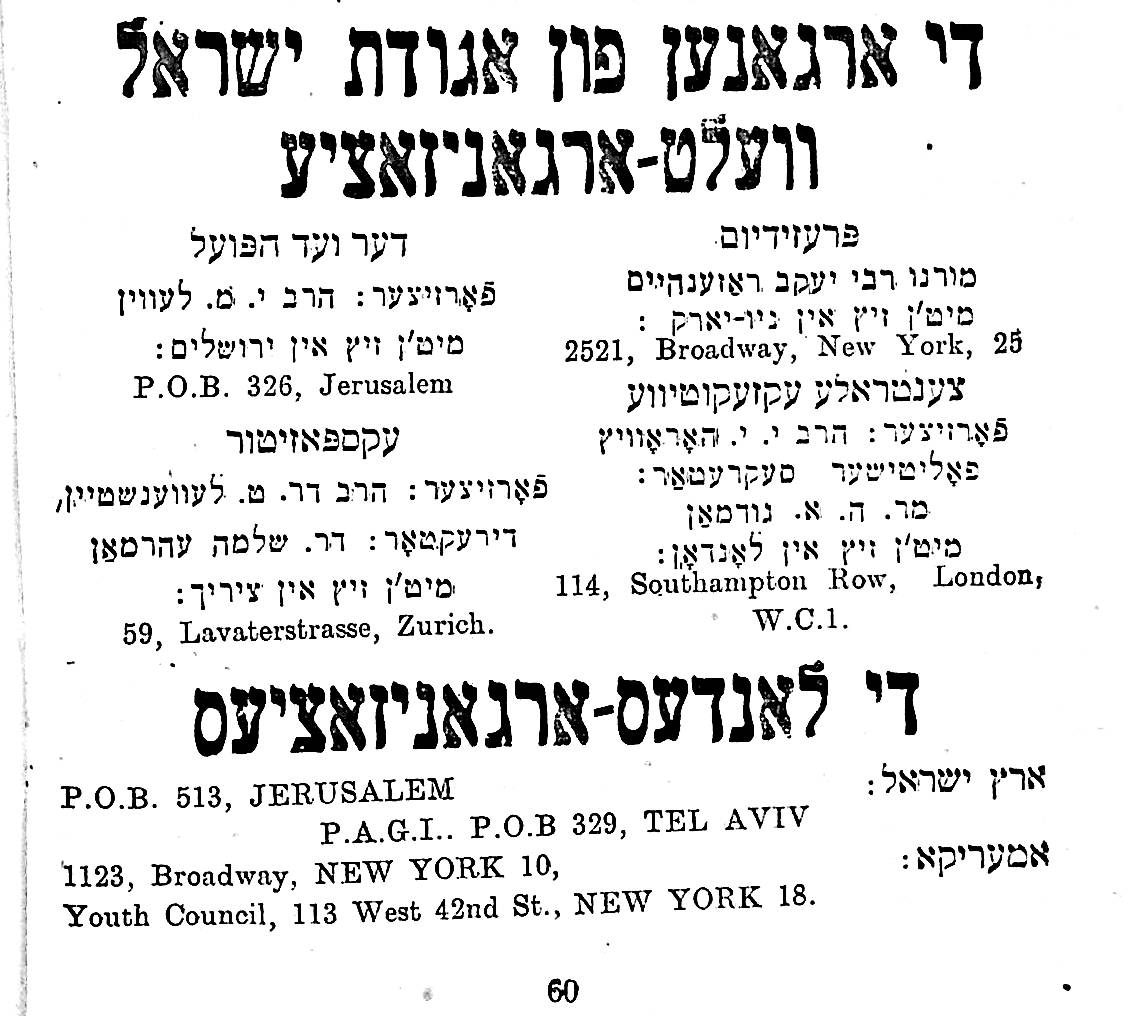
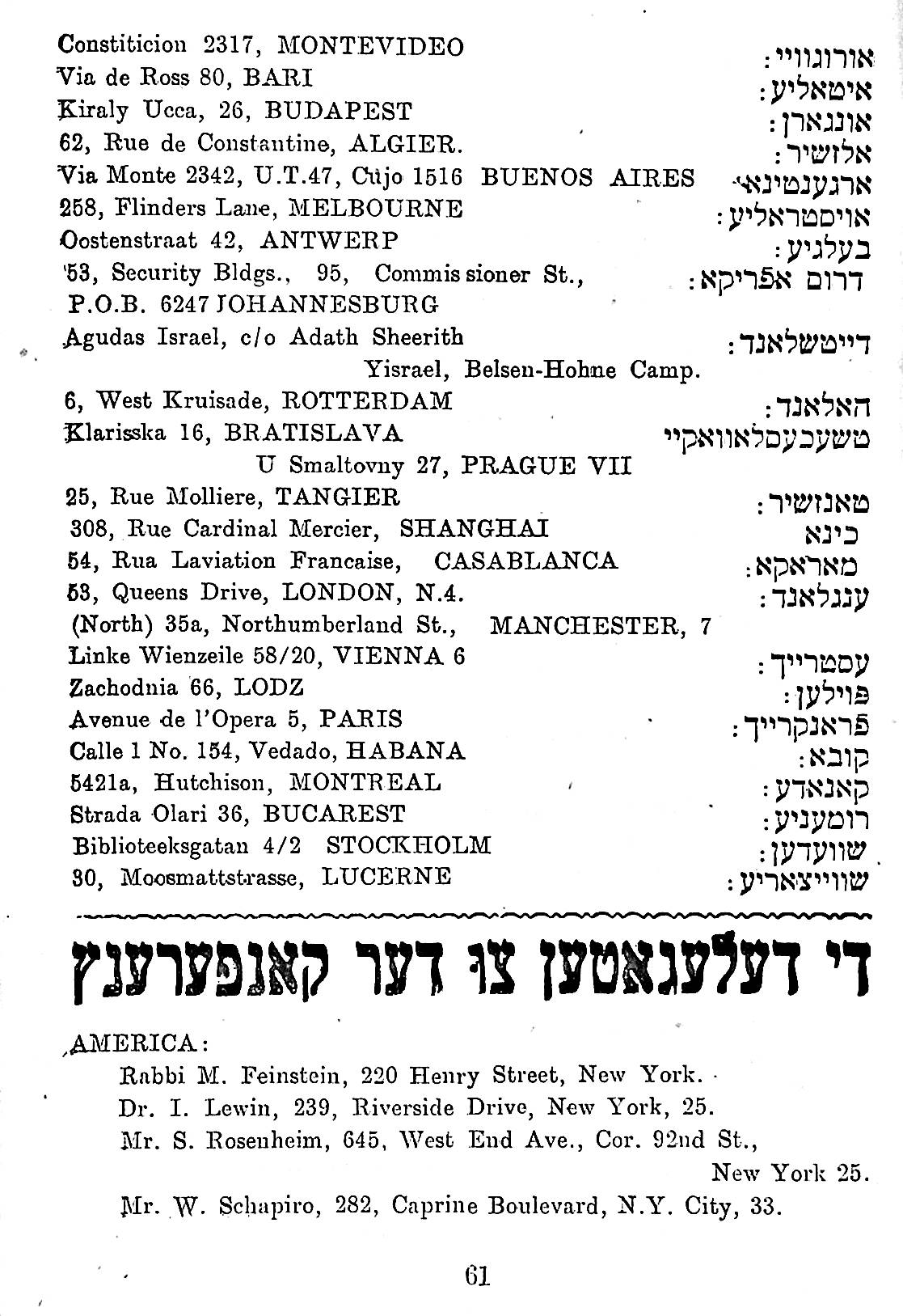
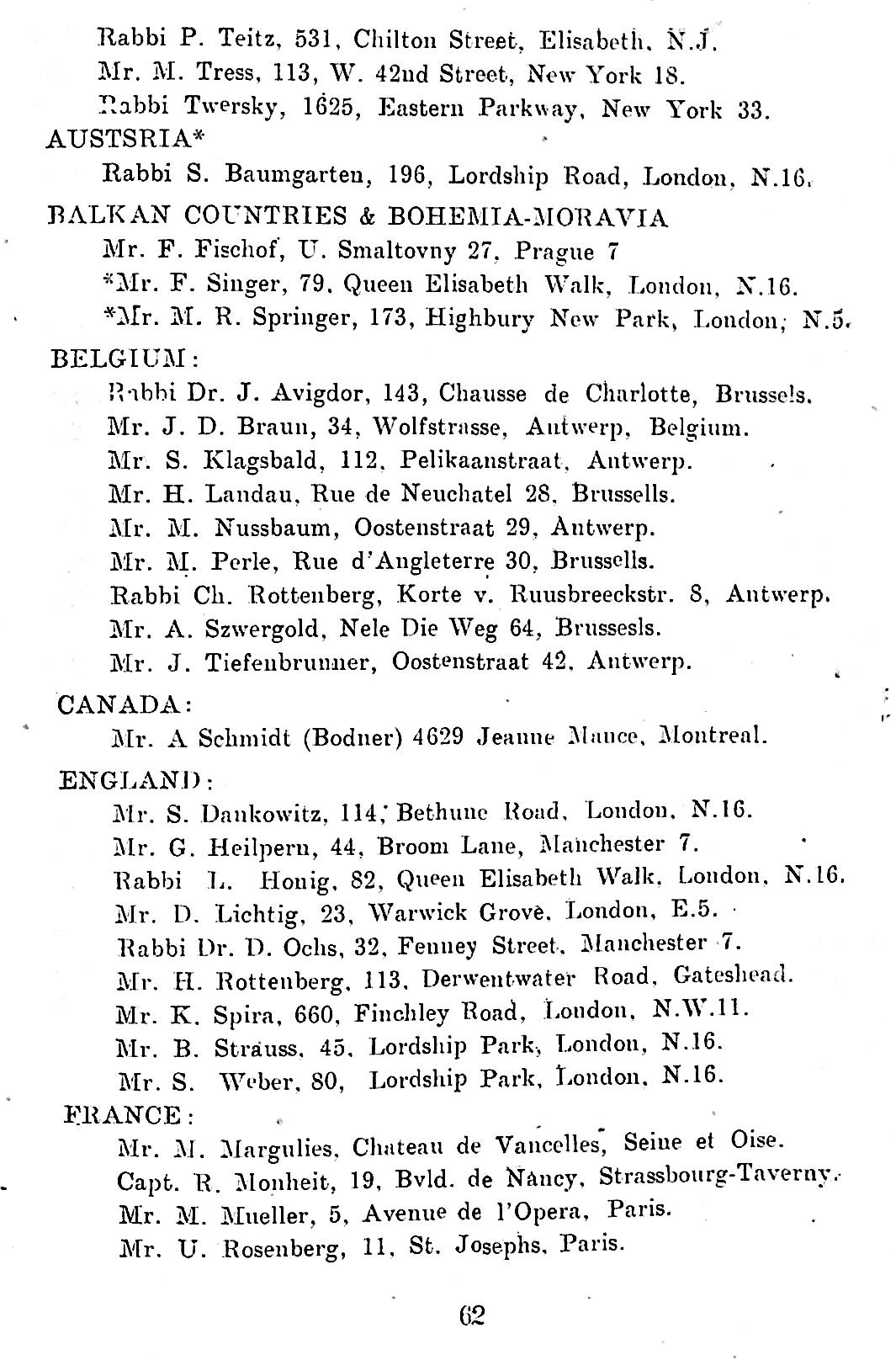
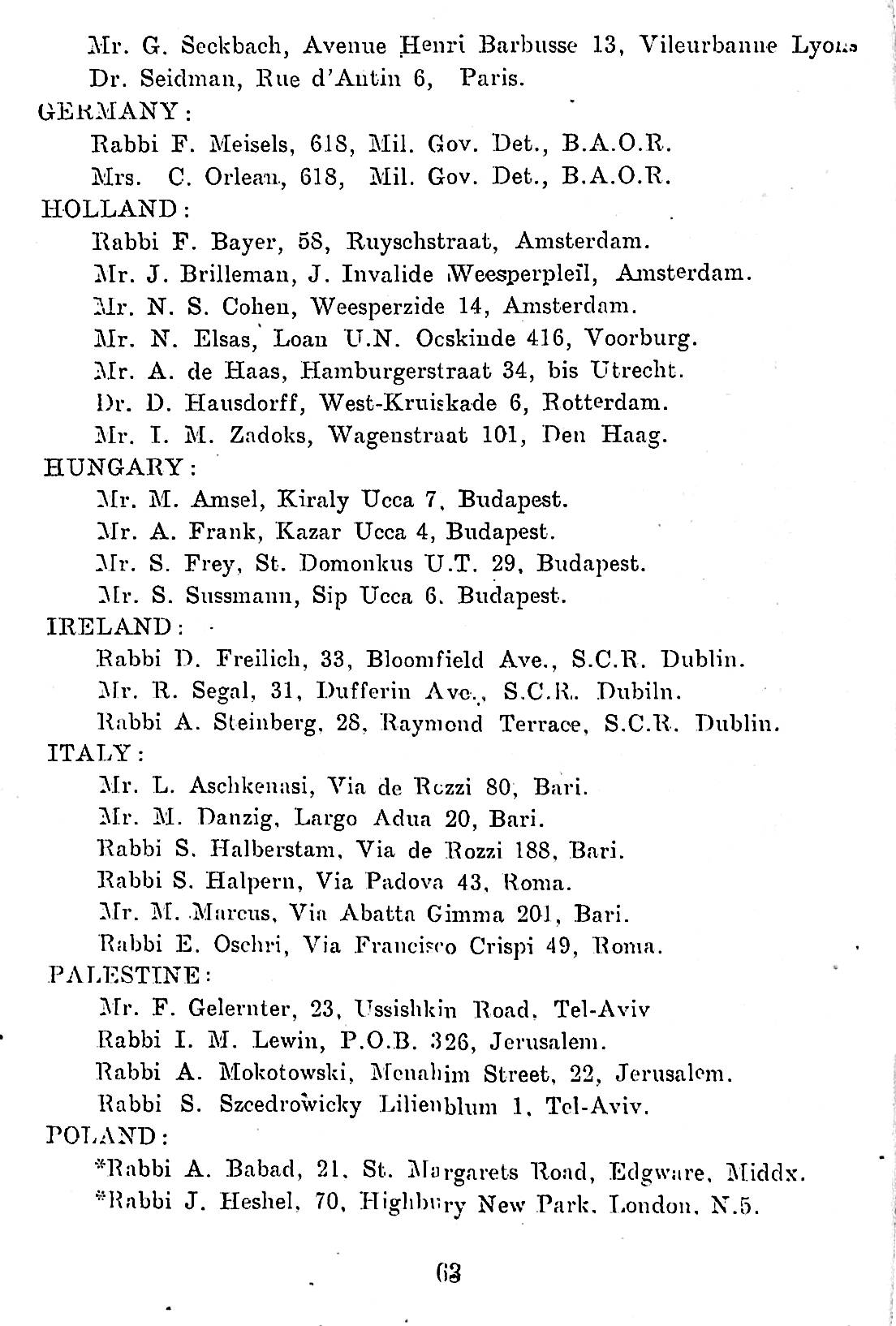
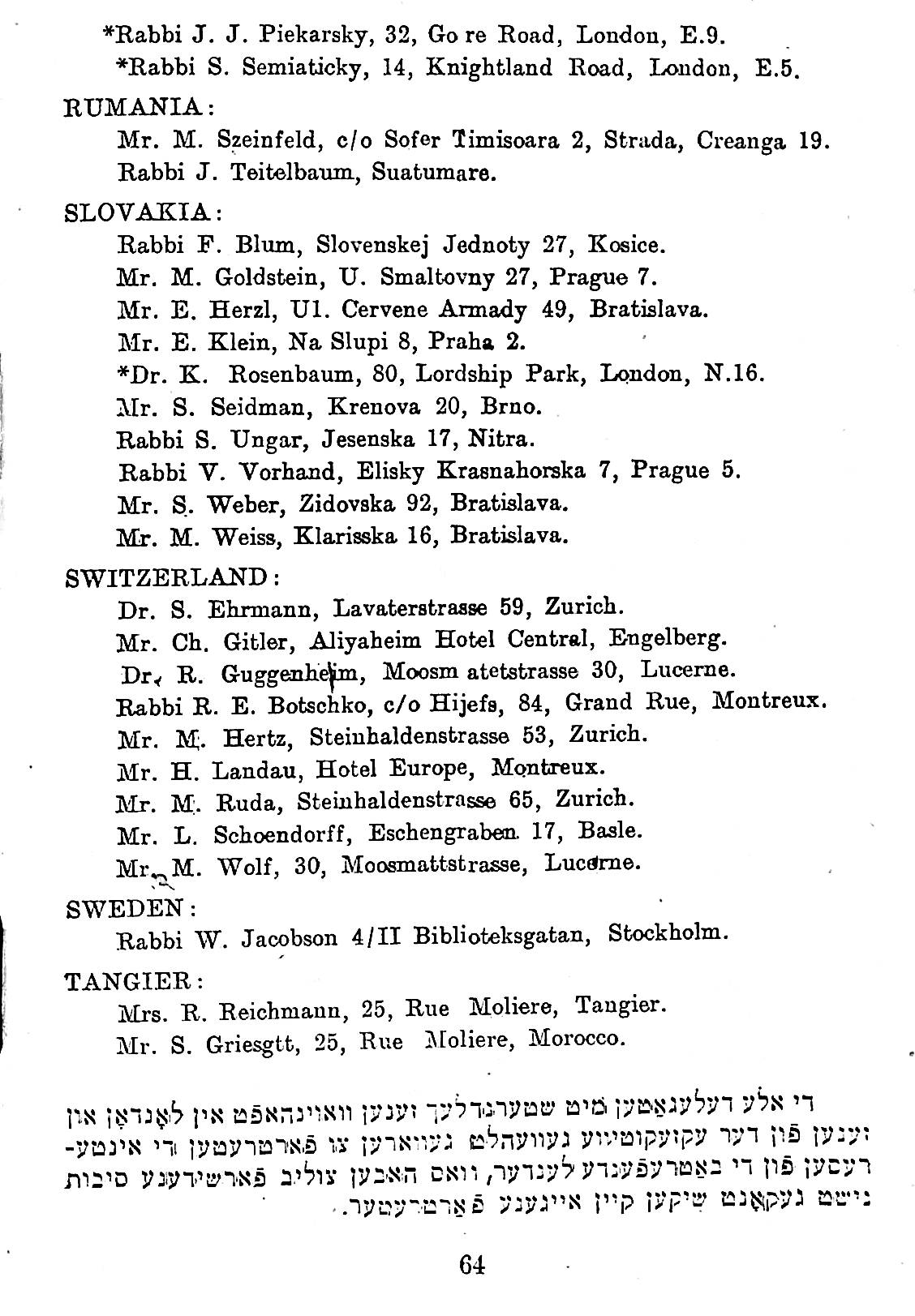
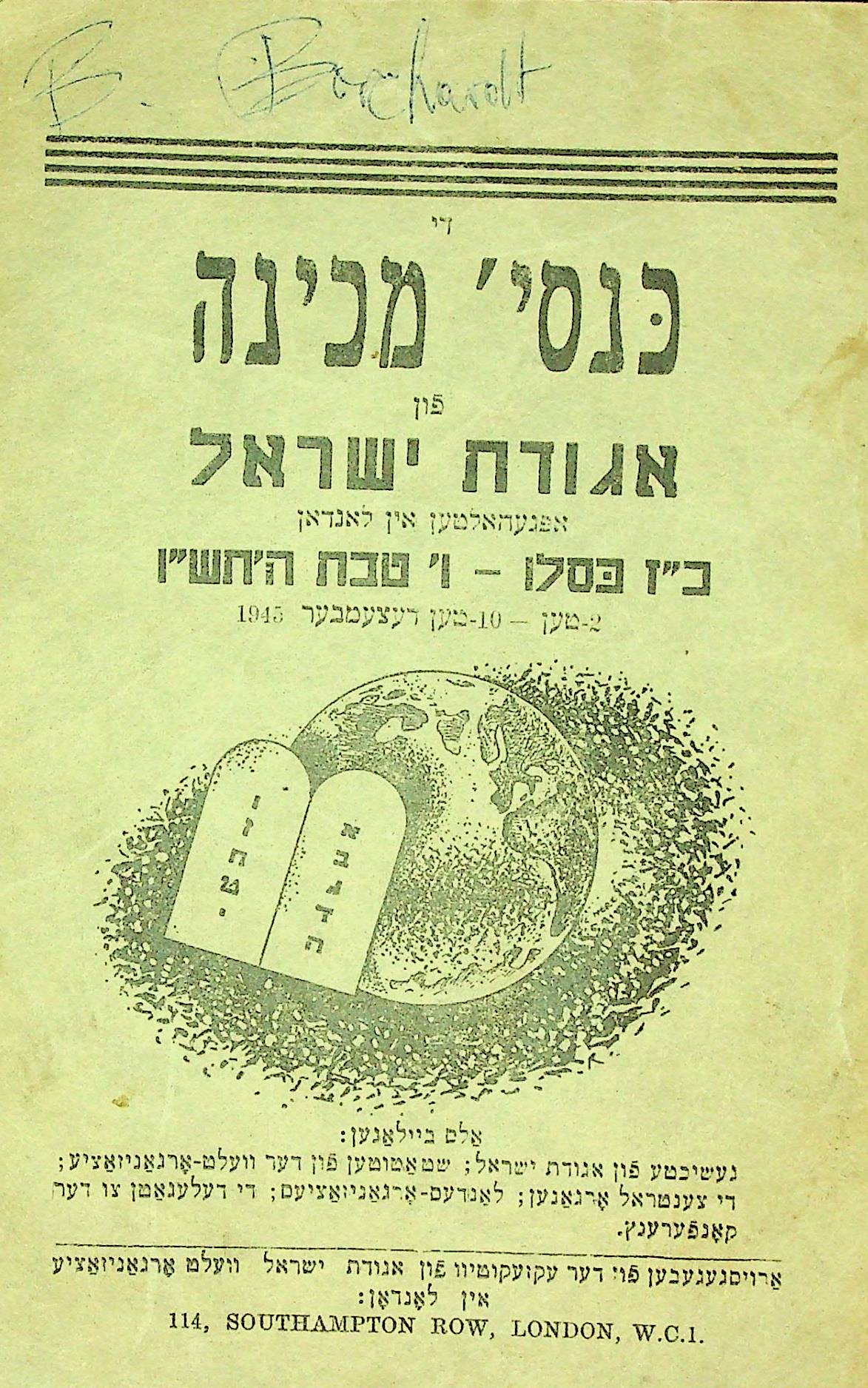
 The Kenesiah Mechina (Preparatory Assembly) of Agudas Yisroel was a historic international conference held in London from December 2nd to 10th 1945. Convened just months after the end of World War II, it was the first global gathering of the Orthodox Jewish movement following the Holocaust.
The Jewish community in Europe had been devastated and Agudas Yisroel could not immediately organize a full scale conference. This “preparatory” conference brought together surviving leaders and delegates from around the world to reorganize the movement, coordinate relief for Holocaust survivors, and prepare for future international congresses.
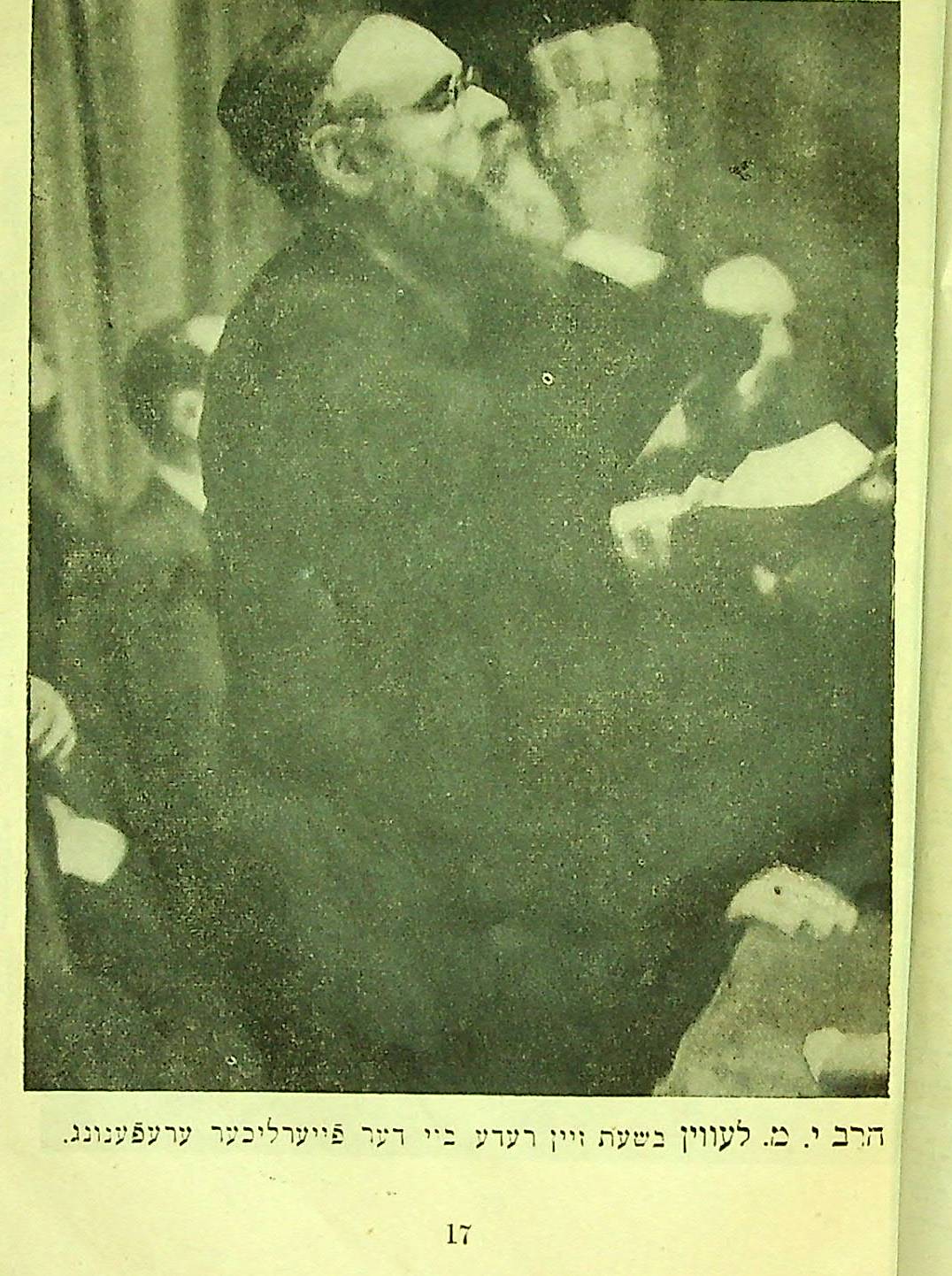
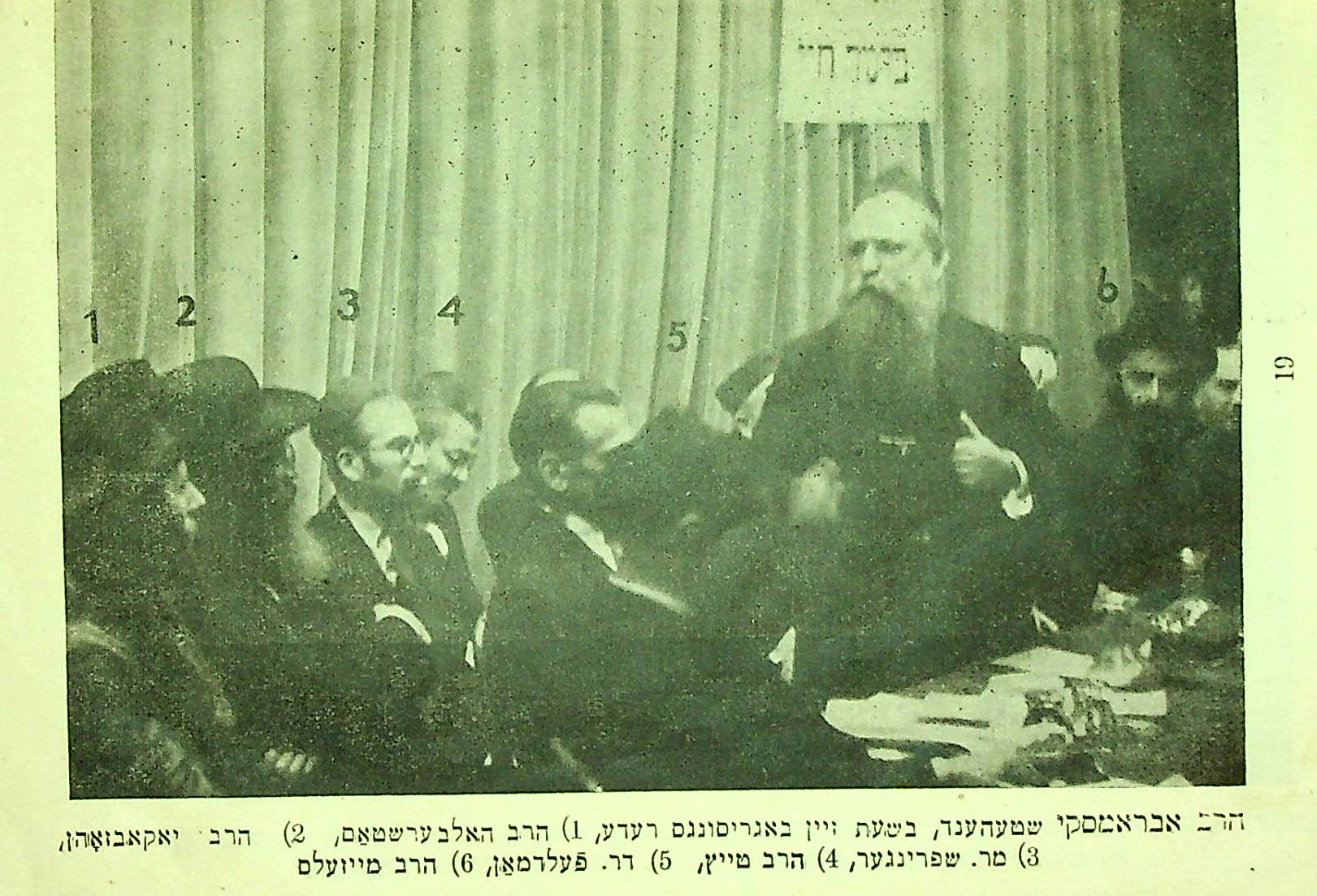
Prominent rabbinic and communal leaders attended and addressed the delegates, including Rabbi Jacob Rosenheim (president of World Agudas Yisroel), Rabbi Yitzhak-Meir Levin, and Dayan Yechezkel Abramsky of London.
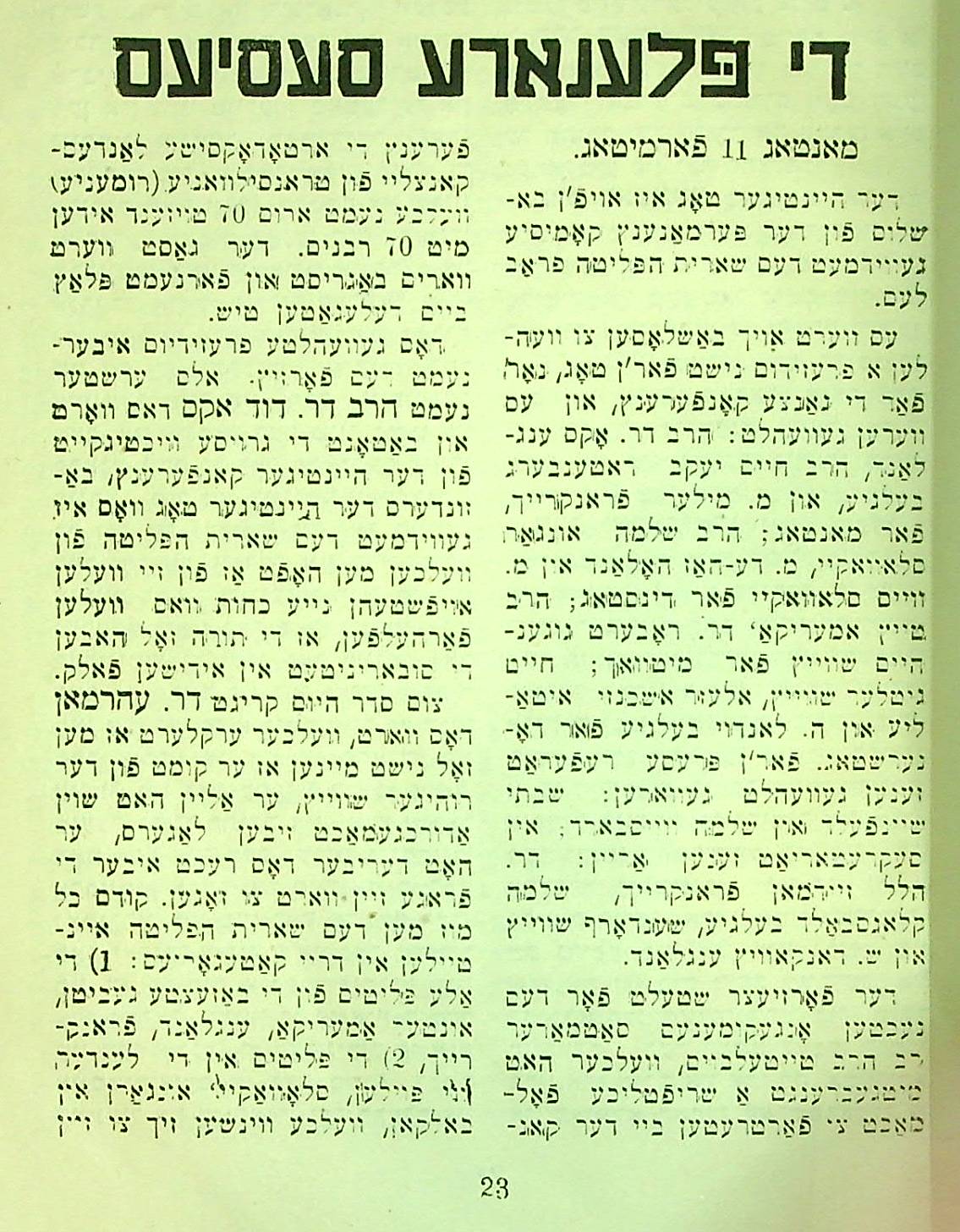
This gathering brought together surviving rabbinic leaders from the Displaced Persons camps as well as delegates from Britain, the United States, and the Land of Israel (Palestine). Key figures included Harry A. Goodman (political secretary in London), Rabbi Michoel Dov Ber Weissmandl (Holocaust rescue leader), Rabbi Shlomo Zev Zweigenhaft and Rabbi Yisroel Moshe Olewski (representing the British Zone / Bergen-Belsen), Rabbi Pinchas Hirschprung, Rabbi S. Teitz, and Elimelech (“Mike”) Tress (head of Agudas Yisroel Youth Council of America).
My copy belonged to Rabbi Boruch B. Borchardt who was a long-time executive director of Agudath Israel of America (Agudas Yisroel), serving the organization for over 50 years until he died in June 2008.
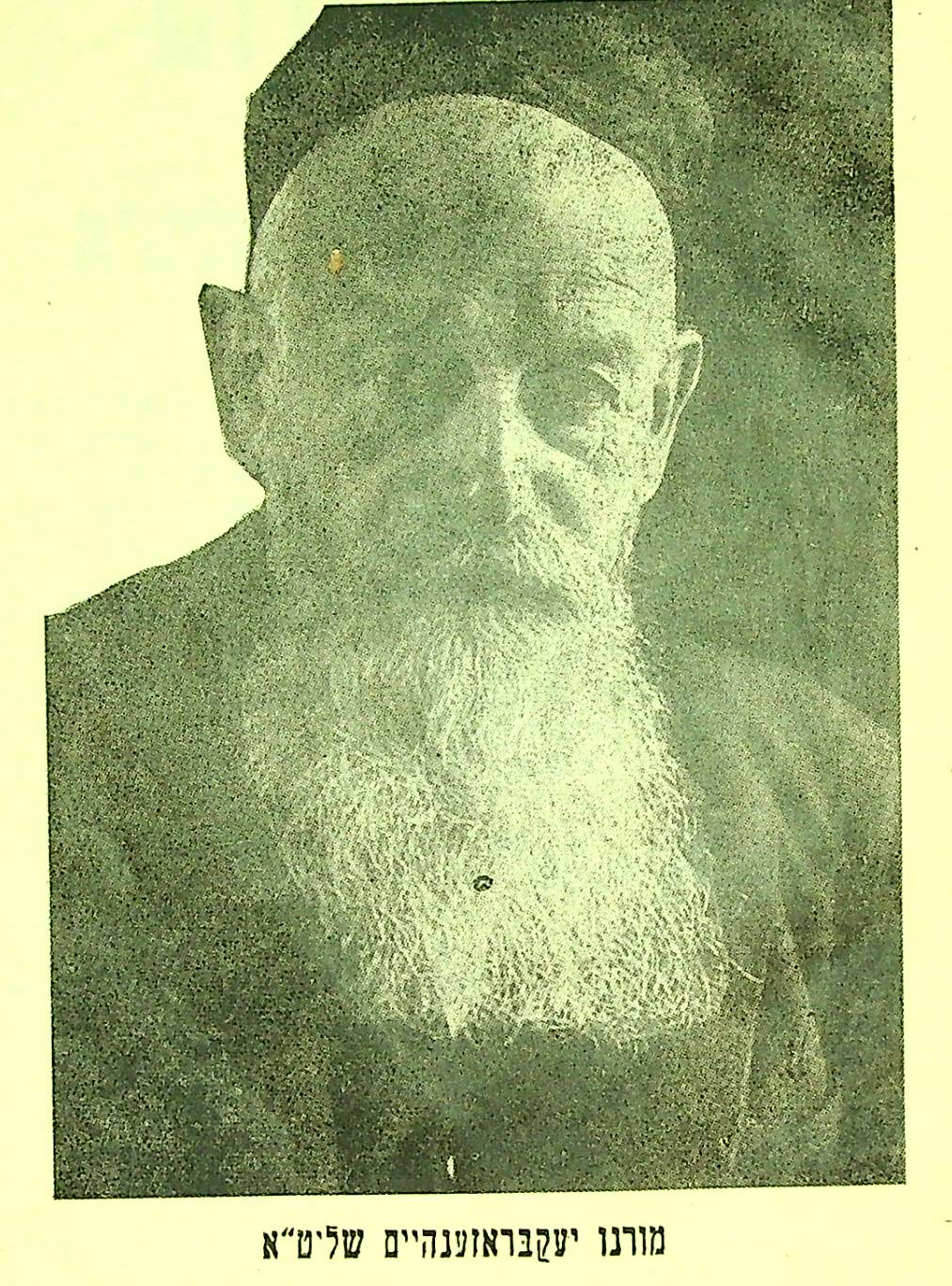 Rabbi Jacob Rosenheim was a born in Frankfurt, a publisher, author, and a co-founder of World Agudas Yisroel. He emigrated to England following the rise of the Nazi Party in Germany, and from 1941 to 1950, he lived in exile in the United States. He immigrated to Israel after its independence in 1948 and lived in Jerusalem and Bnei Brak until his death in 1965.
The United States delegation was led by Rabbi Moshe Feinstein.
Several of the Rabbis representing European countries were actually resident in London, having left or escaped Europe before the war.
Rabbi David Ochs, representing England, was born in a small town near Tarnopol, Poland, about 1905. His family moved to Vienna where he entered a yeshiva and received semicha (his rabbinical diploma) at the age of 17.
He entered the University of Vienna where he received a doctorate in history. He was recognized as an outstanding scholar and described by his colleagues as a “great orator.” In 1939, Rabbi Ochs left his pulpit in Vienna and escaped to England with his family. He served as a prominent rabbi in Manchester, England, leading the Vine Street synagogue in North Salford. In 1946 he visited New York and then accepted a position at the Torah Emeth synagogue in Toronto, Canada.
Rabbi Shlomo Baumgarten, who was born in Vienna, represented Austria. He was the Rabbi of the Toras Etz Chaim synagogue in London and served as a British Army chaplain following World War II, traveling to displaced persons camps to assist Holocaust survivors. He is buried at Adath Yisroel Cemetery in Enfield, Greater London.
 Rabbi David (Dovid) Freilich served as the minister of the United Hebrew Congregation (Greenville Hall Synagogue) in Dublin, Ireland, from 1946 to 1948.
He led the Ashkenazi Orthodox congregation on South Circular Road (Dolphin’s Barn) during the post-WWII era when the community was near its peak membership.
He later moved to Australia, where he served as a prominent rabbi in Sydney (Maroubra Synagogue) and spent 30 years as the Chief Rabbi of the Perth Hebrew Congregation and Western Australia before retiring.
Rabbi Abraham Moses Babad represented Poland. He was a prominent Polish-born British orthodox rabbi, a leader in Agudas Yisroel, and a community figure in London and Sunderland. He was born in Mykulyntsi (Mukulince), Galicia (then part of Austria-Hungary, later Poland, now Ukraine). He received his semicha (rabbinical diploma) at the yeshiva in Tarnopol.
In the 1930s he emigrated to England. He was the rabbi of the Ahavat Emet Synagogue in London’s East End. He was also co-principal of Yeshivah Or Yisroel in Stamford Hill (1937–1943), helping European refugee youths. Then, he served as rabbi of the Edgware Adath Yisroel Synagogue (1943–1947).
He was a major figure in Agudas Yisroel, serving as chairman of its European Executive and as a ranking member of the Agudas Rabbinical Council.
Rabbi Yisroel Yitzchok Piekarski also represented Poland. He was born in Sosnowiec Poland in 1905 to a family of Amshinover chassidim. He served briefly as Rabbi of the small town of Modrzejów in Poland (which is now part of Sosnowiec) before accepting a position as a Rabbi in London England shortly before the outbreak of World War II. In 1947, Rabbi Piekarski emigrated to the United States. He was the Rosh Yeshiva of the Lubavich movement for 42 years.
Another Rabbi representing Poland was Rabbi Yitzchak Tzvi (“Zeidel”) Siemiatycki, a renowned scholar. Born in Poland, he was an elite student and senior scholar at the Mir Yeshiva before relocating to the United Kingdom. In 1943 he was appointed to lead and lecture at Yeshivas Toras Emes (Schneiders Yeshiva), which was founded by his father-in-law, Rabbi Moshe Leib Schneider.
Following World War II, he traveled across Europe, including Hungary in 1947, bringing dozens of young Holocaust survivors back to study at the London yeshiva.
Italy was represented by Rabbi Ephraim Oshri. He had survived the Holocaust and the Kaunas (Kovno) Ghetto. Rabbi Oshry traveled to Italy in 1944–1945. In Rome, Italy, Rabbi Oshry founded and headed Yeshivat Me’or ha-Golah (the Light of the Exile Yeshiva), which was the first postwar yeshiva established in Italy for young orphaned refugee children and Holocaust survivors.
The last name on the Belgium delegate list is Jonas Tieffenbrunner, born in Poland, who stayed in Antwerp throughout the war and established an orphanage there which continued after the war.